Difference Between Pinnate and Palmate Palm Types

Urdaneta Group WSI • September 22, 2024

Understanding the Differences Between Pinnate and Palmate Palms


When you think of palm trees, I’m sure a tropical, beachy image comes to mind; however, not all palms are the same, and understanding the differences between pinnate and palmate palms can help you choose the right type of palm for your needs. This blog explores the characteristics of different palm species in terms of appearance, care, and uses.


What are Pinnate Palms?


Pinnate palms are characterized by their feather-like fronds, composed of multiple leaflets arranged along both sides of a central axis, known as the rachis. This leaf structure resembles a feather, giving these palms their name, as “pinna” is Latin for “feather.”


Characteristics of Pinnate Palms


As mentioned, elongated, feather-like fronds distinguish pinnate palms from their counterparts. Pinnate palms are also known for their flexibility and movement, with their fronds swaying in the wind. This movement and their feathered appearance give them a more delicate and ornamental look.


Pinnate palms are more commonly found in tropical regions like South America and Southeast Asia, thriving in warm, humid climates with plenty of rainfall.


Popular Examples of Pinnate Palms

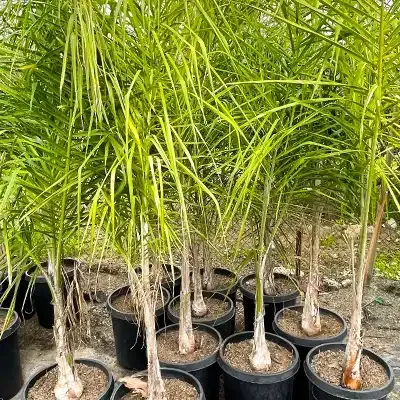
Queen Palm trees in black pots with green fronds.

Queen Palm (Syagrus romanzoffiana)


Known for its elegant, arching fronds, the Queen Palm is a popular choice for landscaping in warm climates. It grows tall and slender, with fronds reaching up to 15 feet long.

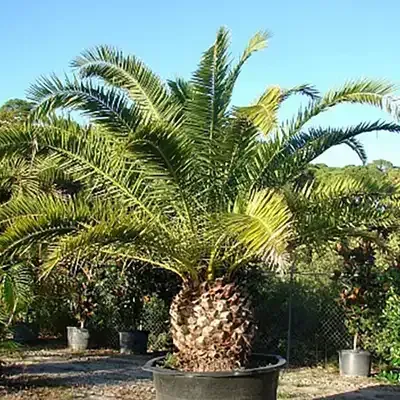
A large Canary palm tree with green fronds in a black pot.

Canary Island Date Palm (Phoenix canariensis)


This palm has a robust trunk and long, arching pinnate fronds. Due to its impressive size and form, it’s often used as a focal point in landscapes.

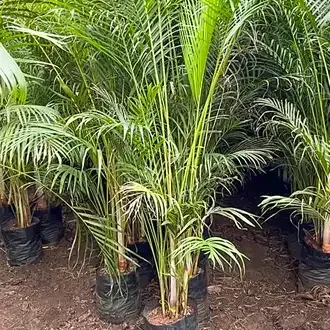
Clump of potted Areca palms with long, green fronds and bamboo-like stems.

Areca Palm (Dypsis lutescens)


Also known as the Butterfly Palm, this species is characterized by its dense clumps of slender, arching fronds. It is commonly used as an indoor plant or in tropical gardens

What are Palmate Palms?


Palmate palms, in contrast to pinnate palms, have fronds that fan out from a central point, much like the fingers of a hand. The term “palmate” comes from “palm,” referring to the hand-like shape of the leaves.


Characteristics of Palmate Palms


Palmate fronds can be nearly circular, with deep lobes that appear star-like. One of the defining characteristics of palmate palms is their more rigid structure. Unlike the flexible fronds of pinnate palms, palmate fronds do not move as freely in the wind. This gives a more sturdy and structured appearance, making them popular for formal or symmetrical garden designs.


Palmate palms are often found in drier, more temperate regions like northern Mexico and the Mediterranean. They are well-adapted to hot, arid conditions and thrive in areas with dry summers and mild winters.


Popular Examples of Palmate Palms

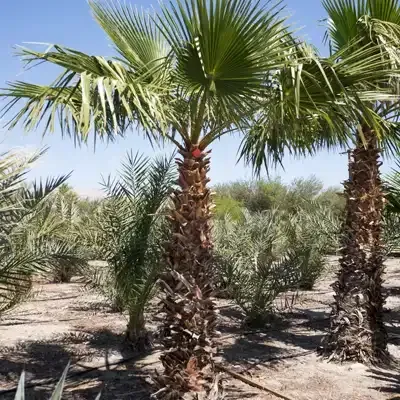
Mexican Fan Palm trees with brown trunks and green fronds.

Mexican Fan Palm (Washingtonia robusta)


This tall palm has large, fan-shaped fronds and is often seen lining streets and parks in warm climates. It is known for its impressive height and slender trunk.

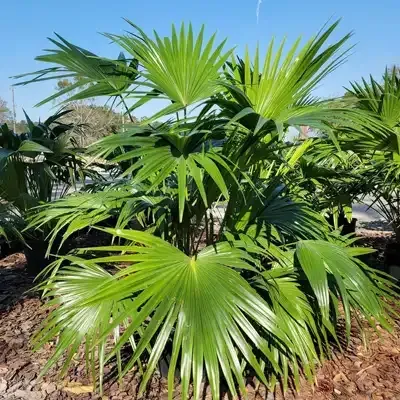
Chinese Fan Palm with green, fan-shaped leaves growing outdoors under a blue sky.

Chinese Fan Palm (Livistona chinensis)


This palm is often used indoors and outdoors. It grows slowly but can eventually reach a significant height. It is recognized by its large, glossy, fan-shaped fronds.

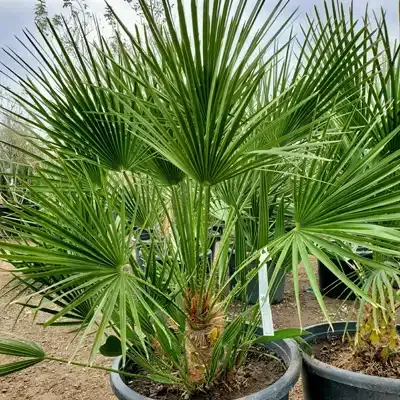
European fan  palm plant with fan-shaped fronds in a dark pot, outdoors.

European Fan Palm (Chamaerops humilis)


This hardy and slow-growing palm features multiple trunks and fan-shaped fronds. It’s often used in Mediterranean-style gardens and can tolerate cooler temperatures.

Pinnate vs Palmate


Visual Differences

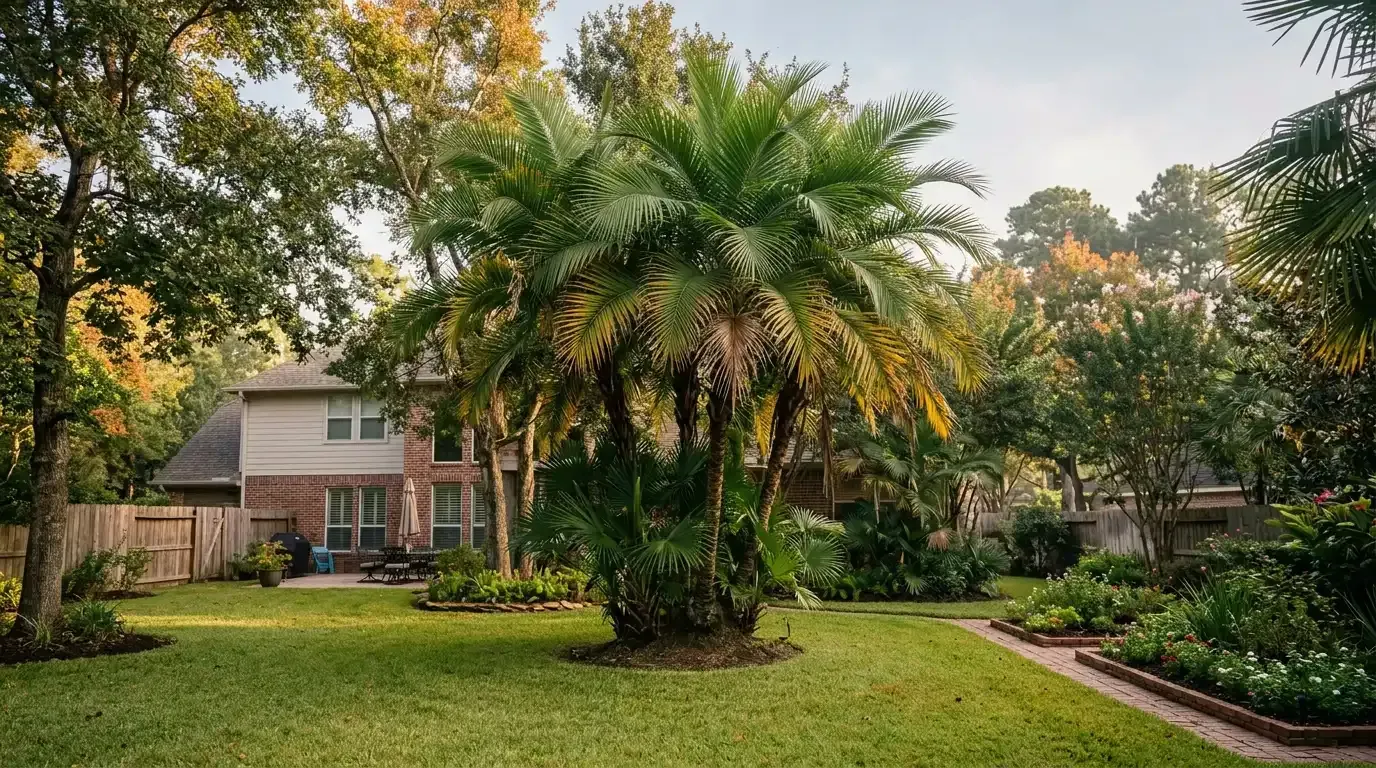
When comparing the whole tree, pinnate palms have a more umbrella-like shape, as they create a canopy with their arching fronds. Meanwhile, palmate palms have a more upright growth habit giving a more architectural appearance.


Care Requirements

Both types of palms generally require similar care, such as well-drained soil, regular watering, and plenty of sunlight. Pinnate fronds may require more protection from strong winds to prevent damage. Palmate Palms are more tolerant of varying weather conditions due to their sturdier fronds.


Uses in Landscaping

Pinnate palms are often used in landscapes where a more graceful, tropical look is desired–think resort-like atmosphere. Palmate palms, with their fan-shaped fronds, are commonly used in more formal or symmetrical designs, such as lining driveways or creating focal points in structured gardens.


Palm Trees for Sale


At Rosehill Palms , we offer a wide selection of both pinnate and palmate palms trees. Our selection includes popular species like the Queen Palm, Mexican Fan Palm, and European Fan Palm, each carefully cultivated to be cold-hardy in the Texas climate.


Visit us to explore our collection and find the ideal palm for your project.


Conclusion


Understanding the difference between pinnate and palmate palms can help you make informed decisions when selecting palms for your landscape. By choosing the right palm for your environment and design preferences, you can create a stunning and inviting landscape reflective of you.

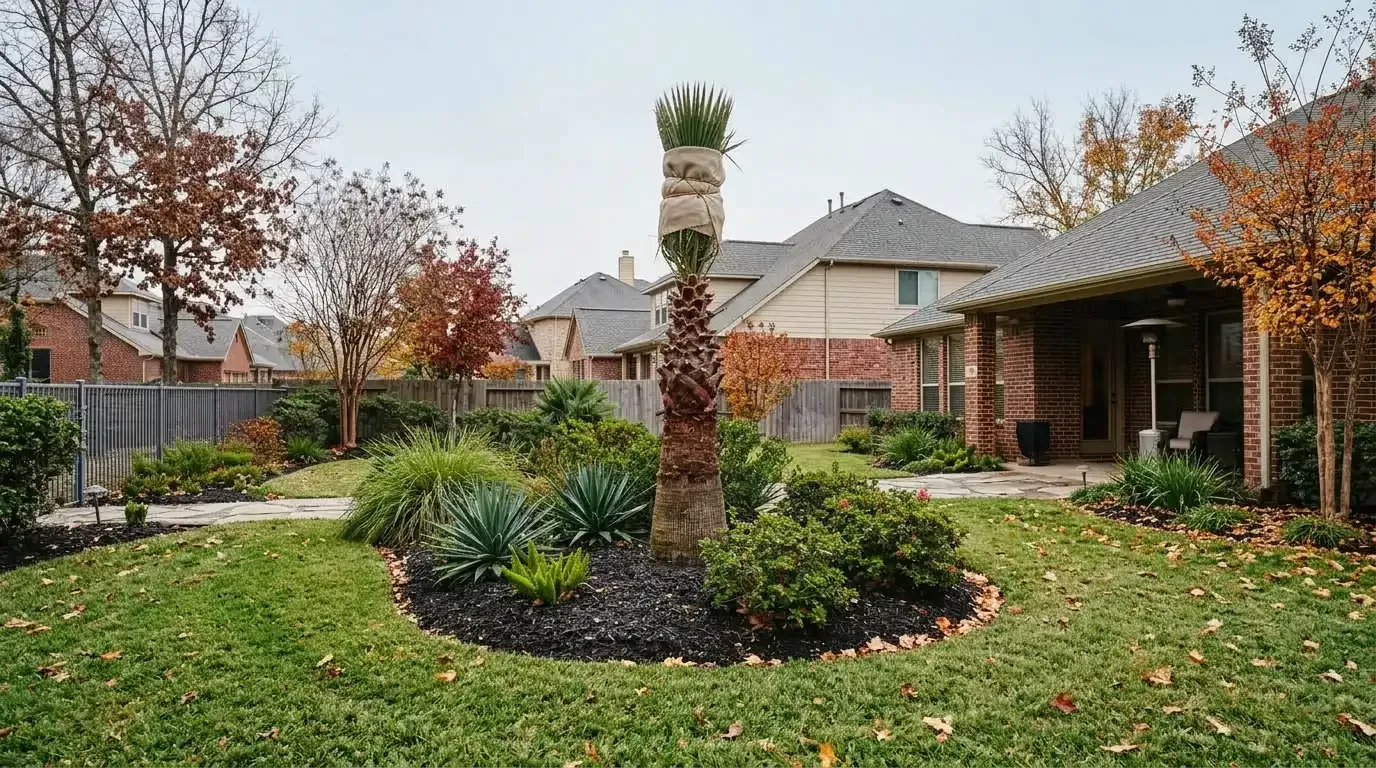
Palms Winter Protection Package

We offer seasonal Palms Care Packages to ensure that your investment is protected during Winter and ready to glow in Spring.

Recent Posts

Best Plants to Create a Cottage Garden in Your Landscaping post image
By Urdaneta Group WSI December 11, 2025
Discover the best plants and design tips to create a charming cottage garden. Learn how to style, maintain, and integrate this look into your landscape.
How To Integrate Permeable Hardscaping into Your Landscaping post image
By Urdaneta Group WSI November 27, 2025
Learn from the Rosehill Palms Landscaping Team how permeable hardscaping improves drainage, prevents flooding, and enhances curb appeal.
Landscaping Trends for 2026 post blog image
By Urdaneta Group WSI October 28, 2025
From lawn alternatives to sustainable gardens, discover the top landscaping trends for 2026, shaping outdoor design in Houston with Rosehill Palms.
More Post
Rosehill Palms logo

Proud member of the

Texas Nursery & Landscape Association

Texas Nursery and Landscape Association  logo
Contact Us  We are here to help! Meet our friendly staff! Enjoy affordable prices! For your dream garden! Join our Community! Big Palms. Little Prices!

Please feel free to contact us via the form below. We will give you an answer as soon as possible!

Contact Rosehill Palms

Rosehill Palms | Developed by Urdaneta Group WSI | All Rights Reserved 2025