
Why Palm Trees in Houston Need Year-Round Care
Why Palm Trees in Houston Need Year-Round Care (Not Just Winterization)
When winter rolls around, many Houston homeowners scramble to protect their palms from a cold snap, and then forget about them entirely until the following year. While winterization is important, it's only one piece of the puzzle.
The truth is, palm trees in the
Greater Houston area face stress year-round. Summer heat, heavy rainfall, nutrient-poor soils, and sudden temperature swings all take a toll on your palms, long before visible damage appears. A reactive approach, one that only responds to problems after they occur, often leads to costly repairs or permanent loss.
This guide breaks down what your palm trees are actually experiencing throughout the year, why
consistent care makes the difference, and what proactive palm maintenance looks like in practice.
How Houston's Climate Challenges Palms Year-Round
Houston sits in USDA Hardiness Zones 8b and 9a, which means palms can thrive here, but they are never completely free from environmental stress. Understanding what your palms face each season is the first step toward protecting them.
Summer: Heat, Humidity, and Overwatering Risk
Houston summers are intense. Temperatures frequently exceed 95°F, and the humidity can make conditions feel far hotter. While palms are heat-tolerant by nature, prolonged heat combined with waterlogged soils, a common result of Houston's clay-heavy ground and summer rainstorms, creates serious stress on root systems.
During summer, palms also experience nutrient depletion at an accelerated rate. High temperatures speed up biological processes in the soil, which means essential nutrients like magnesium, potassium, and manganese are used up faster. Without replenishment, palms begin to show signs of deficiency — yellowing fronds, brown tips, and reduced growth, often mistaken for underwatering.
If you notice these symptoms during the summer months, it's important to act early. Learn more in our guide:
How to Identify and Treat Heat Stress in Palm Trees.
Fall: Recovery and Preparation
As temperatures begin to drop, palms shift out of peak growth mode. Fall is a critical window for recovery from summer stress and preparation for cooler weather ahead. Palms that entered summer already weakened, due to poor nutrition or root stress, are far more vulnerable to winter cold snaps.
This is the season when many homeowners overlook their palms entirely, assuming the hard work is done until winter arrives. In reality, fall care, including appropriate fertilization and inspection, sets the foundation for how well a palm survives cold stress in the months ahead.
Winter: Cold Snaps and Freeze Events
Houston winters are mild by most standards, but freeze events are a real threat. Temperatures can drop below 28°F, the threshold at which many palm varieties begin to suffer cold damage, and do so with very little warning.
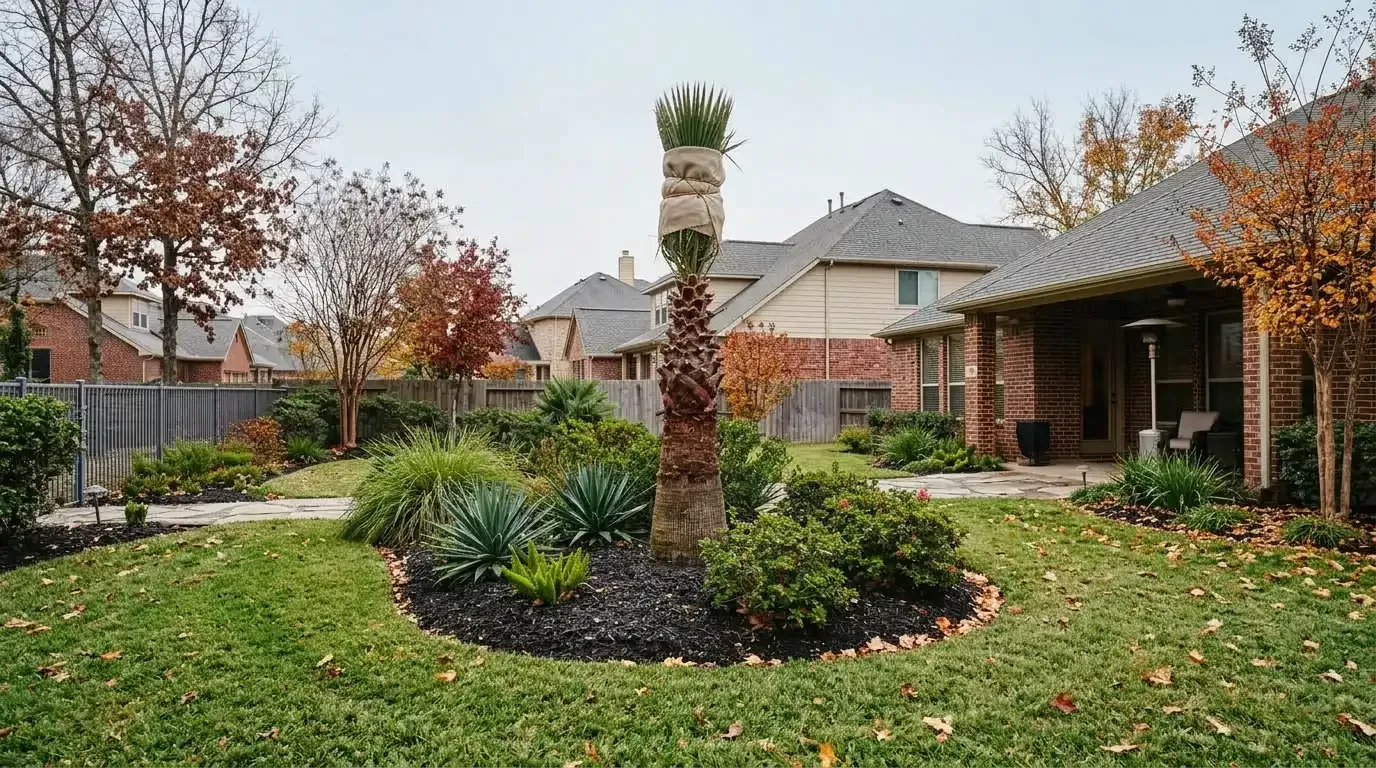
The key insight most homeowners miss: a palm that has been well-nourished and healthy throughout the year is significantly more resilient to freeze damage than one that entered winter already stressed. Winterization treatments, such as wrapping the crown or applying protective coverings, work best on palms that are already in strong condition.
For a detailed checklist of what to do before and during a freeze, visit our post,
Tips for Winter Palm Maintenance.
Spring: New Growth and Nutrient Needs
Spring is when palms resume active growth, and their nutritional demands increase. This is the ideal time to support new root and frond development with targeted nutrition and to assess any damage from the winter. Palms that receive the right support in spring emerge stronger and better equipped for another Houston summer.
Why Winterization Alone Is Not Enough
Winterization is reactive. It addresses an immediate threat, an approaching freeze, but does nothing to address the months of cumulative stress that may have already compromised your palms' health.
Think of it this way: a palm that enters winter with strong root health, proper nutrition, and well-maintained fronds has a far greater chance of recovering from a freeze event than one that has been neglected since the previous spring. Winterization protects the outside. Year-round care strengthens what's on the inside.
Common consequences of relying only on seasonal treatment include:
- Nutrient deficiencies that worsen over multiple growing seasons
- Root stress from drainage issues that go unaddressed
- Frond decline that is mistaken for normal aging
- Greater vulnerability to pests and disease
- Costly emergency treatments, or losing the palm entirely
What Year-Round Palm Care Actually Looks Like
Consistent palm care doesn't mean constant intervention. It means addressing the right things at the right times throughout the year. Here's what a structured approach covers:
Seasonal Nutrition and Fertilization
Palm trees have specific nutritional needs that standard fertilizers don't always meet. They require palm-specific formulations that include magnesium, potassium, and manganese, nutrients that are easily depleted in Houston's soils. Applying the right fertilizer at the right time (typically in spring and early summer) supports healthy frond development and root strength throughout the growing season.
Soil Health and Drainage Management
Houston's clay-heavy soils are notorious for poor drainage. Palms sitting in waterlogged soil for extended periods develop root rot and are far less able to absorb nutrients effectively. Addressing soil compaction and drainage through amendments or strategic planting practices is a foundational element of long-term palm health.
Regular Visual Inspections
Many palm problems are detectable early, before they become severe. Yellowing on lower fronds, discoloration of new growth, or unusual browning patterns can all indicate specific deficiencies or developing issues. Catching these signs early allows for corrective action before the palm's overall health is compromised.
Proper Grooming and Plant Care
Over-pruning is one of the most common mistakes Houston homeowners make with palms. Removing too many fronds, especially green ones, stresses the palm and depletes the nutrients it stores in its canopy. Proper grooming means removing dead or brown fronds when appropriate, not aggressively shaping the tree for appearance.
If you're looking for a structured, professional approach to year-round palm care, learn about our Palm Thrive Palm Maintenance, Care & Conditioning Program.
Which Palm Varieties Benefit Most from Consistent Care
All palm varieties benefit from year-round attention, but some are more sensitive to Houston's conditions than others. Queen Palms and Sylvester Date Palms, for example, are particularly prone to nutrient deficiencies in alkaline soils. Windmill Palms and Needle Palms are more cold-hardy but still benefit from structured seasonal care to maintain their vigor.
Not sure which palms you have in your yard? Our guide,
Fan Palms vs. Date Palms: Which Is the Best for Your Landscape?, can help you identify and compare the most common varieties in Houston.
If you're considering adding new palms to your landscape,
How to Pick a Palm Tree in Texas walks you through everything you need to know before making a decision.
And if cold resilience is a priority, our post on
Learn About Cold-Hardy Palm Trees covers the best varieties for surviving Houston winters.
Conclusion
Palm trees are a significant investment in your Houston landscape, in time, money, and the character they bring to your outdoor space. Protecting that investment requires more than a single seasonal treatment. It requires consistent attention throughout the year, addressing nutrition, drainage, inspection, and grooming in a structured, timely manner.
At Rosehill Palms, we've been helping Houston homeowners care for their palms since 2010. Whether you're looking for guidance on a specific palm health concern or want to establish a consistent care plan, our team is here to help.
Have questions about your palms?
Contact our team or visit us in Tomball to talk through your options.
Frequently Asked Questions
Is winterization enough to keep my palms healthy in Houston?
Winterization protects palms from an immediate freeze threat, but it does not address the cumulative stress that builds throughout the year. Palms that receive consistent year-round care are better nourished, stronger at the roots, and far more resilient when cold weather arrives.
How often should I fertilize my palm trees in Houston?
Most palms in the Greater Houston area benefit from fertilization two to three times per year, typically in spring, early summer, and again in early fall. Always use a palm-specific slow-release fertilizer that includes magnesium, potassium, and manganese.
What are the signs that my palm tree is not getting enough care?
Common warning signs include yellowing of lower fronds, brown or discolored new growth, slow or stunted development, and fronds that drop prematurely. These symptoms often point to nutrient deficiencies or root stress that can worsen significantly if not addressed early.
Can I over-prune my palm trees?
Yes. Over-pruning is one of the most damaging things you can do to a palm. Removing too many fronds, particularly green ones, deprives the palm of nutrients it stores in its canopy and creates unnecessary stress. Only remove fronds that are fully brown and dead.
Do all palm varieties need the same care?
No. While the principles of year-round care apply broadly, specific varieties have different nutritional needs, cold tolerance levels, and drainage sensitivities. If you're unsure about the needs of your specific palms, a consultation with a palm care professional can help you build the right plan.
Flexible
90-Day
Payment Option!
We believe your dream outdoor space should be within reach. That's why we offer a convenient 90-day in-house payment option to fit your budget.
How It Works:
50% DOWN PAYMENT.
Due upon approval to secure your project, materials, and labor. The remaining balance is divided into 3 equal payments.
Invest in Your Outdoor Space Now
Recent Posts
Proud member of the
Texas Nursery & Landscape Association

Please feel free to contact us via the form below. We will give you an answer as soon as possible!
Contact Rosehill Palms
We will get back to you as soon as possible.
Please try again later.
Rosehill Palms | Developed by WSI Urdaneta Group | All Rights Reserved 2026