
Can You Plant Palm Trees in Winter in Houston? What You Need to Know
Can You Plant Palm Trees in Winter in Houston? What You Need to Know
Planting palm trees in winter in Houston is possible, but it is not the right choice for every variety or every planting site. Cold-hardy palms, well-drained soil, careful watering, and a plan for protecting new trees from freezes can all improve the chances of successful establishment.
For many Houston homeowners, spring remains the lower-risk planting window. However, if you want to install palms during winter, understanding your options can help you make a more informed decision. This guide explains which palm varieties are better suited to winter planting in Greater Houston, what precautions to take, and when it makes more sense to wait.
Why Houston's Winter Climate Matters for Palm Trees
Houston's winters are generally milder than most of the United States. The city sits in USDA Hardiness Zones 9a and 9b, where average January low temperatures hover around 42 to 45 degrees Fahrenheit and the ground rarely freezes. This mild baseline is what makes winter planting feasible here when it would be completely inadvisable in colder regions.
That said, Houston winters are unpredictable. Temperatures can fluctuate considerably from one week to the next. A mild afternoon does not guarantee that freezing temperatures will not arrive a few days later, and recent Houston winters have demonstrated that hard freezes with little warning are a real possibility. For a newly planted palm, this unpredictability is the key factor to manage.
The key takeaway: winter planting can work in Greater Houston, but the right palm variety, appropriate site conditions, and a plan for cold weather are essential.
Why Newly Planted Palms Need Extra Care in Winter
A palm that has been growing in the same location for several years handles cold weather differently from one that was recently transplanted. When you transplant a palm, it goes through a period of adjustment as its root system establishes in the new soil. During this period, it is more vulnerable to environmental stress than a fully established tree.
Cooler soil temperatures slow root development, and if a hard freeze arrives before the palm has adjusted to its new location, the risk of damage increases significantly. The level of risk depends on several factors.
Palm variety is the most important consideration, as some species tolerate cold considerably better than others. The condition of the specimen also matters, as a healthy palm handles transplant stress better than one already showing signs of difficulty. Soil drainage is equally important, since waterlogged soil in cold conditions compounds root stress. And the weather in the weeks after planting can determine whether a winter installation succeeds or struggles.
No planting approach eliminates every risk, but choosing the right conditions improves the odds considerably.
Which Palm Varieties Are Better Suited to Winter Planting in Houston
Variety selection is the single most important factor when planting palms in winter. Cold-hardy varieties that are well-adapted to Houston's climate handle the establishment period far better than cold-sensitive ones.
Windmill Palm (Trachycarpus fortunei)
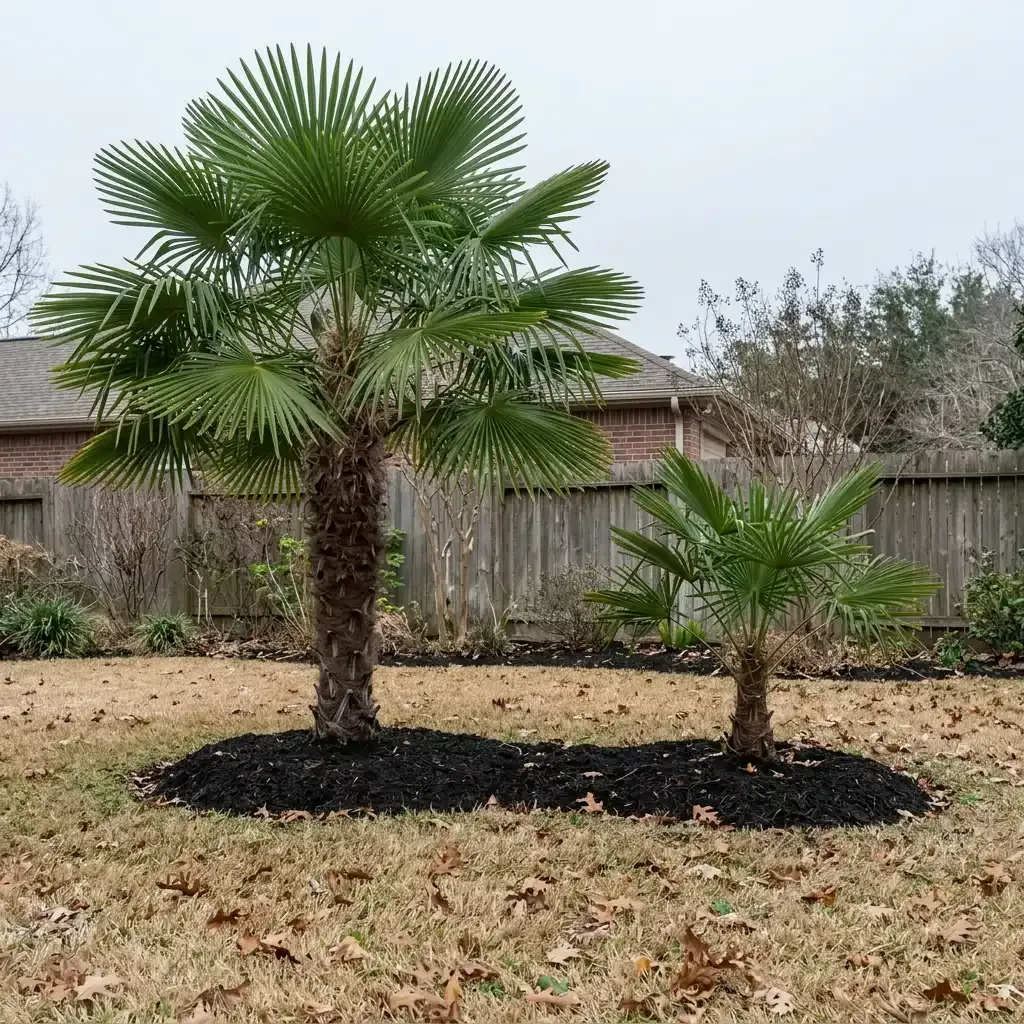
The Windmill Palm is one of the most cold-hardy palms available for Houston landscapes, tolerating temperatures well below freezing. Its compact, upright form makes it suitable for a wide range of residential settings, including smaller yards. Its cold tolerance makes it one of the strongest candidates for winter planting in Greater Houston, provided the site is well prepared and post-planting care is consistent.
Sabal Palm (Texas State Tree)
The Sabal Palm is native to the Gulf Coast region and naturally adapted to the heat, humidity, and occasional freeze conditions of Texas. Its regional suitability and cold tolerance make it another solid choice for Houston homeowners considering a winter installation. It is also one of the most self-sufficient palms once established, which reduces the ongoing attention required after planting.
Pindo Palm (Butia capitata)
The Pindo Palm, also known as the Jelly Palm, is cold-hardy down to approximately 10 to 15 degrees Fahrenheit and offers a distinctive blue-green arching canopy that stands out in Houston landscapes. Its slow growth rate works in its favor during winter planting, as it places fewer demands on a newly developing root system. A well-drained site and attentive establishment care are still important.
For more cold-hardy and compact options suited to Houston yards, read our guide:
The Best Small Palm Trees for Houston Yards
Varieties That Require More Caution in Winter
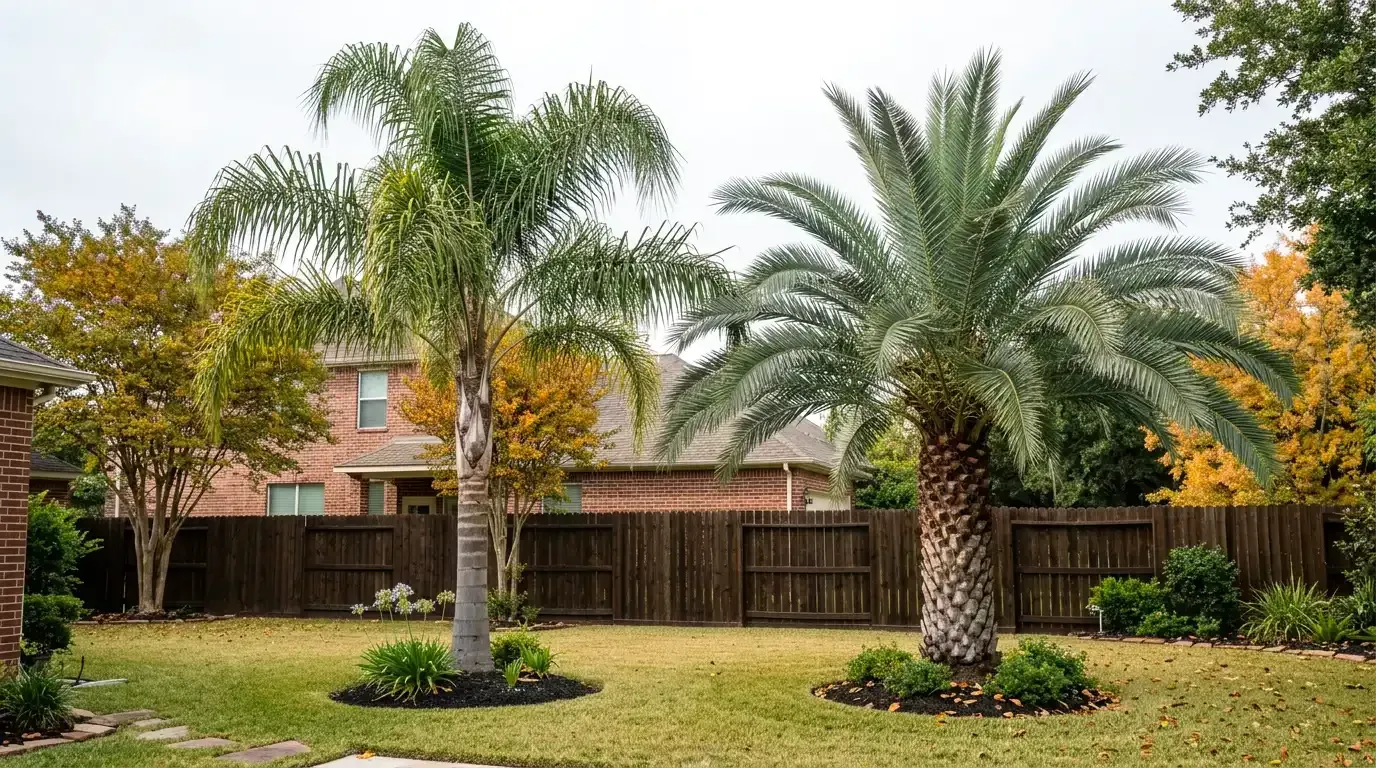
The Queen Palm is the most widely planted in Greater Houston, but it is also one of the most cold-sensitive, beginning to show freeze damage at temperatures around 25 to 27 degrees Fahrenheit. Installing a Queen Palm shortly before a hard freeze increases the risk of serious damage during the establishment period. For this variety, waiting until late February or early March, when freeze risk has largely passed, is the lower-risk approach.
The Phoenix Sylvestris has meaningfully better cold tolerance than the Queen Palm, but because large specimens represent a significant investment, winter planting calls for careful planning. Good drainage, correct planting technique, and freeze protection materials on hand are especially important.
For a detailed comparison of these two popular varieties, read:
Queen Palm vs. Phoenix Sylvestris: Which Is the Right Palm for Your Houston Yard?
How to Give a Winter-Planted Palm the Best Chance
If you decide to plant in winter, the following practices significantly improve the odds of successful establishment.
Choose a Healthy, Well-Established Specimen
Start with a healthy palm from a reputable nursery. Look for a specimen with no obvious signs of stress or decline, and ask about its condition and transplant history. A larger, more developed root ball has more reserves to draw on during the establishment period, which matters more in winter than in the more forgiving spring season.
Evaluate Drainage Before You Plant
Soil drainage is especially important in Greater Houston, where many planting sites have heavy clay soil that retains moisture. A palm sitting in persistently waterlogged soil in cold conditions faces root stress from two directions at once. Before planting, observe how water behaves in the proposed location after rainfall. If water collects or drains very slowly, address the drainage challenge before installing the palm.
Water According to Soil Conditions
Newly planted palms need consistent moisture during establishment, but cooler winter temperatures and Houston's seasonal rainfall reduce how often supplemental irrigation is necessary. Check the soil around the root ball before watering. The goal is to keep the root zone appropriately moist without allowing it to remain saturated, as overwatering in cool conditions is just as damaging as drought stress.
Apply a Generous Mulch Layer
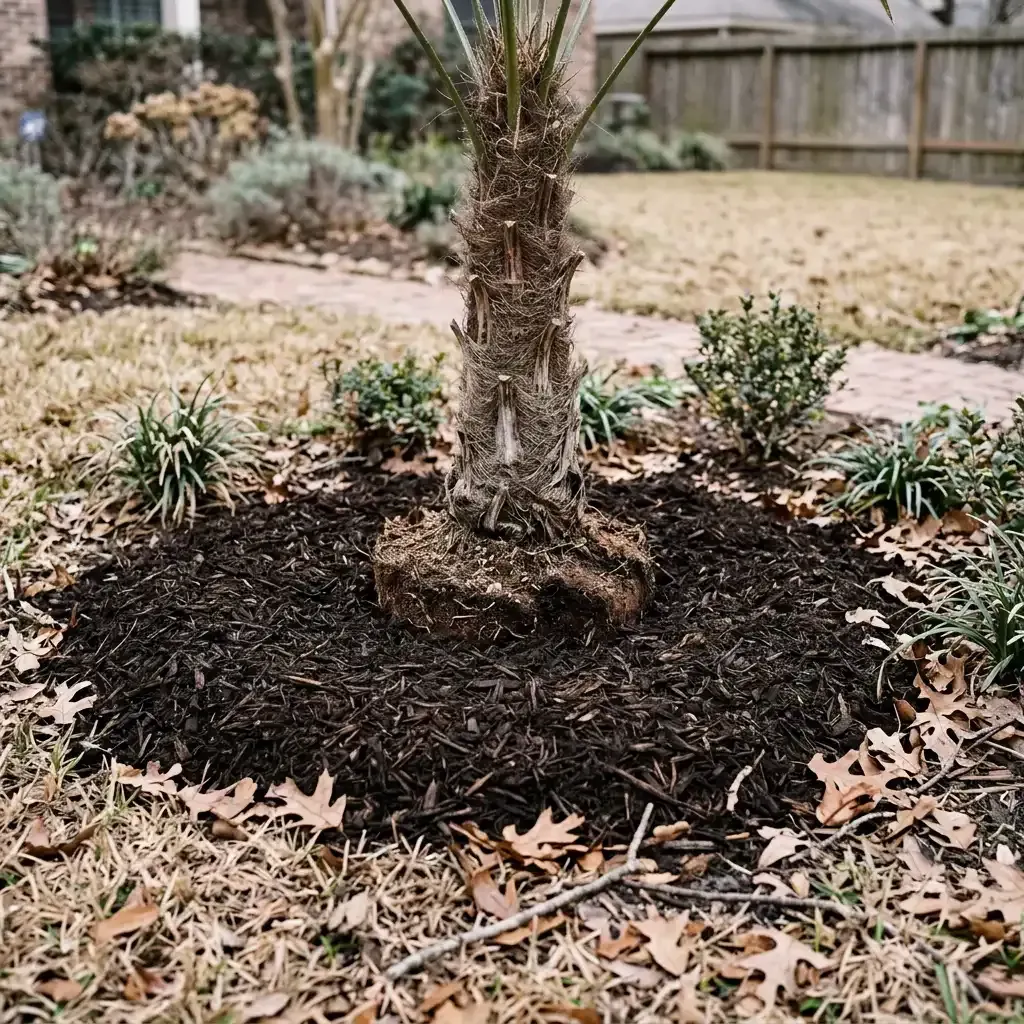
A two- to three-inch layer of mulch around the base of the palm, kept a few inches from direct trunk contact, insulates the root zone against temperature fluctuations and retains soil moisture more consistently. For a winter-planted palm, this layer provides meaningful protection during cold snaps and supports root zone stability through the cooler months.
Prepare for Freezing Weather Before It Arrives
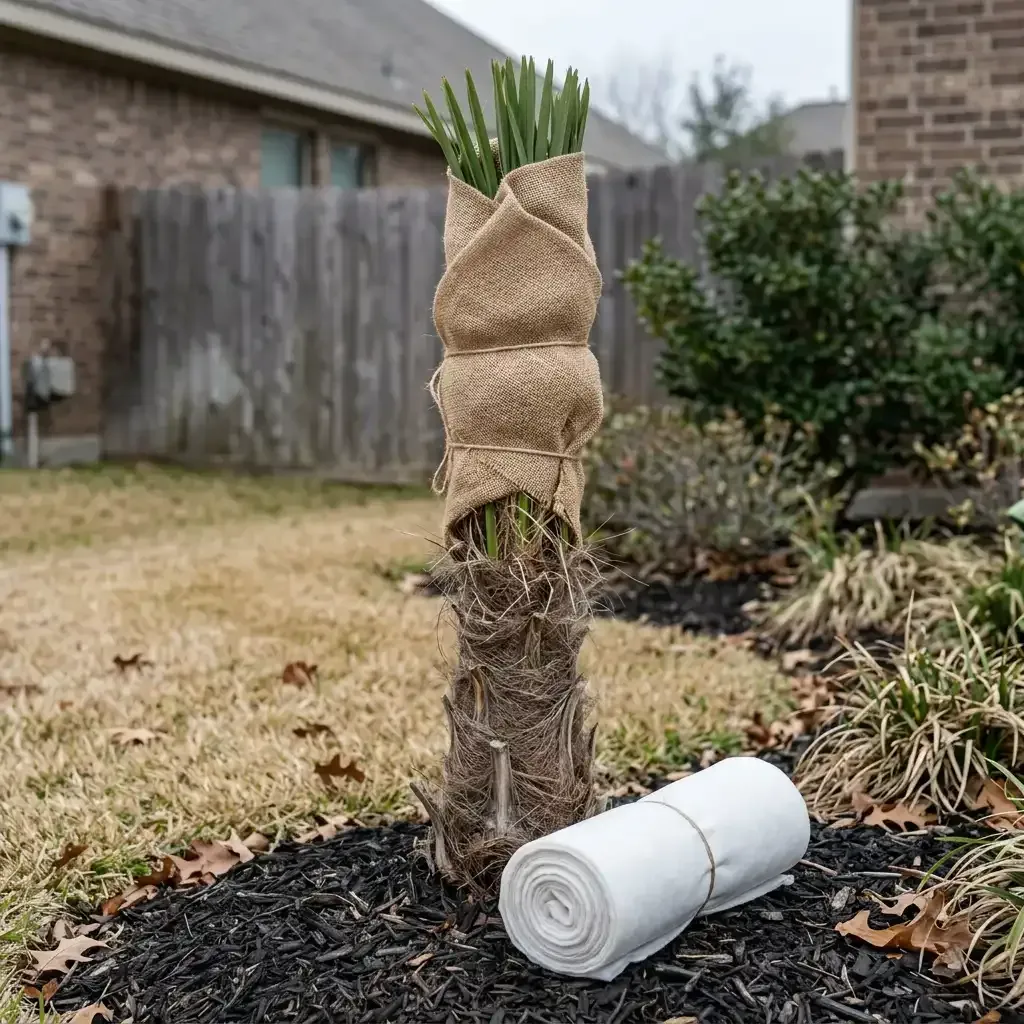
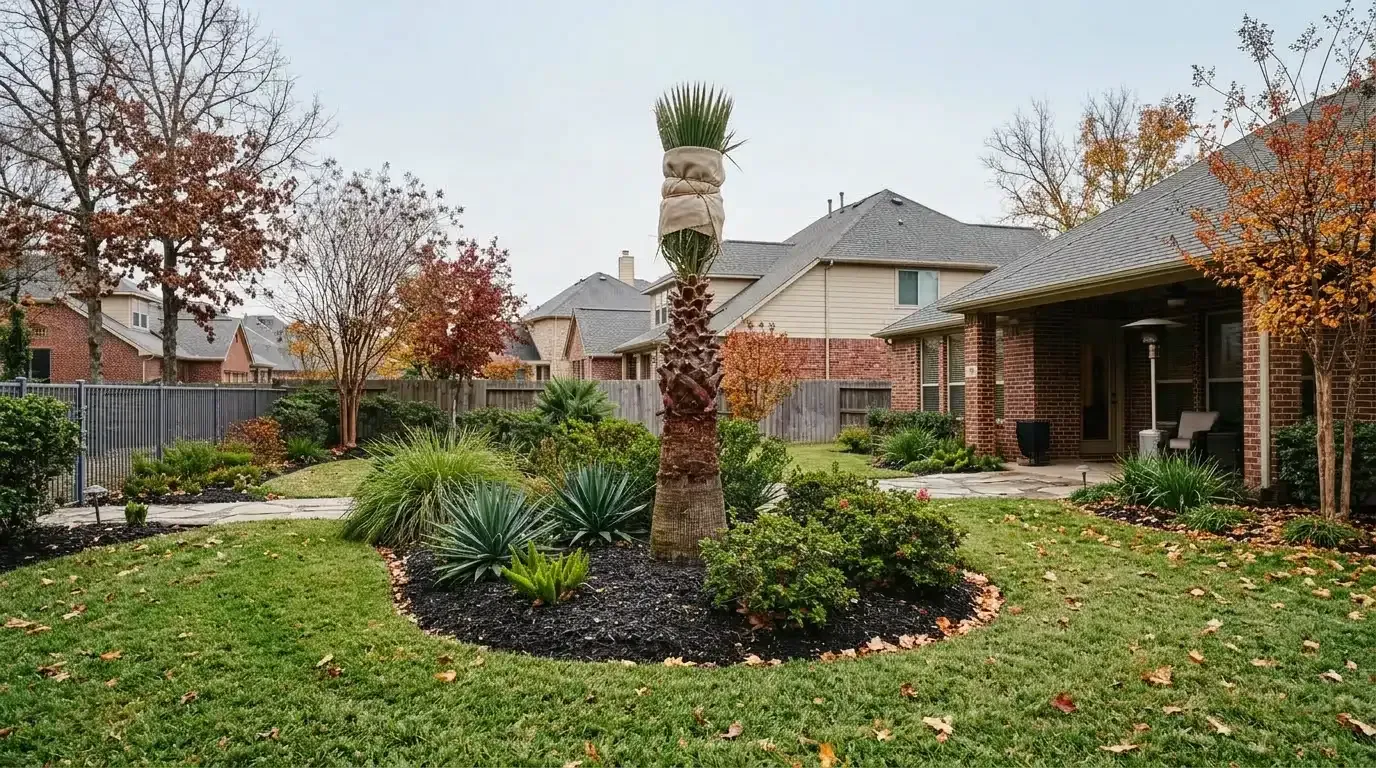
If you are planting in winter, have frost cloth or burlap ready before you plant, not after a freeze is forecast. Houston freeze events often arrive with less than 24 hours of warning, and scrambling to protect a newly planted, cold-sensitive palm during a cold snap is far less effective than being prepared in advance.
For detailed freeze protection guidance, read:
How to Protect Your Palm Trees from a Houston Freeze
Winter Planting vs. Waiting Until Spring: Which Is Right for You?
Spring, specifically March through May in Greater Houston, remains the optimal planting window for most palm varieties. Warming soil temperatures, longer days, and the full growing season ahead give newly planted palms the strongest possible start.
Winter planting makes the most sense when you are working with cold-hardy varieties like Windmill or Sabal Palms, the planting site has good drainage, you can monitor the palm and respond quickly if a freeze is forecast, and you understand that establishment will be slower in cooler conditions.
Waiting until spring makes more sense when you are planting cold-sensitive varieties like Queen Palms, the planting site has drainage challenges that have not yet been addressed, you are installing large or high-value specimens where the cost of loss is high, or a hard freeze is forecast soon after the proposed planting date.
Spring does not eliminate every planting risk, but it provides a more favorable balance of conditions for establishment.
When Professional Installation Makes Sense
Professional installation is especially valuable when planting large palms, working with difficult soil conditions, or choosing varieties that need additional attention during cold weather. An experienced team can evaluate the site, recommend the right specimen, prepare the planting area correctly, and advise on watering and protection after installation.
Our
Landscaping Services team installs palm trees throughout Greater Houston year-round, with the local knowledge to guide timing, site preparation, and variety selection for your specific yard.
Once your palms are in the ground, our
Palm Thrive program provides structured quarterly care through every season, including post-planting establishment support and monitoring through the winter months that follow.
Conclusion
Planting palm trees in winter in Houston is possible, and with the right approach it can work well. The right variety, proper site preparation, consistent post-planting care, and readiness for freeze events all play a role in how well a winter-planted palm establishes.
For cold-hardy varieties like Windmill Palms and Sabal Palms, winter planting with good preparation can produce strong results. For more cold-sensitive varieties, patience until late February or early March is usually the smarter choice.
At Rosehill Palms, we carry a wide selection of palm varieties suited to Houston's conditions and can help you choose the right palm for your space and your timeline.
Browse our
Palm Trees selection or
contact our team to talk through your options before you plant.
Frequently Asked Questions
Can you plant palm trees in winter in Houston?
Yes. Winter planting is possible, particularly with cold-hardy varieties, but the outcome depends on the palm variety, soil drainage, planting technique, and the weather after installation. Spring is generally the lower-risk option for most varieties.
What is the best time of year to plant palm trees in Houston?
Spring is the optimal planting window for most palm varieties in Greater Houston. March through May offers warming soil temperatures, reduced freeze risk, and a full growing season ahead. Fall, specifically September through early November, is also a reasonable window for cold-hardy varieties.
Which palm trees are best for winter planting in Houston?
Windmill Palms and Sabal Palms are the strongest candidates because of their cold tolerance and suitability for the region. Pindo Palms may also work. The condition of the specimen, site drainage, and forecast temperatures should all factor into the decision.
Can I plant a Queen Palm in winter in Houston?
It is possible but carries meaningful risk. Queen Palms are cold-sensitive and more vulnerable to freeze damage during the establishment period. Waiting until late February or March, when the risk of hard freezes has largely passed, is the lower-risk approach for this variety.
Do newly planted palms need freeze protection in their first winter?
Yes, more so than established palms. A newly planted palm has a less developed root system and fewer stored reserves, which means it handles cold stress less well. Having frost cloth or burlap ready and wrapping cold-sensitive varieties when a freeze is forecast is strongly recommended for any palm planted in fall or winter.
How often should I water a newly planted palm in winter?
Check the soil around the root ball rather than watering on a fixed schedule. Keep the root zone appropriately moist without allowing it to remain saturated. Rainfall, soil type, temperature, and the palm variety all affect how frequently supplemental irrigation is needed.
Does Rosehill Palms offer palm installation services in Greater Houston?
Yes. Our landscaping team installs palm trees throughout Greater Houston year-round, including Tomball, Cypress, Spring, The Woodlands, Katy, and Conroe. Learn more about our
Landscaping Services or
contact us to discuss your project.
Flexible
90-Day
Payment Option!
We believe your dream outdoor space should be within reach. That's why we offer a convenient 90-day in-house payment option to fit your budget.
How It Works:
50% DOWN PAYMENT.
Due upon approval to secure your project, materials, and labor. The remaining balance is divided into 3 equal payments.
Invest in Your Outdoor Space Now
Recent Posts
Proud member of the
Texas Nursery & Landscape Association

Please feel free to contact us via the form below. We will give you an answer as soon as possible!
Contact Blog Post
We will get back to you as soon as possible.
Please try again later.
Rosehill Palms | Developed by WSI Urdaneta Group | All Rights Reserved 2026