
How to Protect Your Palm Trees from a Houston Freeze
How to Protect Your Palm Trees from a Houston Freeze: What to Do Before, During, and After a Cold Snap
Houston does not get many freezes, but when it does, they tend to arrive fast and hit hard. A cold front that drops temperatures into the upper teens or low twenties for even a single night can cause serious, lasting damage to unprepared palm trees. And in most cases, homeowners have less than 24 hours of warning to act.
The good news is that freeze protection for palms does not have to be complicated. Homeowners who consistently see the best outcomes aren't necessarily the ones with the hardiest palm varieties. They are the ones who are prepared in advance and know what to do when a freeze is forecast.
This guide covers everything you need to know about protecting your Houston palm trees from cold damage, from understanding how freezes affect palms to the specific steps you should take before temperatures drop.
How Freezes Damage Palm Trees
Understanding how cold damages palms helps you decide when and how to protect them.
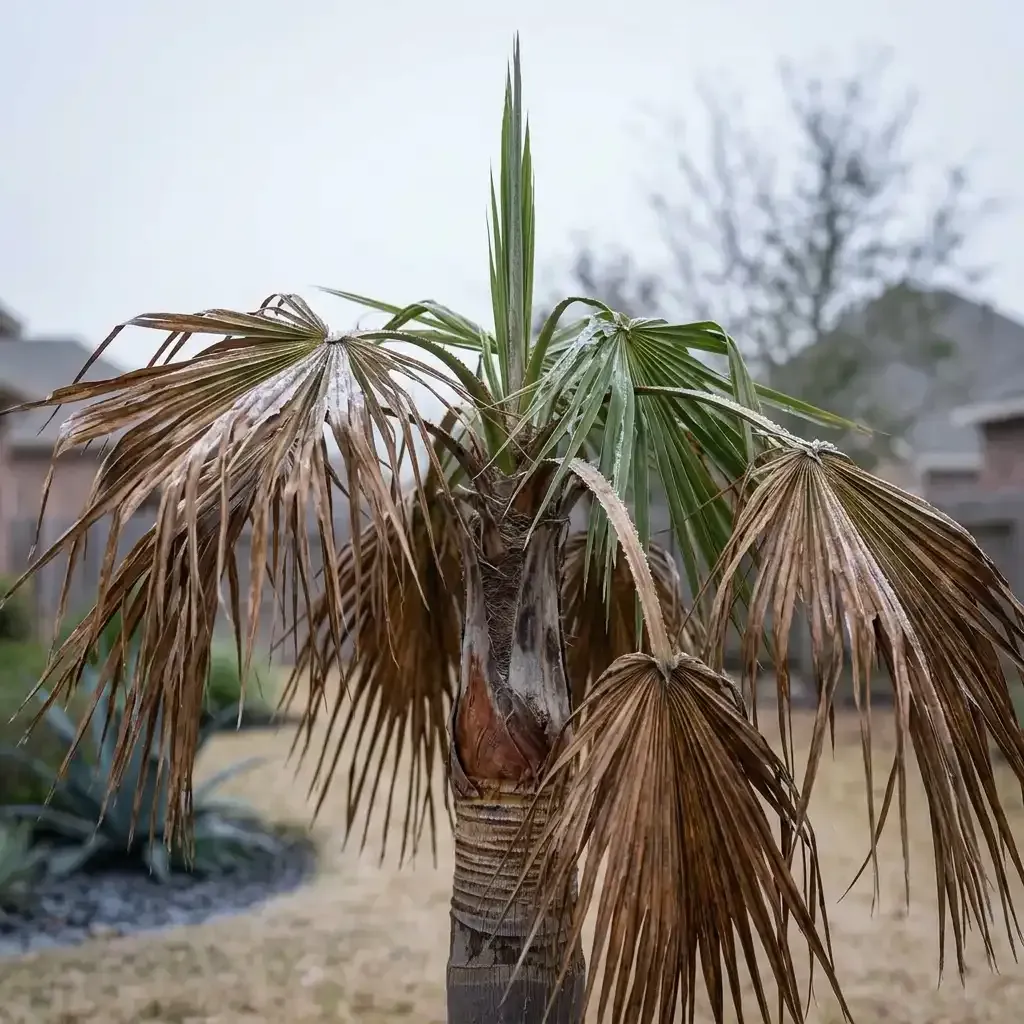
Unlike deciduous trees that go fully dormant in winter, palms remain metabolically active year-round. Their cells retain significant moisture, and when temperatures drop below freezing, that moisture can ice over and rupture cell walls from the inside. This damage is not always immediately visible. A palm may look fine immediately after a freeze and begin showing brown, wilted, or collapsed fronds days or even weeks later as the affected tissue dies back.
The growing point of a palm, the single meristematic tissue at the very top of the trunk known as the spear leaf or heart, is the most critical structure to protect. Unlike most trees, palms cannot regenerate from multiple growth points. If a freeze kills the growing point, the palm cannot recover, no matter how healthy the rest of the trunk and canopy may look.
For more on how to assess your palms after cold weather, read our post:
How to Read Your Palm Trees After Summer: What Fall Fronds Are Telling You
Which Houston Palms Are Most Vulnerable to Freeze Damage
Not all palms carry the same freeze risk, and knowing which varieties in your landscape are most vulnerable helps you prioritize your protection efforts.
High Vulnerability
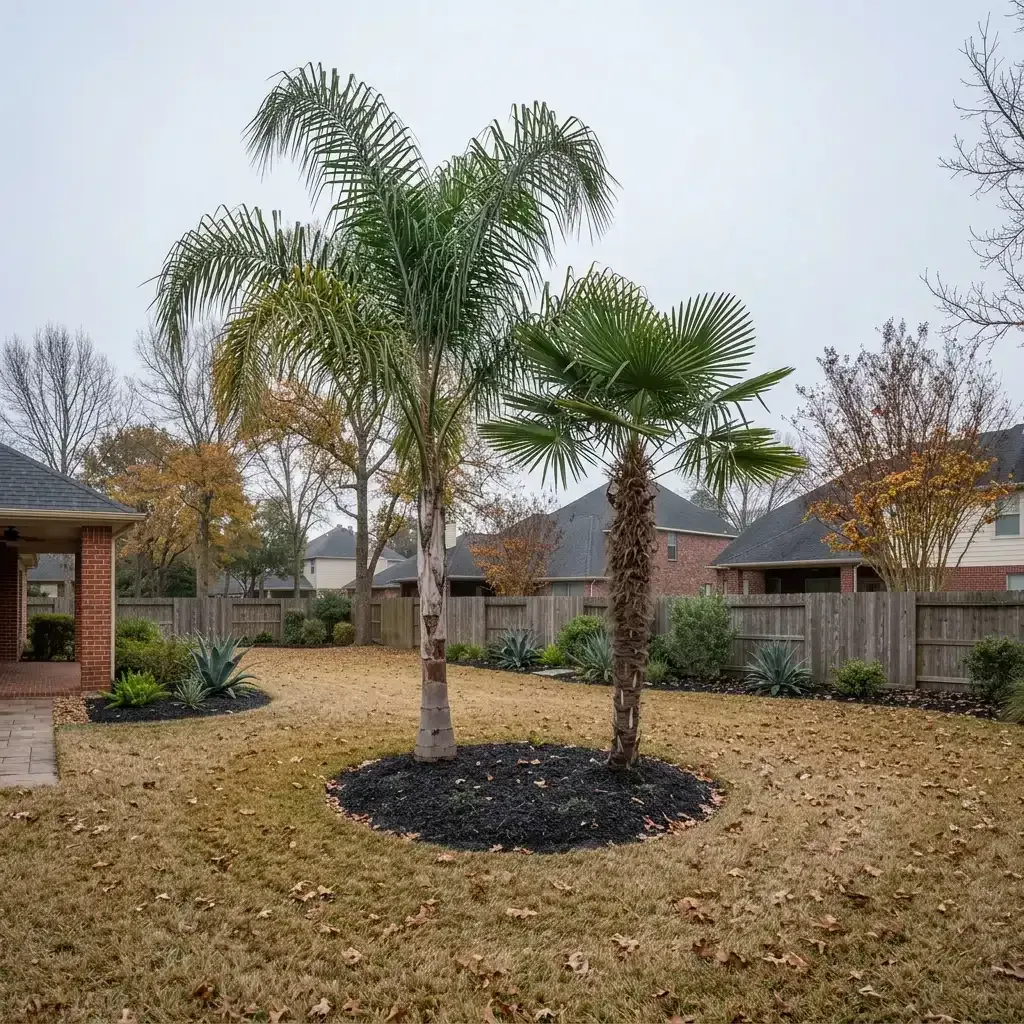
Queen Palms (Syagrus romanzoffiana) are among the most freeze-sensitive palms commonly planted in Greater Houston. They begin showing damage at temperatures around 25 to 27 degrees Fahrenheit and can suffer significant canopy loss or crown death in a hard freeze. They are a popular choice for their graceful appearance but require the most attention when cold weather is forecast.
Coconut Palms, Foxtail Palms, and Royal Palms are even more cold-sensitive and are generally not recommended for Houston landscapes given the frequency of winter freeze events.
Moderate Vulnerability
Phoenix sylvestris (Silver Date Palm) tolerates cold down to approximately 15 to 18 degrees Fahrenheit, making it reasonably resilient for Greater Houston. However, a prolonged freeze event or temperatures at the lower end of that range can still cause frond damage or, in severe cases, crown damage on specimens that were already stressed going into winter.
Canary Island Date Palms have similar cold tolerance and carry an additional concern. They are susceptible to Fusarium wilt, a fungal disease that can enter through pruning wounds, so any post-freeze pruning requires particular care.
Lower Vulnerability
Windmill Palms (Trachycarpus fortunei) are among the most cold-hardy palms available for Houston landscapes, tolerating temperatures as low as 5 to 10 degrees Fahrenheit. They rarely require protective measures except in extreme freeze events.
Sabal Palms and Needle Palms are similarly cold-hardy and generally handle Houston winters without intervention.
For more on cold-hardy palm varieties for Houston, read our post:
The Best Small Palm Trees for Houston Yards
Before Freeze Season: Steps to Take Now
The most effective freeze protection begins weeks before any specific cold event is forecast. A palm that is well-nourished, properly mulched, and free of accumulated summer stress is significantly more resilient to cold damage than one that entered fall already weakened.
Complete Your Fall Fertilization
A palm that goes into winter with adequate potassium levels is better equipped to handle cold stress. Potassium plays a key role in regulating water movement within plant cells, which directly affects freeze tolerance. If you haven't applied your fall fertilization yet, September and early October are the window to do it in Greater Houston.
For a full fall preparation checklist, read our post:
Fall Palm Care Checklist for Houston Homeowners
Refresh the Mulch Layer
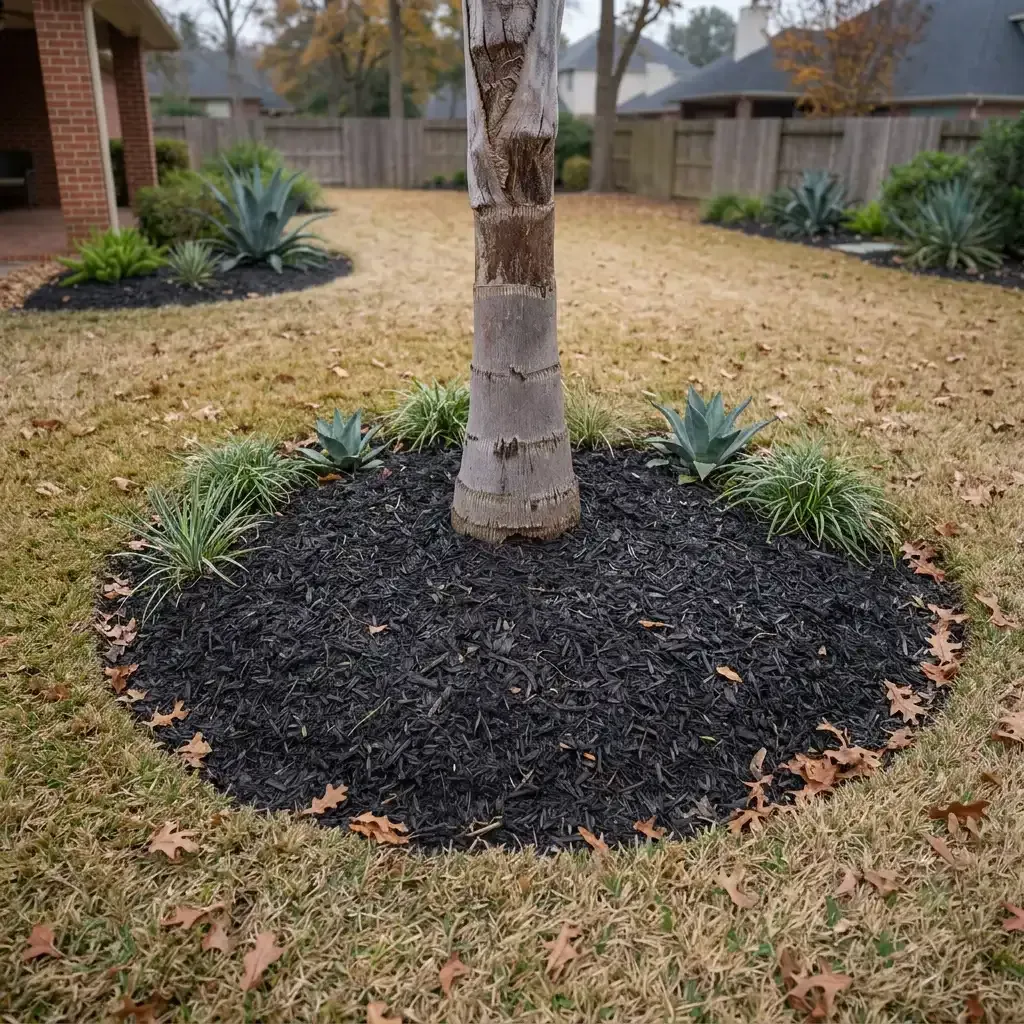
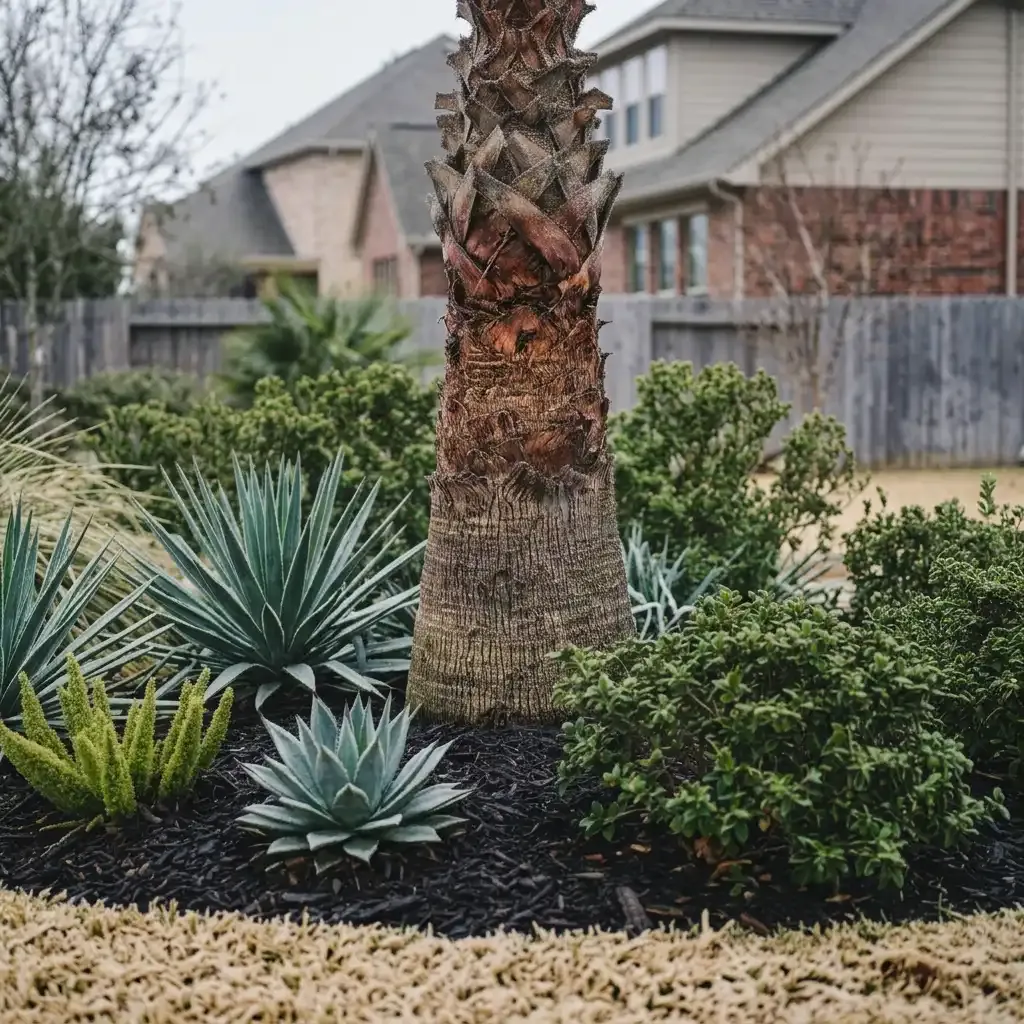
A two- to three-inch layer of mulch around the base of each palm, kept a few inches away from direct contact with the trunk, insulates the root zone against temperature fluctuations. Roots are more cold-sensitive than most homeowners realize, and a consistent mulch layer provides meaningful protection during freeze events without any ongoing effort.
Have Your Materials Ready
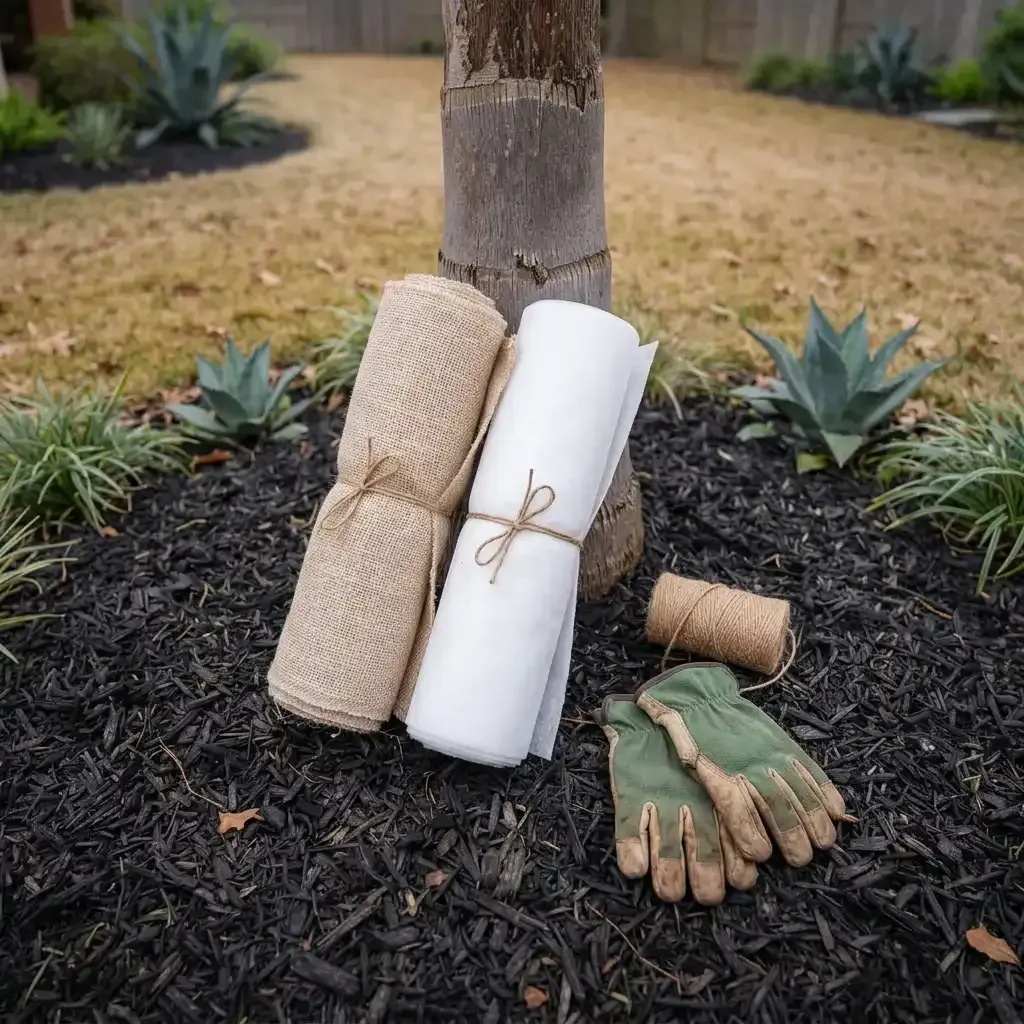
Do not wait until a freeze is forecast to gather your protection materials. By that point, stores often run out of frost cloth and burlap quickly. Keep the following on hand before freeze season:
Frost cloth or burlap for wrapping the crown and upper trunk of vulnerable palms. Avoid plastic sheeting, which can trap moisture and cause as much damage as the cold itself.
String lights or a low-wattage heat source for the interior of the palm crown on palms that are particularly cold-sensitive or valuable. The gentle heat from incandescent string lights wrapped around the crown and covered with frost cloth can make a meaningful difference during a hard freeze.
Stakes or a simple frame to hold protective covering away from the fronds, reducing the risk of the covering pressing wet fronds against cold surfaces.
When a Freeze Is Forecast: What to Do
Once a freeze warning is issued for Greater Houston, the window to act is short. Here is a clear, prioritized sequence of steps.
Water Deeply the Day Before
This may seem counterintuitive, but a well-hydrated palm handles cold better than a dry one. Moist soil also retains heat better than dry soil, which helps protect the root zone. Water your palms deeply the day before temperatures are expected to drop, then stop watering as the freeze arrives.
Wrap the Crown of Vulnerable Palms
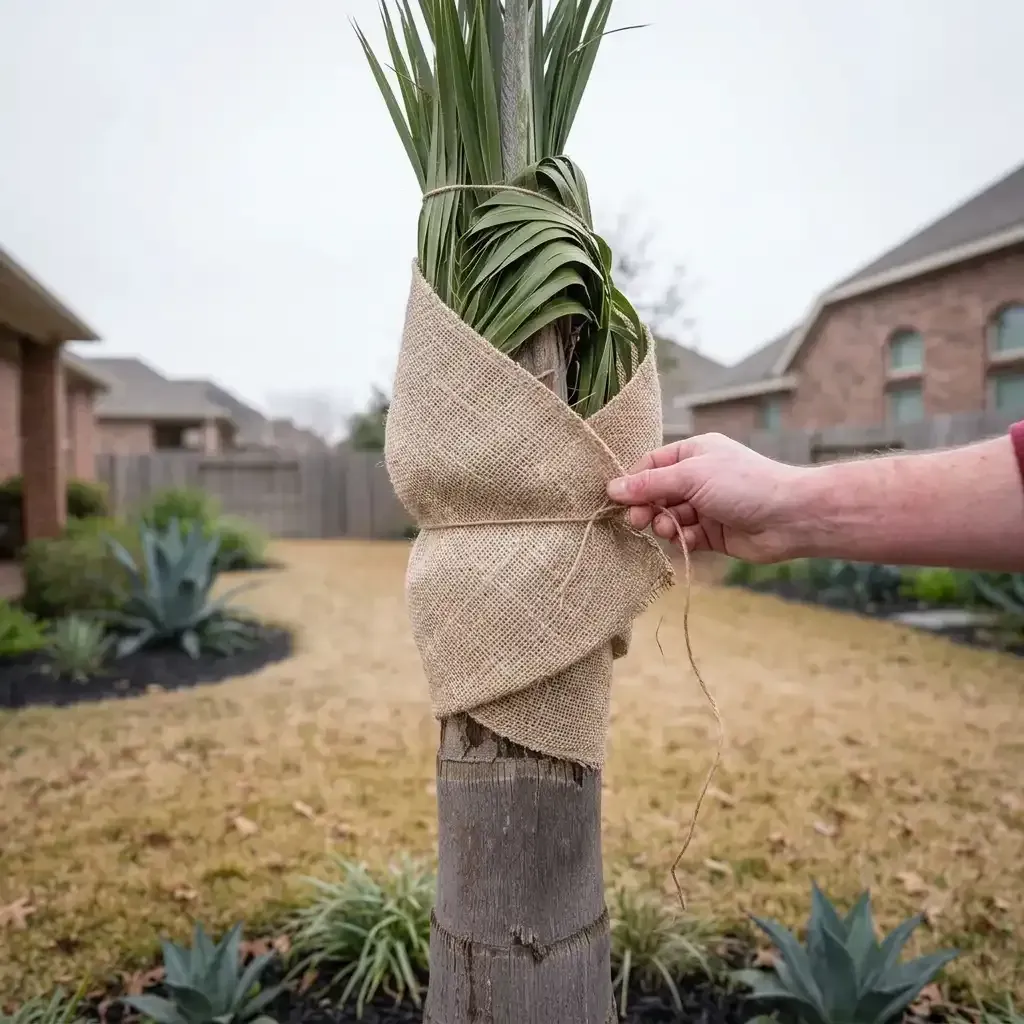
For Queen Palms and other cold-sensitive varieties, wrapping the crown with frost cloth before temperatures drop is the single most important protective measure you can take. The crown contains the growing point, and protecting it from direct exposure to freezing air and wind chill significantly improves outcomes.
To wrap effectively, gently gather the fronds upward around the central spear leaf, then wrap frost cloth or burlap around the entire crown, securing it loosely at the base with garden twine. Do not wrap so tightly that you compress the fronds against the growing point. The goal is to trap warmth and block wind, not to mummify the tree.
For taller palms where the crown is out of reach, wrap the upper trunk with burlap or frost cloth as high as you can safely reach.
Add a Heat Source for the Most Vulnerable Palms
For palms that are particularly cold-sensitive, or that you want to protect as thoroughly as possible, wrapping the crown with frost cloth over incandescent string lights adds an extra layer of warmth. The lights generate a small but meaningful amount of heat that, trapped under the cloth, can keep the crown a few degrees warmer than ambient temperatures.
Use only incandescent lights for this purpose, not LED lights, which generate very little heat.
Protect the Root Zone
In addition to wrapping the crown, add an extra layer of mulch around the base of the palm before the freeze to insulate the root zone. A temporary mulch mound, up to four or five inches deep around the base, provides extra protection during a severe event.
After the Freeze: What Not to Do
What you do after a freeze matters as much as what you do before it.
Wait Before Pruning
The most common mistake Houston homeowners make after a freeze is pruning damaged fronds too quickly. Brown or collapsed fronds after a freeze aren't necessarily dead all the way to the base, and removing them too soon exposes the growing point to additional cold if temperatures drop again. Wait until all risk of further freezing weather has passed before assessing and removing damaged fronds.
In practice, this often means waiting until late February or even March in Greater Houston before making any significant post-freeze pruning decisions.
Assess the Spear Leaf First
Once the risk of further freezing has passed, check the spear leaf first. If it is still green and firm, the palm's growing point survived, and recovery is likely. If it is brown, wilted, or pulls out easily from the crown, the growing point may be damaged, and you should seek a professional assessment before taking further action.
Do Not Fertilize Immediately After a Freeze
Hold off on fertilization until the palm shows clear signs of new active growth, which typically means waiting until spring. Fertilizing a stressed or recovering palm can push new growth when the palm needs its energy for root and crown repair.
For more on warning signs that your palms need professional care after a cold event, read our post:
5 Signs Your Palm Trees Need Professional Care
When to Call a Professional
Some freeze protection situations are beyond what a homeowner can safely or effectively manage alone. Call a professional when:
Your palms are too tall for you to safely reach the crown and wrap it from the ground. You have high-value palms, such as large Phoenix Sylvestris or mature Queen Palms, where the cost of loss outweighs the cost of professional protection. Your palms showed signs of stress or decline going into winter, and you want a professional assessment of their condition before and after a freeze event.
At Rosehill Palms, our
Palm Thrive program includes seasonal monitoring and professional guidance through Houston's winter months, so you never make freeze-protection decisions alone. For homeowners who want a one-time professional consultation before freeze season, our team is also available for standalone service visits.
Contact our team to talk through your palms and their specific needs before winter arrives.
Conclusion
Houston freezes are unpredictable and often arrive with very little warning. The homeowners who protect their palms most effectively are the ones who are prepared in advance, have their materials ready, and know exactly what to do when a cold front is forecast.
The steps in this guide, from fall fertilization and mulching to crown wrapping and post-freeze patience, give your palms the best chance of coming through a Houston winter in good condition. And if you have palms that are particularly valuable or vulnerable, professional support before and during freeze season is always worth considering.
At Rosehill Palms, we've helped Greater Houston homeowners care for their palms through every season for over fifteen years. If you have questions about your palms this winter, we are here to help.
Have questions about protecting your palms?
Contact our team or
visit us in Tomball to talk through your options.
Frequently Asked Questions
At what temperature do palm trees get damaged in Houston?
The answer depends on the variety. Queen Palms begin showing damage at around 25 to 27 degrees Fahrenheit. Phoenix Sylvestris and Canary Island Date Palms can tolerate down to approximately 15 to 18 degrees Fahrenheit. Windmill Palms and Sabal Palms are cold-hardy to 5 to 10 degrees Fahrenheit and rarely need protection in Houston winters.
Should I wrap my palm trees before a freeze in Houston?
Yes, for cold-sensitive varieties like Queen Palms. Wrapping the crown with frost cloth or burlap before temperatures drop is the most effective single protective measure available to homeowners. Avoid plastic sheeting, which can trap moisture and cause additional damage.
How long should I wait to prune freeze-damaged fronds?
Wait until all risk of further freezing weather has passed before making any significant pruning decisions. In Greater Houston, this typically means waiting until late February or March. Removing damaged fronds too early exposes the growing point to additional cold and removes insulating material the palm is still using.
Does mulching help protect palm trees from freezing?
Yes. A two- to three-inch layer of mulch around the base of the palm insulates the root zone against temperature fluctuations. Temporarily mounding mulch deeper around the base before a hard freeze provides additional root protection during severe cold events.
What is the Palm Thrive program and how does it help during winter?
Palm Thrive is Rosehill Palms' structured year-round palm maintenance and conditioning program. It includes quarterly professional visits aligned to Houston's seasons, with fall and winter monitoring designed to ensure palms are properly nourished, inspected, and supported through the cooler months. Learn more at rosehillpalms.com/palm-thrive
Flexible
90-Day
Payment Option!
We believe your dream outdoor space should be within reach. That's why we offer a convenient 90-day in-house payment option to fit your budget.
How It Works:
50% DOWN PAYMENT.
Due upon approval to secure your project, materials, and labor. The remaining balance is divided into 3 equal payments.
Invest in Your Outdoor Space Now
Recent Posts

Proud member of the
Texas Nursery & Landscape Association

Please feel free to contact us via the form below. We will give you an answer as soon as possible!
Contact Rosehill Palms
We will get back to you as soon as possible.
Please try again later.
Rosehill Palms | Developed by WSI Urdaneta Group | All Rights Reserved 2026