
Fall Palm Care Checklist for Houston Homeowners
Fall Palm Care Checklist for Houston Homeowners
September arrives in Houston, and the temperatures are still high, but the calendar does not lie. Fall is coming, and for palm tree owners across Greater Houston, the next six to eight weeks represent one of the most important windows of the year for proactive care.
The palms that handle Houston winters best are not always the hardiest varieties. They are the ones that went into the cool season well-nourished, properly maintained, and free of the cumulative stress that builds quietly through a long Texas summer. Fall is the time to address that before it becomes a problem.
This checklist covers what Houston homeowners should be doing with their palms in September and October to set them up for a strong, healthy transition into winter.
Why Fall Palm Care Matters in Houston
Houston's winters are mild by most standards, but they still carry risks. Temperatures can drop below freezing with very little warning, and a palm that enters the cool season already weakened by summer stress, nutrient depletion, or drainage issues is significantly more vulnerable to cold damage than one that has been properly prepared.
Fall is also the season when many homeowners make the mistake of stepping back from lawn and garden maintenance, assuming the hard work is done until spring. For palms specifically, that instinct works against you. The care you invest in September and October pays dividends in how well your palms look and perform through the following growing season.
For a full breakdown of why palms need attention in every season, read our guide: Why Palm Trees in Houston Need Year-Round Care (Not Just Winterization)
The Fall Palm Care Checklist
1. Apply Your Fall Fertilization
Fall is the third and final key fertilization window for palms in Greater Houston, following spring and early summer applications. As temperatures begin to drop and palm growth slows, a targeted application of palm-specific slow-release fertilizer helps replenish the nutrients depleted by a long, demanding summer.
The most important nutrients are magnesium, potassium, and manganese. Houston's alkaline, clay-heavy soils are naturally low in all three, and a summer of active growth accelerates that depletion. A well-timed fall application gives palms the nutritional foundation they need to maintain root health and resilience through the cooler months ahead.
Timing matters here. Apply early enough in fall for the palm to absorb and use the nutrients before growth slows significantly, but not so late that you push new growth into the coldest weeks of the year. September and early October is the right window for most of Greater Houston.
2. Inspect Fronds for Signs of Stress
Before the season changes, take a close look at your palms from the ground up. Fall is an ideal time to assess the cumulative effects of the summer and identify any issues that need to be addressed before they carry over into winter.
Look for yellowing on lower fronds, which can indicate nutrient deficiency. Look for browning that starts at frond tips and moves inward, a common sign of potassium depletion. Look for discoloration or unusual patterns in new growth near the crown, which can signal more serious developing issues.
Catching these signs in fall, when palms still have active biology and the ability to respond to corrective treatment, is far more effective than discovering them after a winter freeze.
For a full guide to what these signs mean and when to act, read our post:
5 Signs Your Palm Trees Need Professional Care
3. Check Drainage Around the Root Zone
Houston's fall brings its own pattern of heavy rainfall, and clay-heavy soils that drain slowly can leave palm roots sitting in saturated conditions for extended periods. Root systems weakened by waterlogging are significantly more vulnerable to cold damage when temperatures drop.
Walk around the base of each palm after a heavy rain and observe where water pools and how long it stays. If you consistently see standing water within a few feet of the trunk, address it before winter. Options include amending the soil with organic matter or sand to improve permeability, adding a raised planting bed around the palm, or consulting a landscaping professional about drainage solutions for your specific yard.
Our
Landscaping Services team works with Houston homeowners on exactly this kind of seasonal assessment and drainage correction.
4. Prune Dead Fronds, and Only Dead Fronds
Fall often triggers an impulse to tidy up the garden, and palm pruning is one area where that impulse can do real damage. The rule is simple and worth repeating: only remove fronds that are fully brown and dead.
Green fronds, even partially green ones, are still active. Palms store essential nutrients, particularly potassium, in their canopy, and removing green fronds before they complete their cycle depletes reserves the palm needs to stay healthy through winter. Over-pruned palms enter the cold season already nutritionally compromised, which makes them more susceptible to freeze damage.
If you are unsure whether a frond is ready to be removed, leave it. A frond that looks yellow or pale but has not fully browned is still contributing to the palm. Let it complete its natural cycle before pruning.
5. Refresh the Mulch Layer
A two- to three-inch layer of mulch around the base of each palm, kept a few inches away from direct contact with the trunk, is one of the simplest and most effective ways to prepare for fall and winter. Mulch insulates the root zone against temperature fluctuations, retains soil moisture more evenly during dry spells, and gradually improves the structure of Houston's clay-heavy soils as it breaks down.
Fall is a good time to refresh or replace the mulch layer if it has thinned significantly over the summer. A fresh layer going into the cooler months gives the root zone meaningful protection through the coldest weeks of the year.
6. Assess Palm Health Before Cold Weather Arrives
A professional palm health inspection in September or early October gives you a clear, expert picture of where each palm stands going into winter. A trained eye can spot early-stage nutrient deficiencies, developing disease indicators, root zone concerns, and structural issues that aren't always obvious in a casual visual check.
A fall inspection gives you time to act. Issues identified in October can usually be addressed before the first cold snap. Issues discovered in January after a freeze are much harder and more expensive to resolve.
At Rosehill Palms, our
Palm Thrive Program includes a structured fall visit as part of its quarterly care cycle, covering visual health inspections, palm-specific nutrition, and root zone assessment. For homeowners who want a one-time fall check without a full program commitment, we also offer a standalone Single Service Visit.
7. Know Your Palm Varieties and Their Cold Tolerance
Not all palms handle Houston winters the same way. Understanding the cold tolerance of the specific varieties in your landscape helps you prioritize which trees may need additional protection if a freeze event is forecast.
Queen Palms and Phoenix Sylvestris are among the varieties most sensitive to severe cold in the Greater Houston area. Windmill Palms and Sabal Palms are significantly more cold-hardy and typically require less intervention during freeze events.
If you are not sure which varieties you have or what their specific cold tolerance levels are, our team is happy to help you identify them. For a comparison of common palm varieties for Houston landscapes, read our post:
The Best Small Palm Trees for Houston Yards
8. Have a Freeze Protection Plan Ready
You do not need to execute your freeze protection plan in September, but you should have one ready. Houston freeze events often arrive with less than 24 hours of warning, and scrambling to protect palms in the middle of a cold snap is far less effective than being prepared in advance.
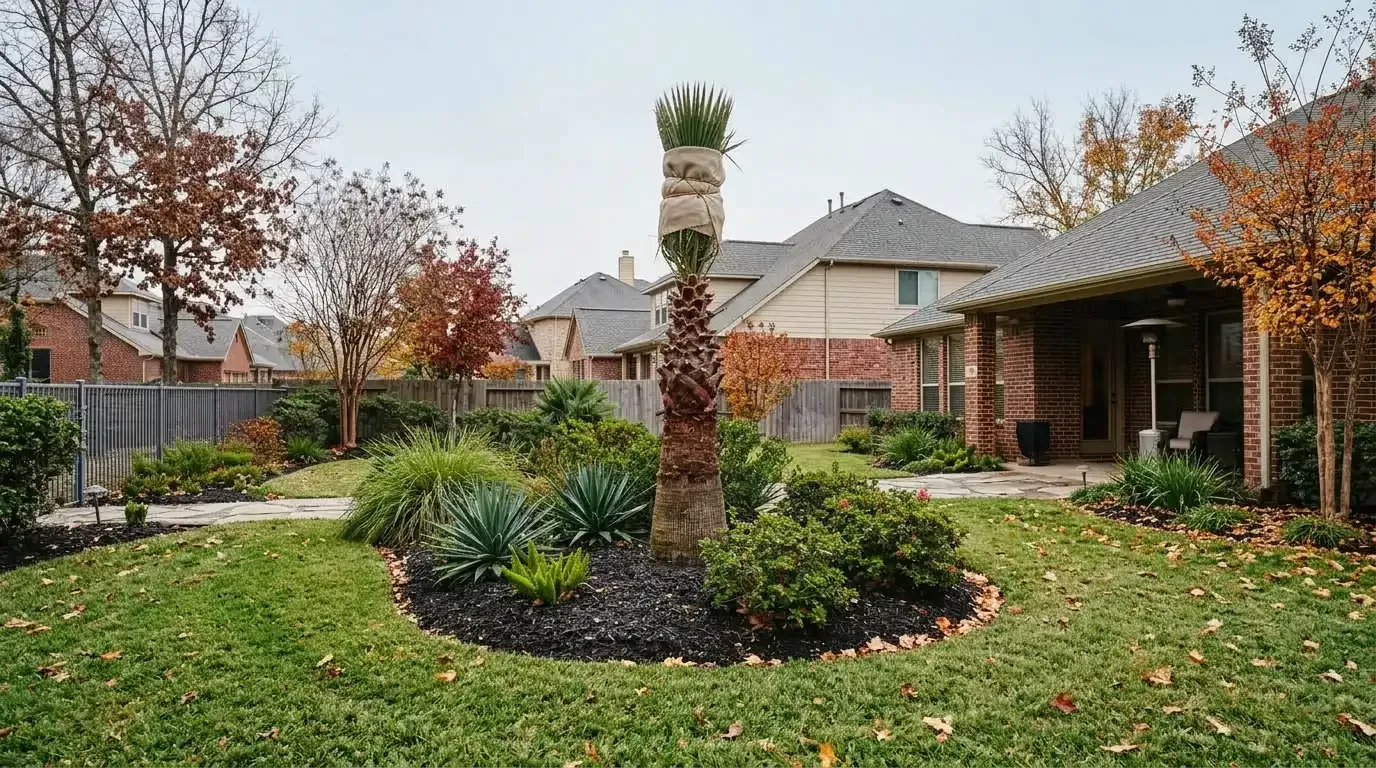
Basic freeze protection for palms includes having burlap, frost cloth, or a palm-specific protective covering on hand for sensitive varieties. Knowing which palms in your landscape are most vulnerable and having the materials and plan ready to act quickly when a freeze is forecast makes a significant difference in outcomes.
For detailed guidance on what to do before and during a Houston freeze, read our post:
Tips for Winter Palm Maintenance
A Note on Timing
The checklist above is designed for September and October in Greater Houston. Some items, particularly fertilization, become less effective as temperatures drop further into fall, so earlier in the window is generally better than later. If you are reading this in November, focus on inspection, drainage, and freeze-prep steps, and plan to address fertilization and mulching at the start of the following spring.
When to Call a Professional
If your palms are already showing signs of stress going into fall, or if you have not been following a consistent care routine through the spring and summer, a professional assessment before winter is strongly recommended. Palms that enter the cool season already weakened are the ones most likely to suffer serious damage or fail to recover from a freeze event.
For more on recognizing the warning signs that a palm needs professional attention, read our post:
Why Are My Palm Trees Dying? Signs Your Palms Are in Decline (https://www.rosehillpalms.com/why-are-my-palm-trees-dying-signs-your-palms-are-in-decline).
Our
Palm Thrive program is designed for exactly this kind of proactive, seasonal approach to palm health. If you want the fall visit, the professional inspection, and the nutritional support handled without managing it yourself, that is what the program is built for.
Conclusion
Fall in Houston is a short but critical window for palm care. The palms that make it through Houston winters in the best condition are the ones that went into the season well-nourished, properly inspected, and free of unresolved summer stress. A few targeted actions in September and October make a meaningful difference in how your palms look and perform through the following spring.
At
Rosehill Palms, we've helped Greater Houston homeowners care for their palms for over fifteen years. Whether you want to follow this checklist yourself or have our team handle the fall care professionally, we are here to help.
Have questions about your palms this fall?
Contact our team or visit us in Tomball to talk through what you are seeing.
Frequently Asked Questions
When should I fertilize my palm trees in the fall in Houston?
September and early October is the right window for fall fertilization in Greater Houston. Apply early enough that the palm can absorb and use the nutrients before growth slows significantly, but not so late that you are pushing new growth into the coldest weeks of the year.
Should I prune my palm trees before winter in Houston?
Only remove fronds that are fully brown and dead. Avoid pruning green or partially green fronds, as palms store essential nutrients in their canopy that they need through winter. Over-pruning before cold weather is one of the most common and damaging mistakes Houston homeowners make with their palms.
How do I protect my palm trees from a Houston freeze?
Preparation is everything. Know which of your palm varieties are most cold-sensitive, have frost cloth or burlap on hand before freeze season, and be ready to act quickly when a freeze is forecast. Palms that are well-nourished and healthy going into winter are significantly more resilient to freeze damage than stressed ones.
Is fall a good time to plant new palm trees in Houston?
Fall can work as a planting window, though spring is generally preferred in Greater Houston. Palms planted in fall have less time to establish their root systems before cooler temperatures slow growth. If you do plant in fall, consistent watering during the establishment period is especially important.
How do I know if my palm needs professional care before winter?
If your palms are showing yellowing fronds, browning tips, stunted growth, or any of the warning signs covered in our 5 Signs Your Palm Trees Need Professional Care post, a professional inspection before winter is strongly recommended. Issues addressed in fall are far more manageable than those discovered after a freeze event.
What is the Palm Thrive program and how does it help with fall care?
Palm Thrive is Rosehill Palms' structured year-round palm maintenance and conditioning program. It includes four professional visits per year, aligned to Houston's seasons, with the fall visit covering visual health inspections, palm-specific nutrition, and root zone assessment to prepare palms for the cooler months ahead. Learn more at rosehillpalms.com/palm-thrive.
Flexible
90-Day
Payment Option!
We believe your dream outdoor space should be within reach. That's why we offer a convenient 90-day in-house payment option to fit your budget.
How It Works:
50% DOWN PAYMENT.
Due upon approval to secure your project, materials, and labor. The remaining balance is divided into 3 equal payments.
Invest in Your Outdoor Space Now
Recent Posts

Proud member of the
Texas Nursery & Landscape Association

Please feel free to contact us via the form below. We will give you an answer as soon as possible!
Contact Rosehill Palms
We will get back to you as soon as possible.
Please try again later.
Rosehill Palms | Developed by WSI Urdaneta Group | All Rights Reserved 2026