
How to Read Your Palm Trees After Summer
How to Read Your Palm Trees After Summer: What Fall Fronds Are Telling You
September arrives in Houston, and the worst of the summer heat is finally easing. For most homeowners, this is the moment to step outside and take a proper look at the yard after months of heat, humidity, and heavy rainfall. And for anyone with palm trees, that look is worth taking carefully.
Palms are resilient, but a long Houston summer leaves its mark. The fronds your palms are wearing right now in early fall are a record of everything the tree went through between May and August. They show where the palm thrived, where it struggled, and where it may need attention before the cooler months arrive.
This guide explains how to read what your palm fronds are telling you this fall, what each pattern means, and what to do about it.
Why Fall Is the Right Time to Assess Your Palms
Most palm problems do not announce themselves immediately. They develop gradually through the growing season, becoming visible only once enough cumulative stress has built up to show in the fronds. By September, that process has had several months to play out, and the fronds your palms carry now reflect it all.
Assessing your palms in early fall is valuable for two reasons. First, it gives you a clear picture of how well your palms came through the summer. Second, and more importantly, it gives you time to act. You can still address issues identified in September and October before winter. Issues discovered after a freeze are significantly harder and more expensive to resolve.
Starting Your Assessment: What to Look For
A good fall palm assessment does not require any special tools or expertise. It requires time, a clear view of the full canopy, and an understanding of what patterns to look for. Here is how to approach it.
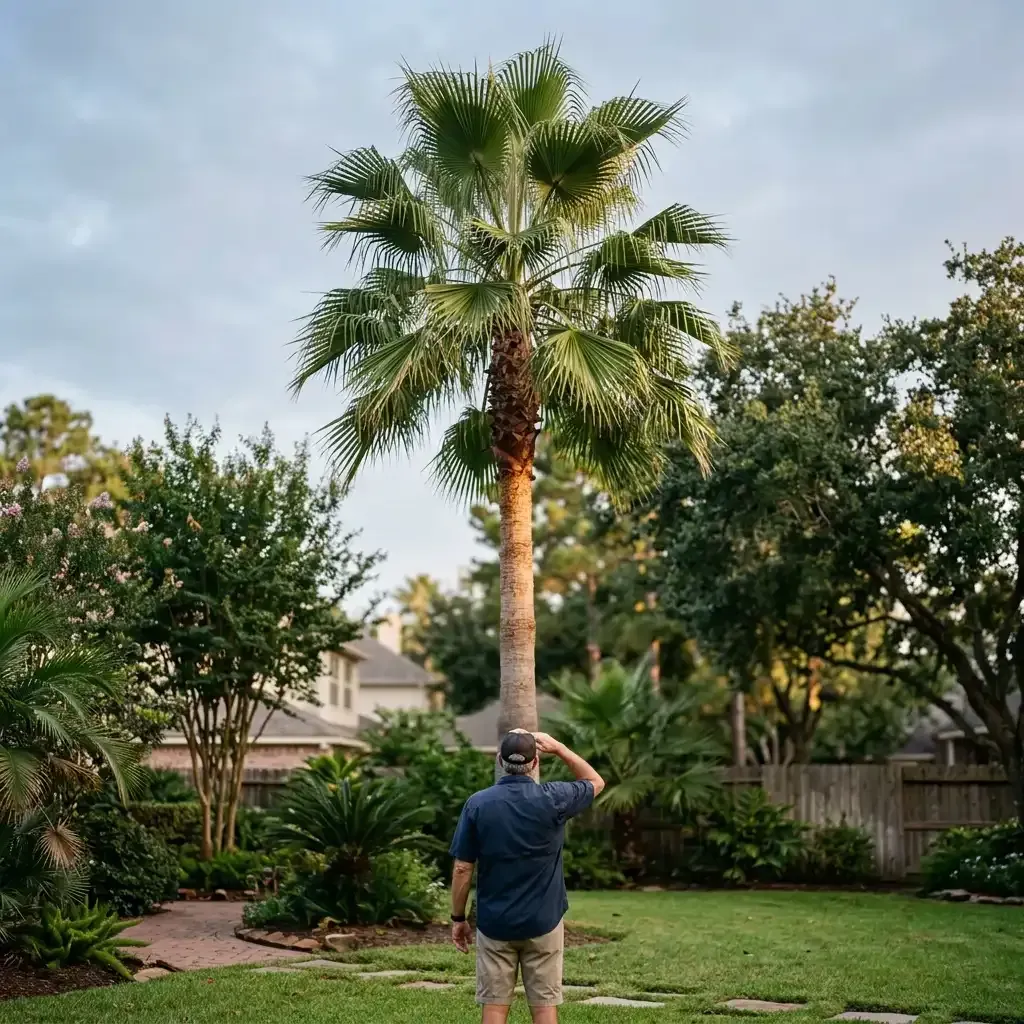
Stand back far enough to see the entire canopy, not just the fronds at eye level. Look at the color and condition of fronds across all levels of the tree, from the lowest and oldest at the bottom to the newest growth emerging from the center at the top. Note any patterns in where discoloration or damage appears, because location matters as much as color when it comes to interpreting what you are seeing.
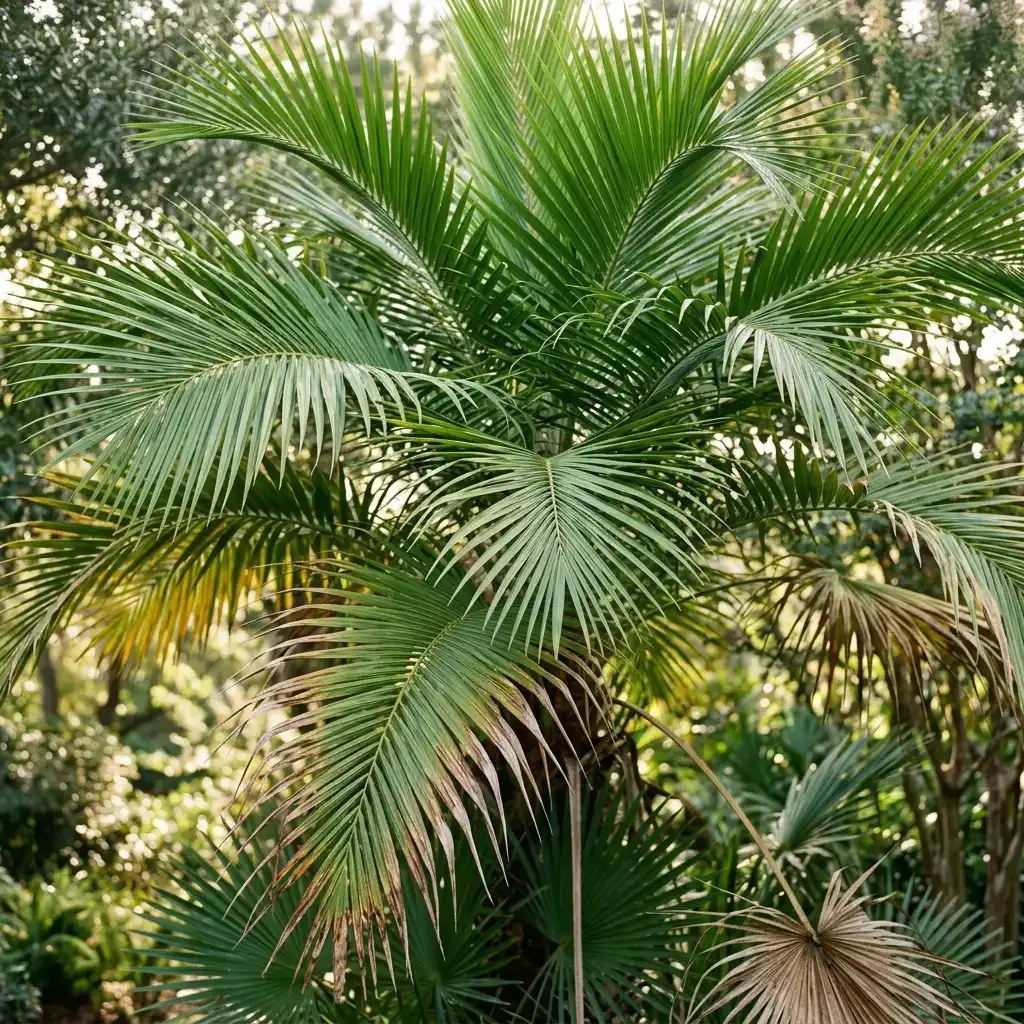
What Your Fronds Are Telling You
Yellowing on Lower Fronds Only
What it looks like: The oldest fronds at the bottom of the canopy have turned yellow or pale green, while the fronds higher up and toward the center of the crown look healthy and green.
What it usually means: This is the most common pattern seen in Houston palms coming out of summer, and in many cases it is a normal part of the natural frond cycle. As palms grow, older lower fronds yellow and die back to make room for new growth above. Some yellowing at the base of the canopy after a demanding summer is expected and not automatically a cause for concern.
When to act: If the yellowing is limited to the two or three lowest fronds and the rest of the canopy looks healthy, monitor it through fall. If yellowing spreads upward through multiple canopy levels, or appears alongside other symptoms, that pattern points to a nutrient deficiency that needs attention.
Yellowing Across Multiple Frond Levels
What it looks like: Yellow or pale fronds appear not just at the bottom of the canopy but across several levels, sometimes including fronds that are relatively new.
What it usually means: Widespread yellowing across multiple canopy levels is the signature of a nutrient deficiency, most commonly magnesium or manganese in Houston's alkaline soils. It can also indicate that the palm's root system has been compromised by overwatering or poor drainage during the summer's heavy rainfall periods, limiting its ability to absorb nutrients even when they are present in the soil.
When to act: Widespread yellowing warrants a fall fertilization with a palm-specific formulation and, if drainage is a concern, an assessment of conditions around the root zone. Left unaddressed, nutritional deficiencies compound from season to season, making palms progressively weaker and more vulnerable to winter damage.
Brown Tips That Spread Inward
What it looks like: The tips of otherwise green fronds are brown and dry, with the browning moving progressively toward the base of the frond. The browning is consistent across the frond rather than appearing in patches.
What it usually means: This pattern is strongly associated with potassium deficiency, one of the most common nutritional issues for palms in Greater Houston. It can also result from salt stress or drought stress during periods of extreme summer heat. Unlike yellowing from magnesium deficiency, this pattern often starts on older fronds and progresses upward through the canopy over time.
When to act: Potassium deficiency does not resolve on its own. It requires targeted treatment with a palm-specific fertilizer that includes potassium, applied consistently over at least one to two growing seasons to see meaningful improvement. The earlier you start treatment, the better the outcome.
For more on this pattern and what it means for your palms, read our post:
5 Signs Your Palm Trees Need Professional Care
Discoloration or Unusual Patterns in New Growth
What it looks like: The newest fronds emerging from the center of the crown look pale, stunted, yellow-green, or show unusual striping or mottling rather than the solid, vibrant green of healthy new growth.
What it usually means: Discoloration in new growth is a more serious signal than yellowing in older fronds, because new growth reflects what is happening in the palm's root system and growing point right now. In Houston's soils, this pattern often signals manganese deficiency, sometimes called frizzle top, which causes new fronds to emerge with stunted, twisted, or pale leaflets. It can also indicate that something is affecting the palm's ability to absorb nutrients at the root level.
When to act: Discoloration in new growth warrants professional assessment. Manganese deficiency requires specific treatment and does not respond well to general palm fertilizer alone. Early identification and treatment give the palm the best chance of recovering before the condition progresses.
Fronds That Are Uniformly Brown and Dead
What it looks like: Entire fronds are fully brown, dry, and hanging down or already shed. No green tissue remains anywhere on the frond.
What it usually means: Fully brown, dead fronds are a normal part of the palm's lifecycle. Every frond has a finite lifespan, and as palms grow, the oldest fronds at the base of the canopy naturally die back. Dead fronds on lower levels of the canopy after a long summer are expected and do not indicate a problem with the palm's health.
When to act: Remove fully dead fronds as part of your fall maintenance. This is the only category of frond you should prune. Removing fronds that are still partially green or haven't fully completed their cycle depletes the palm's nutrient reserves and causes unnecessary stress going into winter.
A Thin or Reduced Canopy
What it looks like: The palm's overall canopy looks smaller or less dense than it did at the start of the season. Fewer fronds are present, and new growth from the center of the crown seems slow or absent.
What it usually means: A reduced canopy after summer usually indicates that the palm has been under significant stress, spending more energy on basic survival than on producing new fronds. Root stress from waterlogging, severe nutrient depletion, or heat stress that exceeded the palm's capacity to compensate can all result in a canopy that looks visibly smaller by fall.
When to act: A noticeably reduced canopy warrants a full assessment of soil conditions, drainage, and nutrition. This is one situation where professional input makes the biggest difference, because you need to identify and address the underlying cause before the palm's condition deteriorates further into winter.
For more on what a declining canopy can mean, read our post:
Why Are My Palm Trees Dying? Signs Your Palms Are in Decline
After the Assessment: What to Do Next
Once you have a clear picture of where your palms stand, the next step depends on what you found.
If your palms look healthy, with vibrant green fronds across most of the canopy and only normal yellowing on the lowest two or three fronds, focus on fall fertilization and refreshing the mulch layer before temperatures drop. Both of those steps are covered in detail in our
Fall Palm Care Checklist for Houston Homeowners
If you notice yellowing across multiple canopy levels, browning frond tips, discoloration in new growth, or a noticeably reduced canopy, address those patterns before winter. Fall is the last window of the year to make meaningful progress on nutritional deficiencies and root zone issues before cooler temperatures slow the palm's ability to respond to treatment.
If you are not sure what you are seeing, or if you want a professional set of eyes on your palms before making decisions, that is exactly what our
Palm Thrive program is designed for. The fall quarterly visit includes a full visual health inspection, targeted nutritional support, and root zone assessment, so you know exactly where your palms stand going into winter and what, if anything, needs attention.
For homeowners who want a one-time professional assessment without a full program commitment, we also offer a standalone Single Service Visit.
One Thing to Watch That Is Easy to Miss
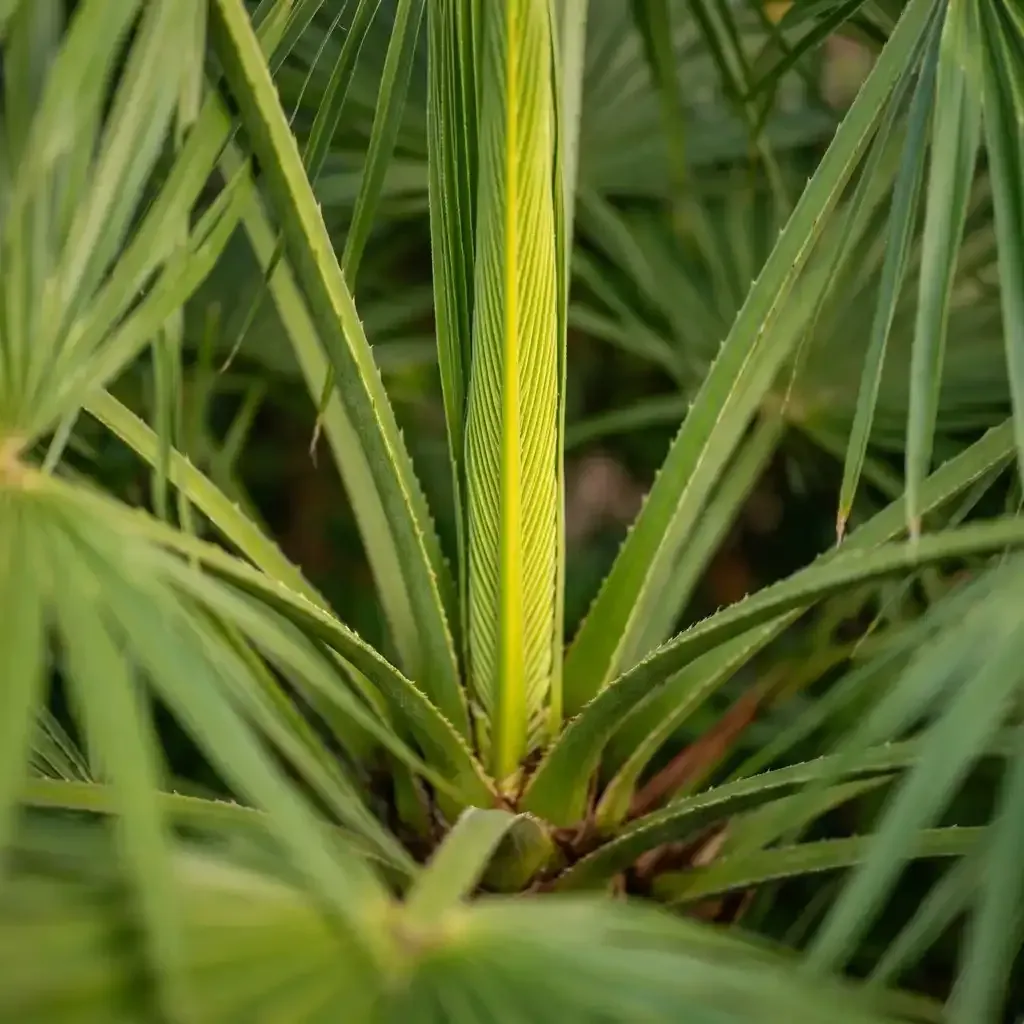
The spear leaf, the tightly rolled new frond emerging from the very center of the crown, is the single most important indicator of a palm's current health. It is also the easiest to overlook because it is at the top of the tree and not always visible from the ground.
If your spear leaf looks healthy, firm, and green, your palm's growing point is in good condition. If it looks brown, wilted, or pulls out easily from the crown, that is a serious warning sign that requires immediate professional attention, regardless of how healthy the rest of the canopy looks.
For more on what spear leaf collapse can mean and how to respond, read our post:
5 Signs Your Palm Trees Need Professional Care
Conclusion
Your palm fronds this fall are not just foliage. They record everything your trees went through during one of the most demanding seasons in Greater Houston. Taking the time to read them carefully in September gives you the information you need to make smart decisions before winter arrives.
Healthy fronds mean your palms came through the summer in good shape and are ready for a straightforward fall care routine. Stressed fronds mean there is still time to act, but that window is shorter than it feels.
At Rosehill Palms, our team has been helping Greater Houston homeowners understand and care for their palms for over fifteen years. If you have questions about what you are seeing in your palms this fall, we are here to help.
Have questions about your palms?
Contact our team or
visit us in Tomball to talk through what you are seeing.
Frequently Asked Questions
Is it normal for palm fronds to turn yellow in the fall in Houston?
Some yellowing on the oldest, lowest fronds is a normal part of the palm's natural frond cycle and is not a cause for concern. Yellowing that spreads across multiple canopy levels, or that appears alongside browning tips or discoloration in new growth, points to a nutritional issue that warrants attention.
What does it mean when palm frond tips turn brown?
Browning that starts at frond tips and moves progressively inward is strongly associated with potassium deficiency in Houston palms. It can also result from salt stress or drought stress. This pattern does not resolve on its own and requires targeted treatment with a palm-specific fertilizer that includes potassium.
Should I cut off yellow or brown palm fronds in the fall?
Only remove fronds that are fully brown and dead, with no remaining green tissue. Yellow fronds and partially green fronds are still active and should be left in place. Palms store essential nutrients in their canopy, and removing fronds too early depletes the reserves the palm needs through winter.
How do I know if my palm's new growth is healthy?
Healthy new fronds emerging from the center of the crown should be a solid, vibrant green with normal leaflet structure. Pale color, stunted or twisted leaflets, or unusual striping in new growth are warning signs that indicate a nutritional deficiency or root zone issue that needs professional assessment.
When is the best time to fertilize palm trees in Houston after summer?
September and early October are the right window for fall fertilization in Greater Houston. This gives palms enough time to absorb and use the nutrients before growth slows significantly in the cooler months, without pushing new growth into the coldest weeks of the year.
What should I do if I am not sure what my palm fronds are telling me?
A professional palm health inspection is the most reliable way to get a clear picture of your palms' condition. At Rosehill Palms, our Palm Thrive program includes a fall quarterly visit with a full visual health inspection, or you can book a standalone Single Service Visit for a one-time assessment. Contact our team
Flexible
90-Day
Payment Option!
We believe your dream outdoor space should be within reach. That's why we offer a convenient 90-day in-house payment option to fit your budget.
How It Works:
50% DOWN PAYMENT.
Due upon approval to secure your project, materials, and labor. The remaining balance is divided into 3 equal payments.
Invest in Your Outdoor Space Now
Recent Posts

Proud member of the
Texas Nursery & Landscape Association

Please feel free to contact us via the form below. We will give you an answer as soon as possible!
Contact Blog Post
We will get back to you as soon as possible.
Please try again later.
Rosehill Palms | Developed by WSI Urdaneta Group | All Rights Reserved 2026