
The Best Small Palm Trees for Houston Yards
The Best Small Palm Trees for Houston Yards
Not every Houston yard has room for a 40-foot palm. But that does not mean smaller spaces have to go without that unmistakable tropical character that only a palm can bring. The good news is that several palm varieties stay compact enough for tight yards, patios, courtyards, and urban lots while still delivering the texture, presence, and visual interest that make palms such a popular landscaping choice in Greater Houston.
This guide covers the best small palm trees for Houston yards, what makes each one a strong choice for the local climate, and how to use them effectively in your outdoor space.
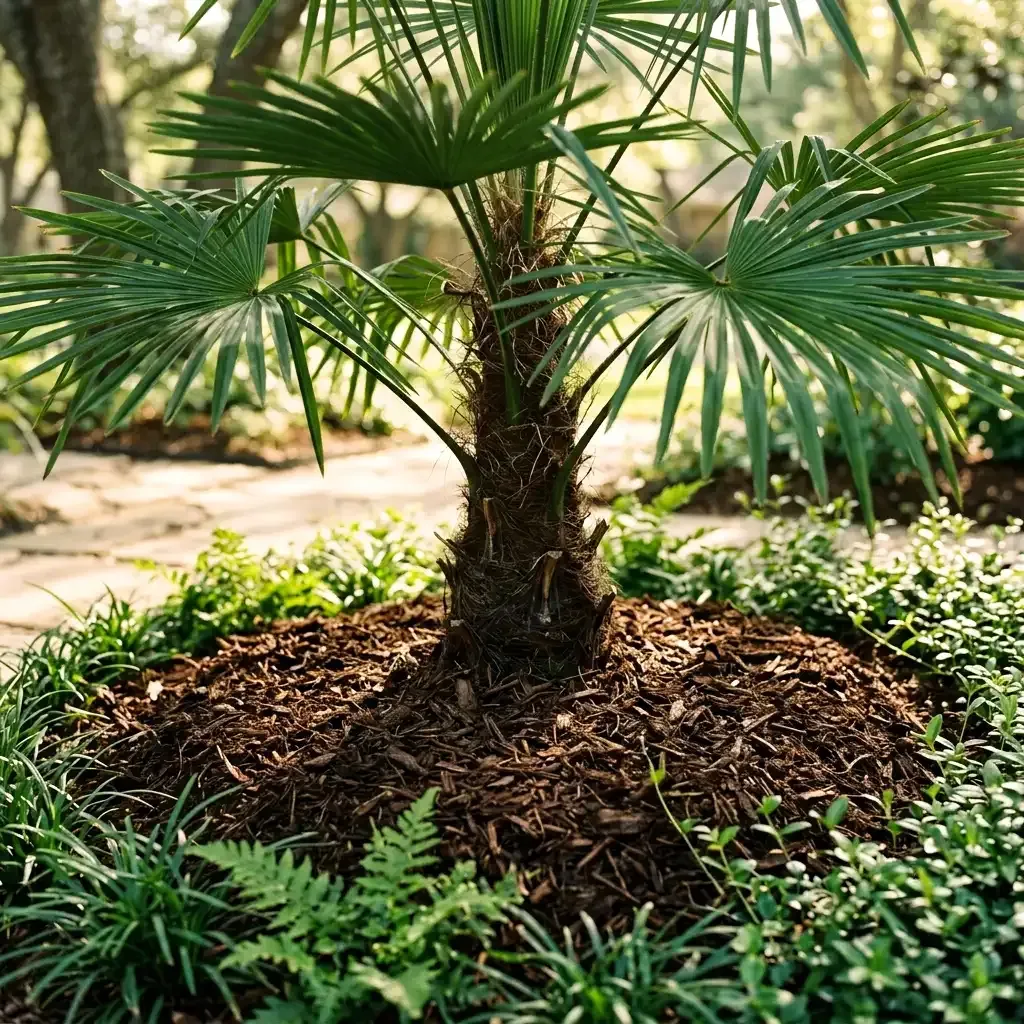
What Counts as a "Small" Palm Tree?
For the purposes of this guide, a small palm is one that reaches a mature height of 15 feet or less, or one that grows slowly enough to stay manageable for many years without dominating a smaller yard. Some varieties on this list are naturally compact. Others can be used as container plants or kept to a manageable size through thoughtful placement.
What they all have in common is suitability for Houston's climate, including the heat, humidity, clay-heavy soils, and the occasional winter freeze that define Greater Houston's growing conditions.
The Best Small Palm Varieties for Houston
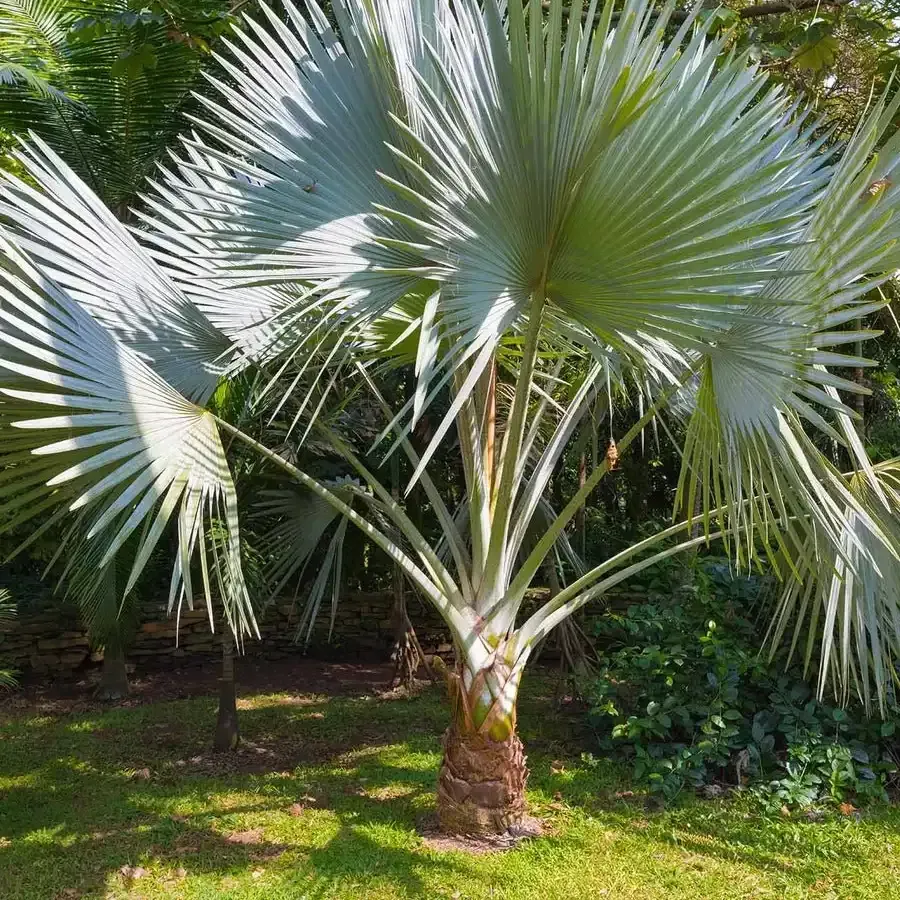
Windmill Palm (Trachycarpus fortunei)
The Windmill Palm is one of the most popular choices for smaller Houston yards, and for good reason. It is one of the most cold-hardy palms available anywhere, tolerating temperatures well below freezing, which makes it exceptionally reliable in Houston's climate where unexpected winter freezes can catch less hardy varieties off guard.
Its growth habit is naturally slender and upright, reaching 10 to 20 feet at maturity with a canopy spread of just 6 to 8 feet. This compact footprint makes it one of the best choices for tight spaces, narrow side yards, or as a vertical accent near a home's entrance. The distinctive fibrous trunk adds texture and character, and the fan-shaped fronds give it a classic tropical silhouette without overwhelming the surrounding landscape.
Care requirements are minimal once established. It prefers full sun to partial shade and handles Houston's clay soils reasonably well, though good drainage is always important.
Dwarf Palmetto (Sabal minor)
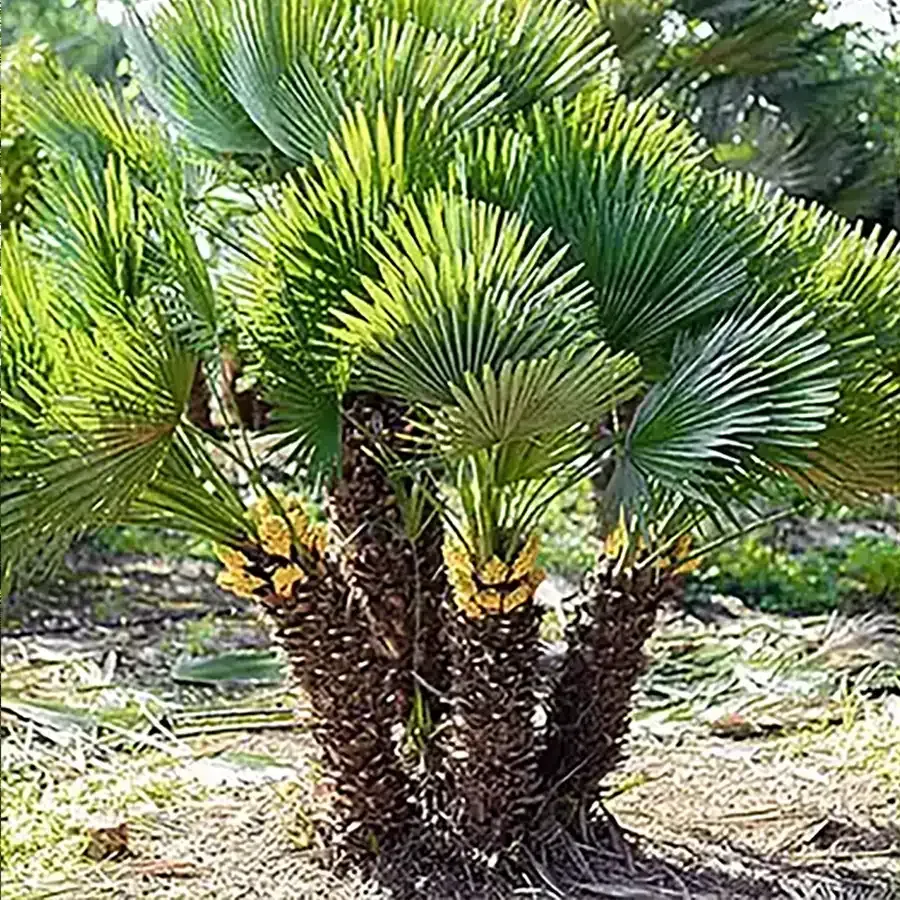
The Dwarf Palmetto is one of the most underrated palms for Houston landscapes. It is a native Texas species, which means it evolved specifically for the heat, humidity, and occasional freeze conditions of the Gulf Coast region. It requires almost no intervention once established, making it one of the lowest-maintenance options on this list.
Unlike most palms, the Dwarf Palmetto is nearly trunkless, producing a low, spreading rosette of large fan-shaped fronds that typically reaches 4 to 6 feet in height. This makes it an excellent choice for shaded areas under taller trees, naturalistic garden designs, and any space where a low, spreading tropical form is more appropriate than a vertical one.
It handles both wet and dry conditions far better than most palms, which is a genuine advantage in Houston's variable rainfall patterns.
Mediterranean Fan Palm (Chamaerops humilis)
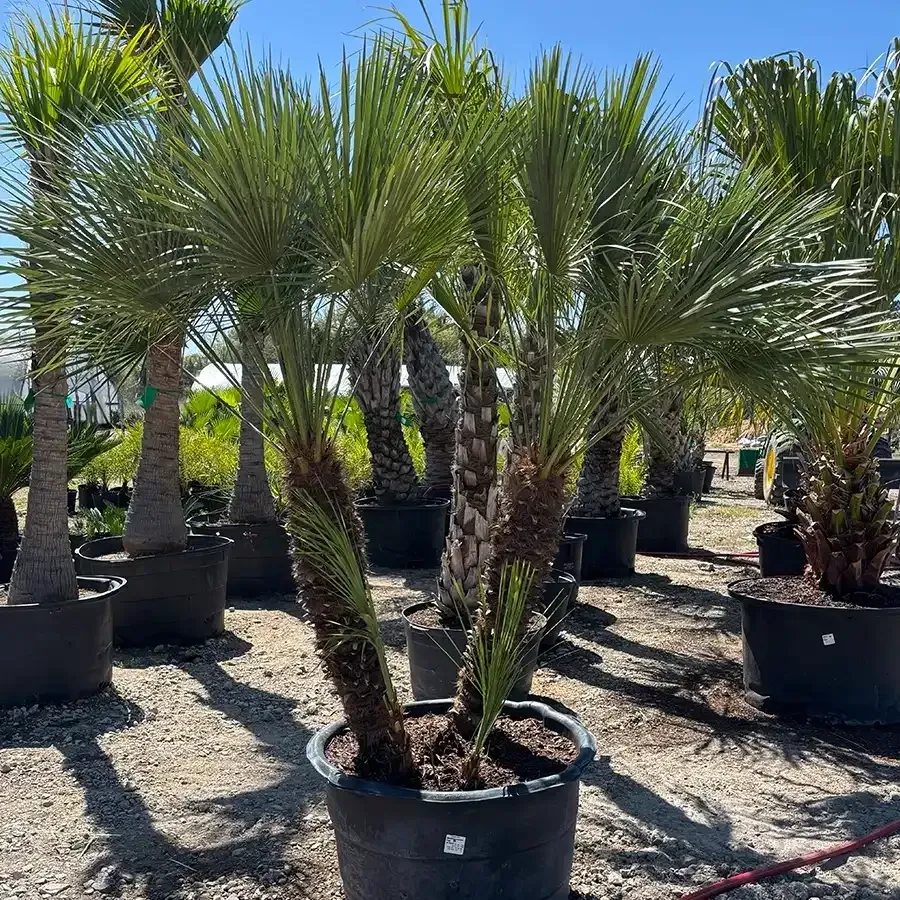
The Mediterranean Fan Palm is a multi-trunked palm that brings a dramatic, sculptural quality to smaller spaces. Rather than growing as a single trunk, it produces a cluster of slender stems that spread outward over time, creating a full, bushy form that reaches 8 to 12 feet in height and can spread 6 to 10 feet wide.
Its stiff, silver-green fronds and naturally varied trunk cluster create a visually interesting focal point that works well in modern and Mediterranean-style landscapes. It is highly drought-tolerant once established, handles alkaline soils well, and is cold-hardy to around 10 to 15 degrees Fahrenheit, making it a resilient choice for Houston winters.
One practical consideration is that it spreads over time as it produces additional stems. Removing suckers as they emerge at the base keeps the plant tighter and more manageable if space is limited.
Pindo Palm (Butia capitata)
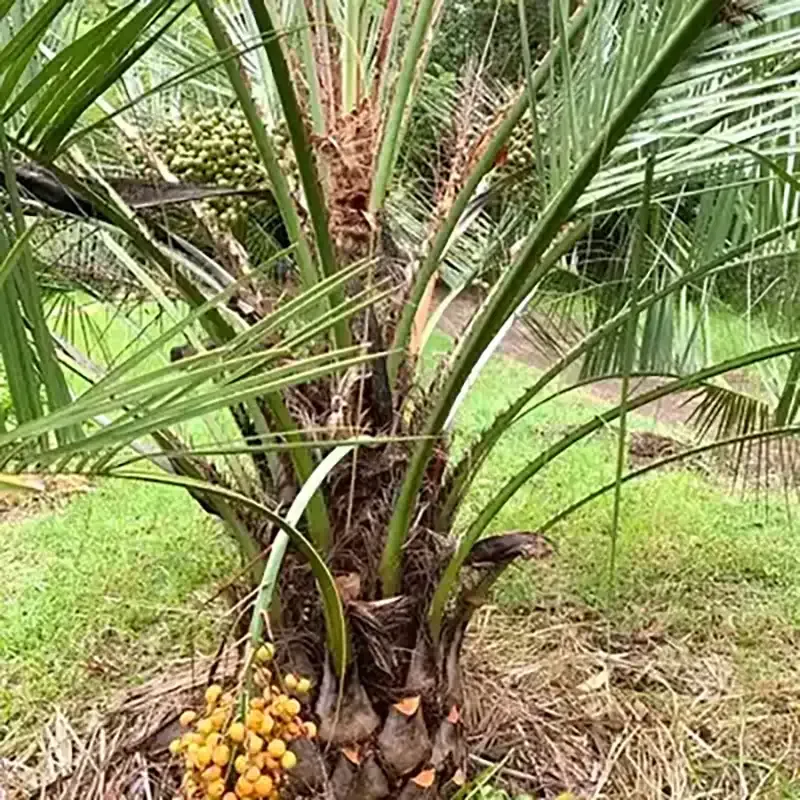
The Pindo Palm, also known as the Jelly Palm, is one of the most striking small palms available for Houston landscapes. Its arching, blue-green feather fronds curve gracefully downward, giving it an elegant, weeping silhouette that stands out in any planting. It grows slowly, typically reaching 15 to 20 feet at maturity over many years, which means it stays at a very manageable size for a long time after planting.
The Pindo Palm is cold-hardy down to approximately 10 to 15 degrees Fahrenheit and handles Houston's summer heat and humidity well. It is also drought-tolerant once established. One bonus: it produces clusters of small, edible orange fruit each summer that are mildly sweet and can be used to make jelly, which is where its common name comes from.
It performs best in full sun with well-drained soil, and its slow growth rate makes it a relatively low-maintenance choice over time.
Sago Palm (Cycas revoluta)
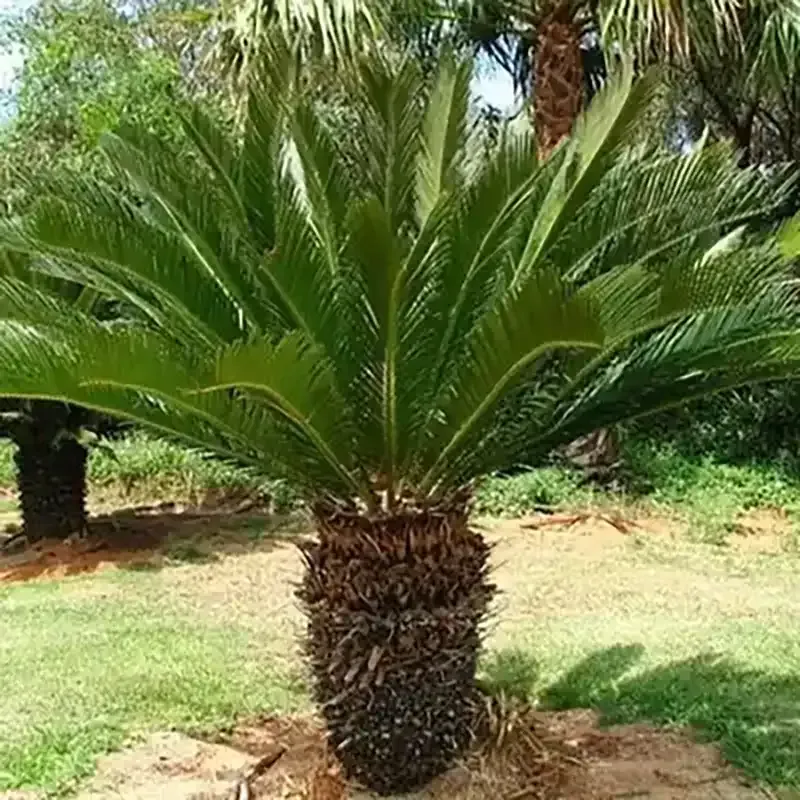
The Sago Palm is one of the most recognizable plants in Houston landscaping. Technically, it is not a true palm but a cycad, a prehistoric plant group that predates flowering plants by hundreds of millions of years. However, its symmetrical, low-growing rosette of dark green feather fronds creates exactly the kind of tropical, architectural form that homeowners associate with palms, and it performs exceptionally well in Houston's climate.
Mature Sago Palms reach 3 to 6 feet in height with a similar spread, growing very slowly over many decades. This makes them ideal for small beds, container planting, and spaces where a compact, permanent focal point is needed.
Care is straightforward in most conditions, though Houston's humidity can invite Asian Cycad Scale, a pest that requires monitoring and treatment. Applying horticultural oil every six months and ensuring good drainage helps keep Sago Palms healthy and pest-free.
One important note: all parts of the Sago Palm are highly toxic to pets and humans if ingested. Placement should take this into account, particularly in households with dogs or small children.
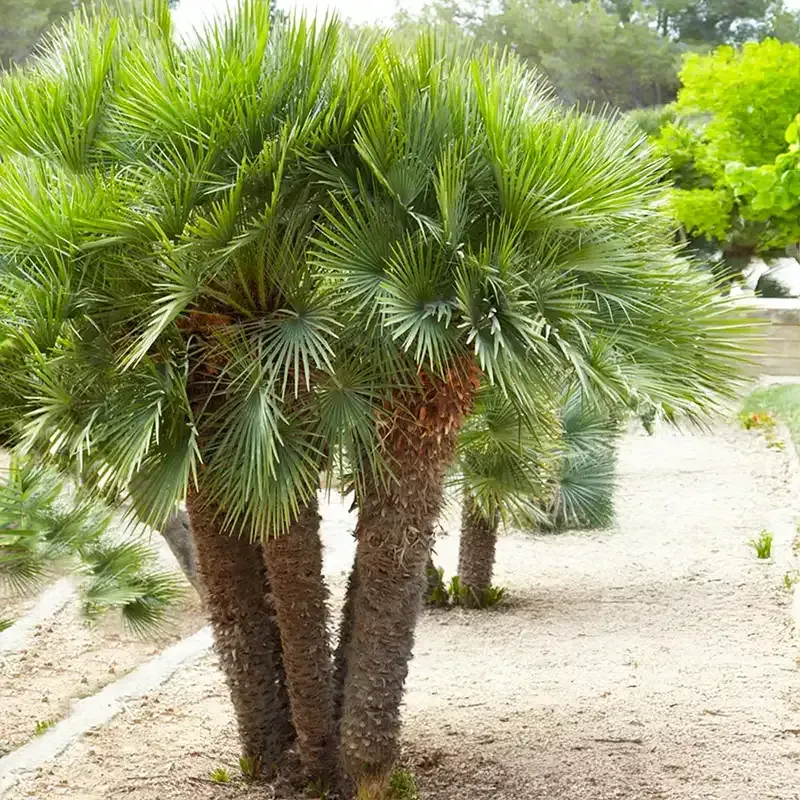
European Fan Palm (Chamaerops humilis var. cerifera)
Closely related to the Mediterranean Fan Palm, the European Fan Palm is a slightly more compact and often more silvery-blue variety that brings excellent cold hardiness and a refined, architectural look to smaller Houston yards. It tolerates temperatures as low as 5 to 10 degrees Fahrenheit, making it one of the hardiest options on this list.
Its compact, multi-trunked form typically reaches 6 to 10 feet in height and works beautifully in containers, raised planters, and small accent beds. The silvery-blue color of its fronds is particularly striking when placed against darker foliage or a light-colored wall.
How to Use Small Palms Effectively in Your Houston Yard
Choosing the right variety is only part of the equation. How and where you place small palms in your landscape determines how much visual impact they deliver.
Entryway and Doorway Accents
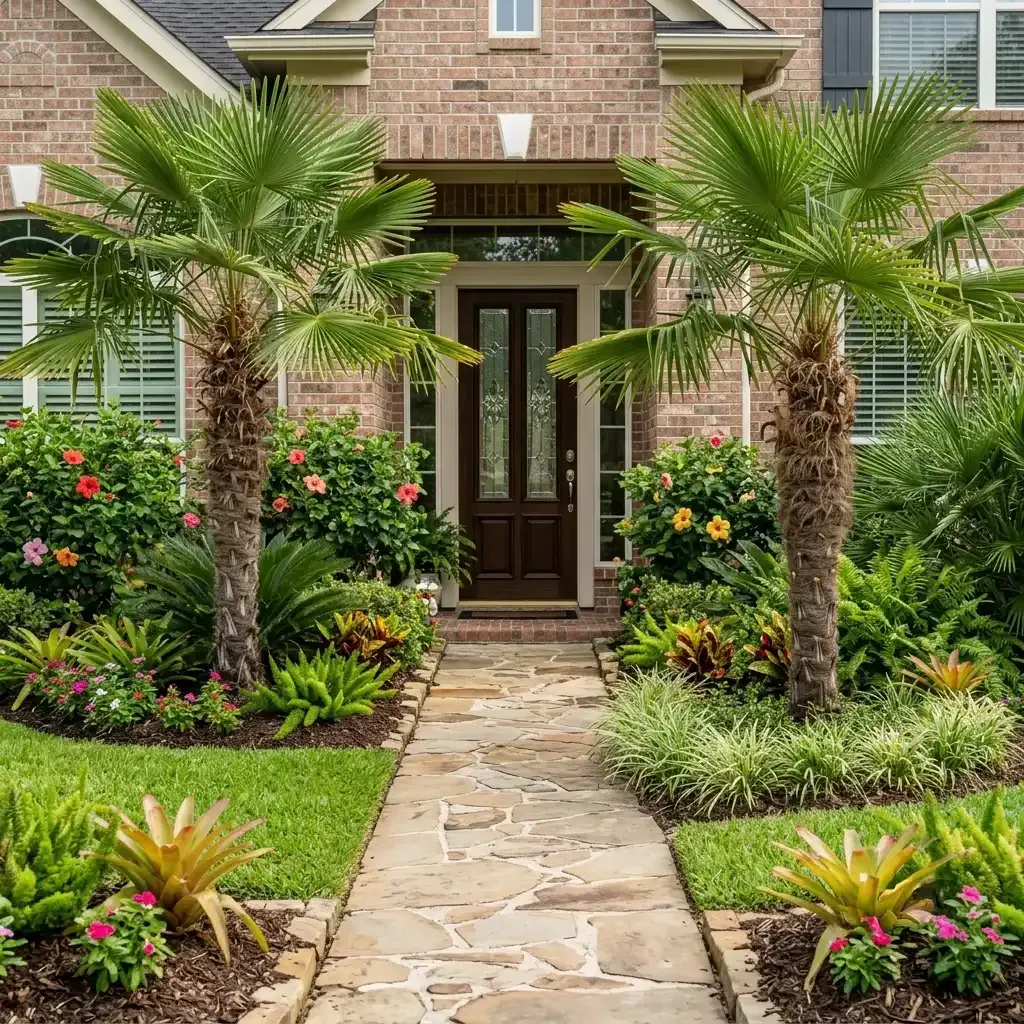
A pair of Windmill Palms or Mediterranean Fan Palms flanking a front door creates an elegant, welcoming entrance without overwhelming the scale of a smaller home. Their vertical or multi-trunked forms frame the entryway naturally and stay in proportion with the surrounding architecture.
Container Planting for Patios and Courtyards
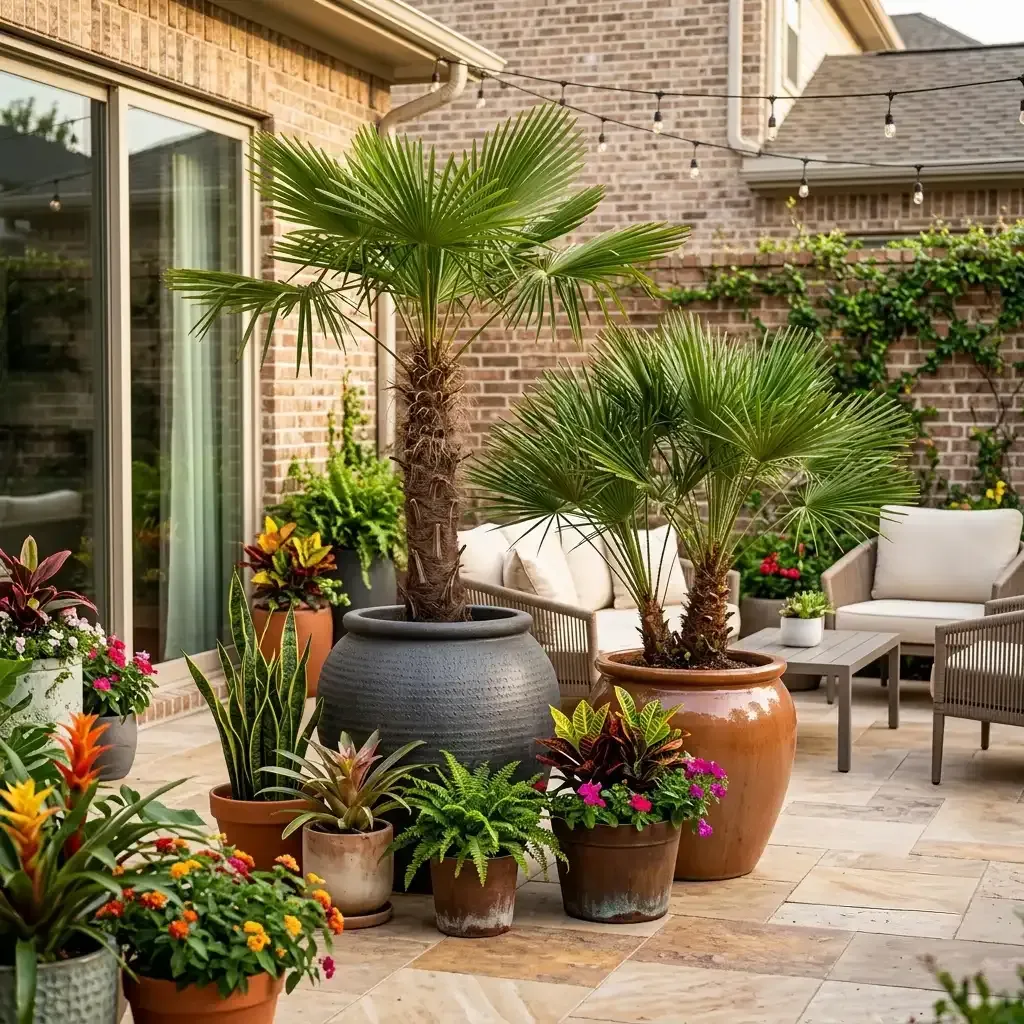
Many small palms perform well in large containers, which is ideal for Houston homeowners with patios, courtyards, or limited ground planting space. Sago Palms, Mediterranean Fan Palms, and Windmill Palms all adapt well to container growing. Use a large pot with excellent drainage, a quality potting mix, and palm-specific fertilizer to keep container palms healthy and vigorous.
Layered Planting Under Taller Trees
The Dwarf Palmetto is particularly well-suited for shaded or semi-shaded positions under the canopy of larger trees. Its low, spreading form fills in naturally under taller specimen palms or shade trees, creating a layered, lush tropical effect without competing for vertical space.
Privacy Screening Along Fences
A row of Windmill Palms planted along a fence or property line creates a natural privacy screen with a tropical aesthetic. Their upright habit and moderate spread make them easy to space evenly without overcrowding, and they grow tall enough over time to provide genuine screening without spreading aggressively into the yard.
Small Palm Care Essentials for Houston
Regardless of which variety you choose, a few fundamental care practices make a significant difference in how small palms establish and perform in Houston's conditions.
Drainage is the single most important factor. Houston's clay-heavy soils drain slowly, and palms sitting in saturated soil develop root stress and are far more vulnerable to disease. Amending the planting area with sand or organic matter, or building a slightly raised planting bed, helps significantly.
Fertilization with a palm-specific slow-release formula, applied two to three times per year, provides the magnesium, potassium, and manganese that Houston's soils typically lack. Even low-maintenance varieties benefit from this foundational nutrition.
Pruning should be minimal. Remove only fully brown, dead fronds and avoid cutting any fronds that are still partially green, as palms store nutrients in their canopy.
For homeowners who want professional oversight of their palms' health throughout the year, our
Palm Thrive program provides quarterly visits, visual health inspections, and palm-specific nutrition, keeping palms of all sizes in their best condition across every Houston season.
For more on what year-round palm care looks like in practice, read our guide:
Why Palm Trees in Houston Need Year-Round Care (Not Just Winterization)
Find Your Perfect Small Palm at Rosehill Palms
Finding a healthy, well-grown palm makes a meaningful difference in how quickly it establishes and how well it performs long-term. At our
Palm Trees selection and
Garden Center in Tomball, we carry a range of palm varieties suited to Houston's conditions, along with the expertise to help you choose the right one for your space, soil, and sun exposure.
If you would like help incorporating small palms into a larger landscape design, our
Landscaping Services team designs and installs custom landscapes throughout the Greater Houston area, from initial concept through full installation.
For commercial properties looking to add palm character to courtyards, entrances, or common areas, our
Commercial Landscaping Services
team brings the same expertise to larger-scale projects.
Conclusion
A smaller yard does not mean settling for less. Houston's climate supports a genuinely impressive range of compact palm varieties, from the cold-hardy Windmill Palm and the native Dwarf Palmetto to the sculptural Mediterranean Fan Palm and the elegant Pindo Palm. Each one brings its own character to a landscape, and all of them are well-suited to the heat, humidity, and occasional freeze conditions that define Greater Houston.
The key is matching the right variety to your space, planting conditions, and long-term goals, and giving it the foundational care it needs to establish well. Get those two things right, and a small palm can become one of the most rewarding plants in your yard.
Ready to find the right small palm for your space? Visit us at Rosehill Palms in Tomball, browse our
Palm Trees selection online, or
contact our team to talk through your options.
Frequently Asked Questions
What is the smallest palm tree I can grow in Houston?
The Dwarf Palmetto is one of the smallest true palms suited to Houston's climate, typically reaching just 4 to 6 feet in height. The Sago Palm, while technically a cycad rather than a true palm, stays similarly compact and is widely available in Greater Houston.
Can I grow small palm trees in containers in Houston?
Yes. Several varieties on this list perform well in large containers, including Windmill Palm, Mediterranean Fan Palm, and Sago Palm. Use a container with excellent drainage, a palm-specific potting mix, and fertilize regularly, as container palms dry out faster than those planted in the ground.
What is the most cold-hardy small palm for Houston?
The Windmill Palm and the European Fan Palm are among the most cold-hardy small palms available, both tolerating temperatures as low as 5 to 15 degrees Fahrenheit. This makes them highly reliable choices for Houston's occasional winter freeze events.
How fast do small palm trees grow in Houston?
Growth rates vary significantly by variety. Windmill Palms grow at a moderate pace of around 6 to 12 inches per year. Pindo Palms are notably slow, adding just a few inches per year. Sago Palms are among the slowest, sometimes growing only 1 inch per year. Houston's long, warm growing season generally supports faster establishment than cooler climates.
Are small palm trees good for privacy screening in Houston?
Windmill Palms in particular work well for privacy screening when planted in a row along a fence or property line. Their upright habit and moderate spread allow even spacing without overcrowding, and they grow tall enough over time to provide meaningful visual screening.
Do small palms need the same fertilization as large palms?
Yes. Small palms have the same nutritional needs as larger varieties and benefit from palm-specific fertilization with magnesium, potassium, and manganese two to three times per year. Houston's alkaline, clay-heavy soils deplete these nutrients over time regardless of the palm's size.
Flexible
90-Day
Payment Option!
We believe your dream outdoor space should be within reach. That's why we offer a convenient 90-day in-house payment option to fit your budget.
How It Works:
50% DOWN PAYMENT.
Due upon approval to secure your project, materials, and labor. The remaining balance is divided into 3 equal payments.
Invest in Your Outdoor Space Now
Recent Posts
Proud member of the
Texas Nursery & Landscape Association

Please feel free to contact us via the form below. We will give you an answer as soon as possible!
Contact Rosehill Palms
We will get back to you as soon as possible.
Please try again later.
Rosehill Palms | Developed by WSI Urdaneta Group | All Rights Reserved 2026