
How to Create a Low-Maintenance Tropical Backyard in Houston
How to Create a Low-Maintenance Tropical Backyard in Houston
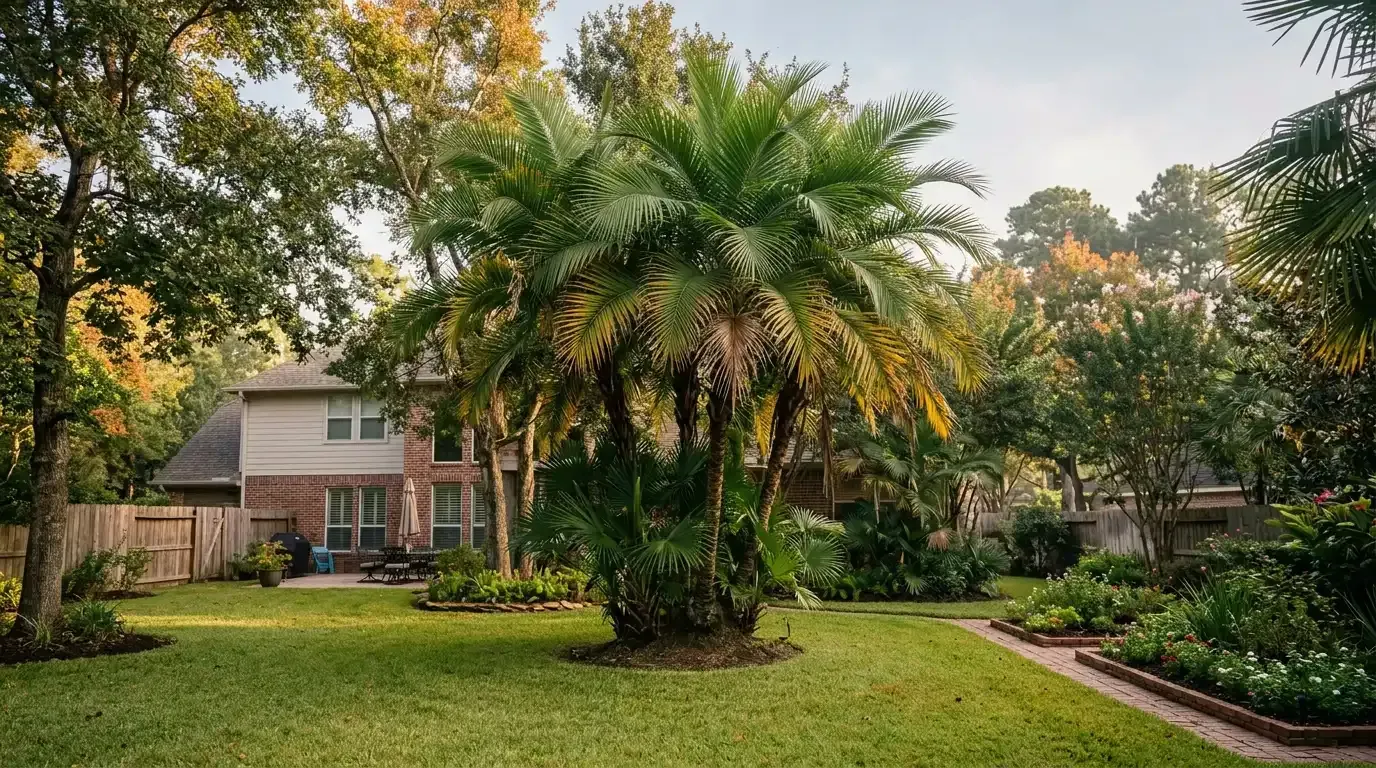
There is something about a well-designed tropical backyard that feels like a permanent vacation. Lush palms, layered greenery, warm textures, and a sense of privacy that makes you forget you are five minutes from the highway. The good news for Houston homeowners is that this kind of outdoor space is genuinely achievable here, and it does not have to mean spending every weekend maintaining it.
Houston's climate, which can be challenging for many plants, is actually a significant advantage for tropical landscaping. The heat, humidity, and long growing season that make traditional lawns so demanding are exactly the conditions that allow tropical and subtropical plants to thrive with very little help once they are established.
This guide covers how to design a low-maintenance tropical backyard in Houston, which plants to choose, and how to put it all together so it looks great year-round without becoming another chore.
Why Houston Is Perfect for Tropical Landscaping
Most tropical plants evolved in climates with long, hot summers, high humidity, and regular rainfall. Sound familiar? Houston's subtropical climate sits in USDA Hardiness Zones 9a and 9b, which means a wide range of tropical and near-tropical plants can be grown here that simply are not possible in most of the United States.
The key to low-maintenance success is choosing plants that are not just tropical in appearance but genuinely adapted to Houston's specific conditions, including the occasional winter freeze, clay-heavy soils, and periods of intense summer heat. Plants that fight the environment require constant intervention. Plants that suit it largely take care of themselves.
The Foundation: Choosing the Right Palms
No plant defines a tropical backyard quite like a palm tree, and Houston's climate supports a wide variety of palm species that bring instant character to any landscape. The key is choosing varieties that perform well in local conditions and do not demand excessive maintenance.
Phoenix Sylvestris (Silver Date Palm)
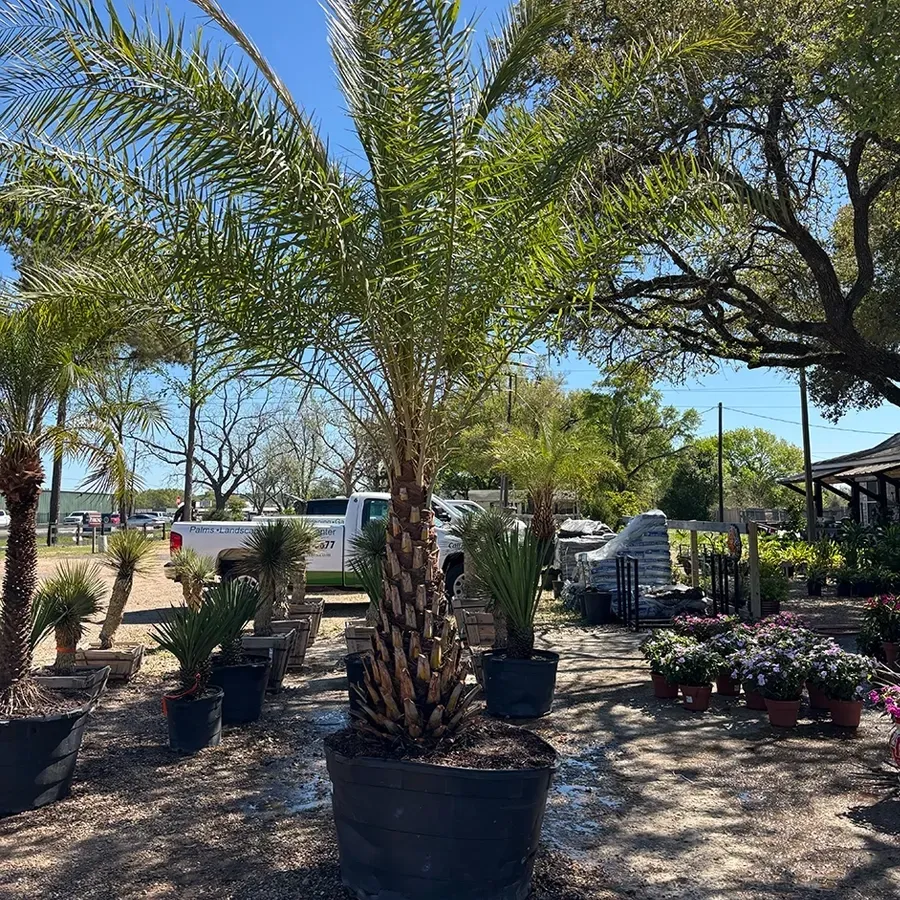
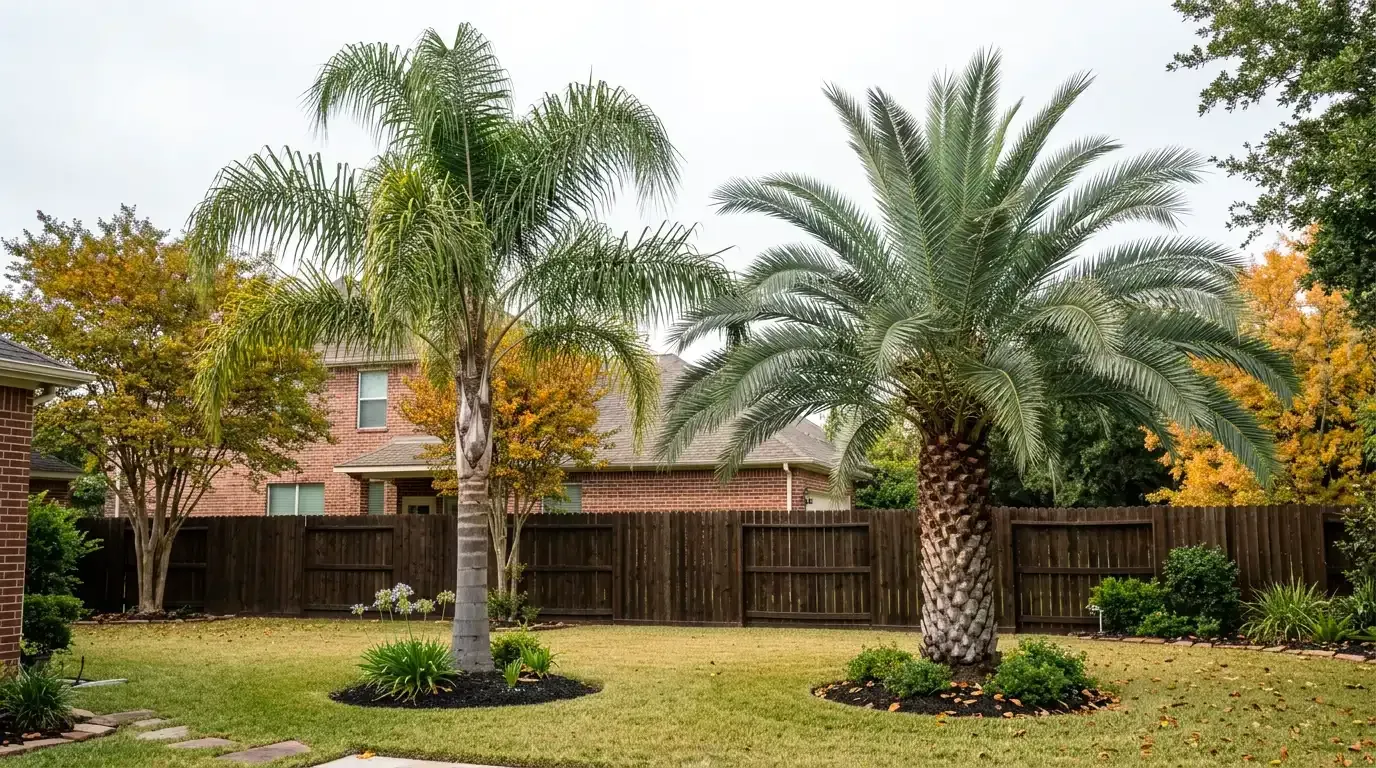
The Phoenix Sylvestris is one of the most striking palms available to Houston homeowners. Its towering trunk, distinctive diamond-patterned bark, and sweeping silver-green fronds create a focal point that transforms any backyard into a memorable space. Once established, it is highly drought-tolerant, cold-hardy down to around 15 degrees Fahrenheit, and adapts well to Houston's soils with minimal intervention.
For design purposes, it works beautifully as a specimen tree in an open lawn, as a poolside anchor, or as a flanking element at a driveway entrance. A single well-placed Phoenix Sylvestris can define the entire character of a backyard landscape.
For a complete guide to this variety, read our post:
Phoenix Sylvestris: The Complete Guide to the Silver Date Palm
Windmill Palm (Trachycarpus fortunei)
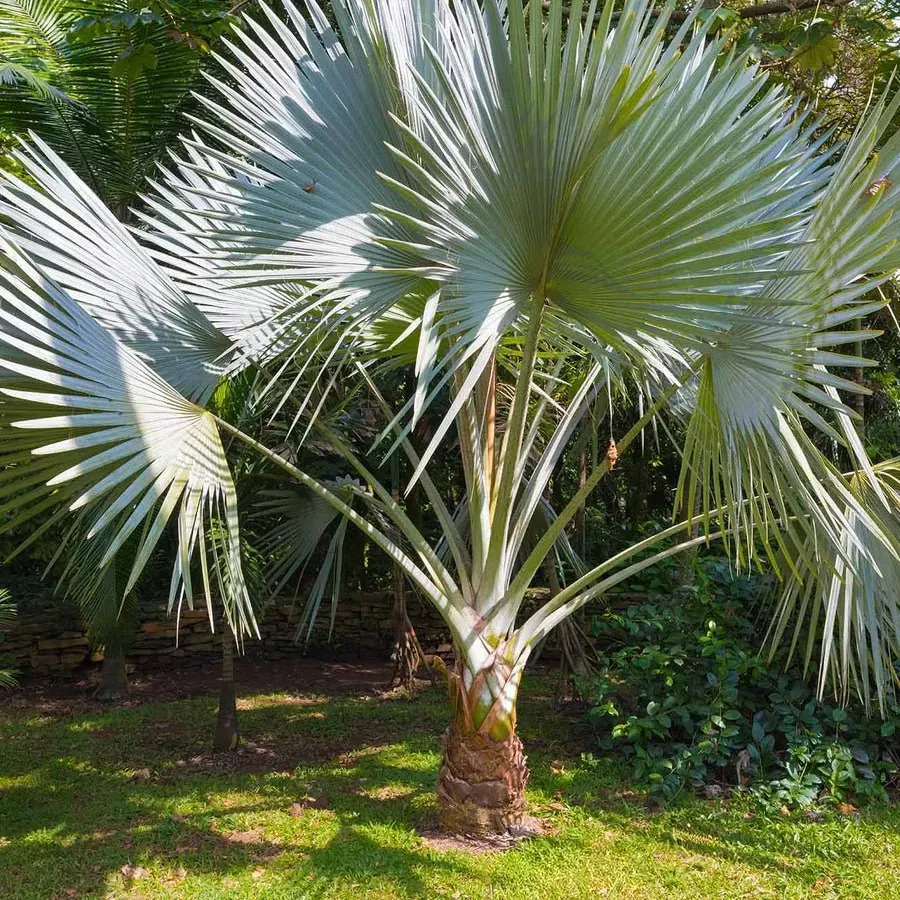
The Windmill Palm is one of the most cold-hardy palms available, tolerating temperatures well below freezing, which makes it an excellent choice for Houston homeowners who want tropical character without worrying about winter damage.
Its compact, upright habit and distinctive fibrous trunk make it a great fit for smaller yards or as part of a grouped planting.
Queen Palm (Syagrus romanzoffiana)
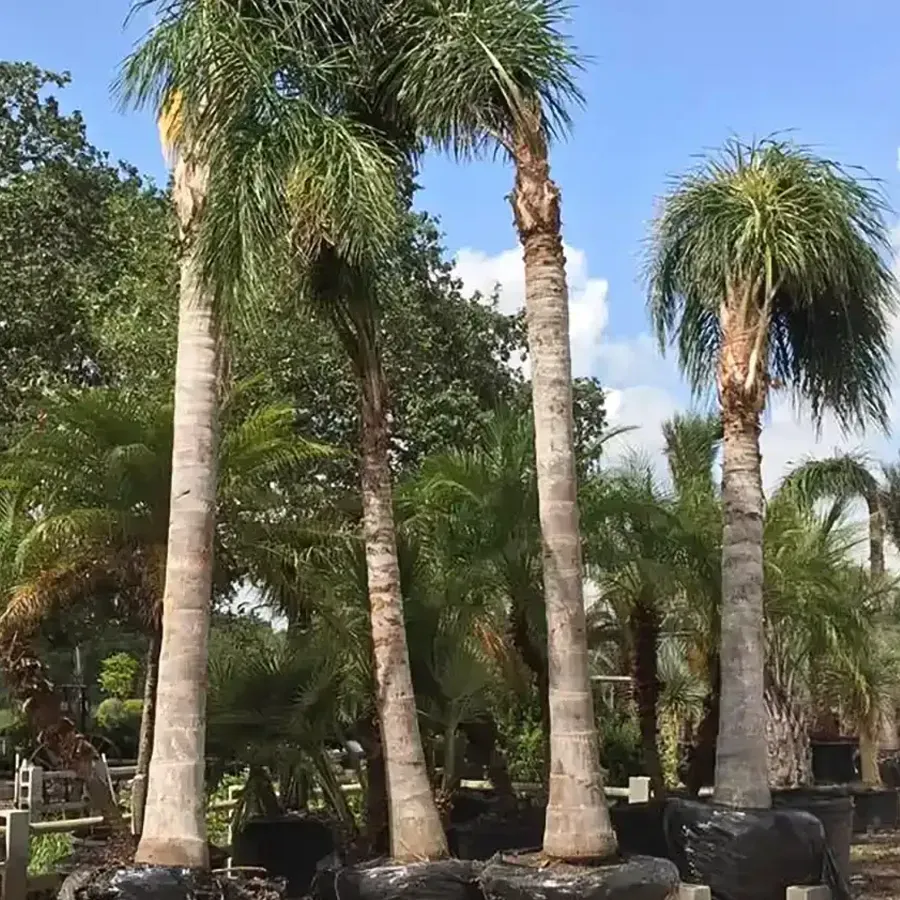
The Queen Palm is a popular choice for its graceful, feathery fronds and moderate growth rate. It works especially well in poolside settings and grouped plantings.
In Houston, it benefits from regular palm-specific fertilization, as it is prone to nutrient deficiencies in alkaline soils. Still, its visual impact makes it a rewarding choice for homeowners willing to give it that attention.
Sabal Palm (Texas State Tree)
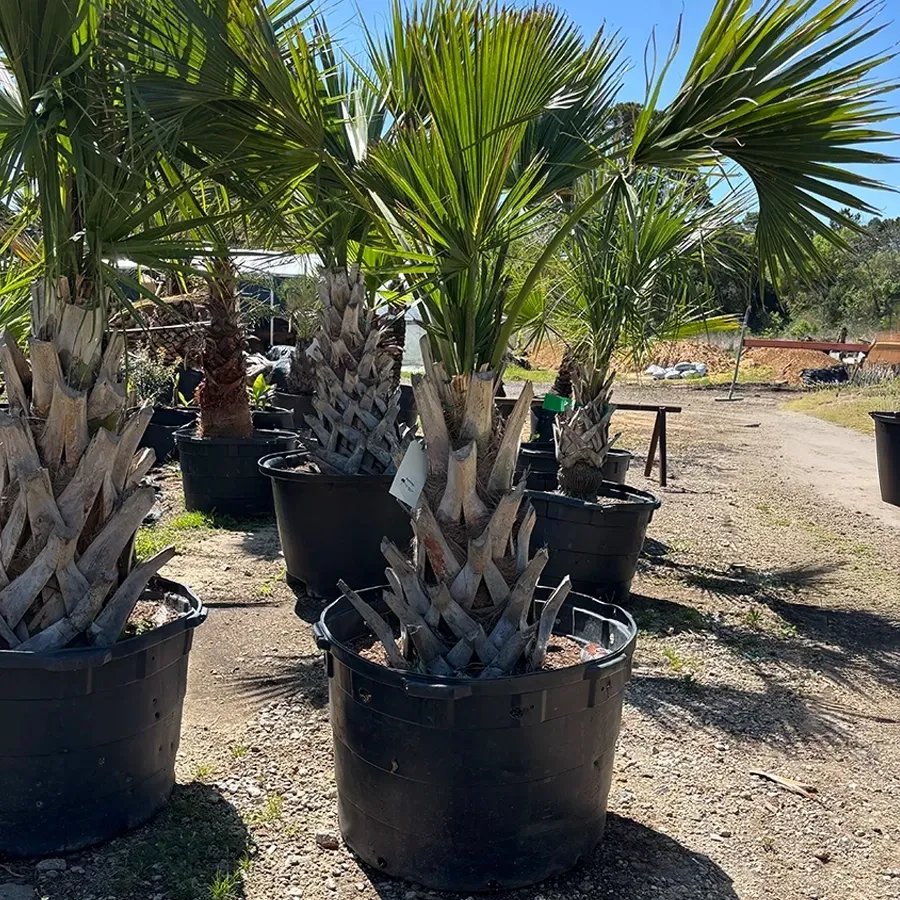
The Sabal Palm is one of the most low-maintenance options available. It is native to coastal Texas and naturally adapted to the region's heat, humidity, and occasional freeze events. Its broad, fan-shaped fronds create a classic tropical silhouette with almost no intervention once established.
Browse our full selection of palm varieties at
Palm Trees
The Layers: Building a Tropical Garden Around Your Palms
A truly lush tropical backyard is not just about palms. The key to that immersive, resort-like feel is layering, combining palms and tall canopy plants with mid-level tropical shrubs and low-growing ground covers that fill in the space and create depth.
Mid-Level Tropical Plants for Houston
Bird of Paradise
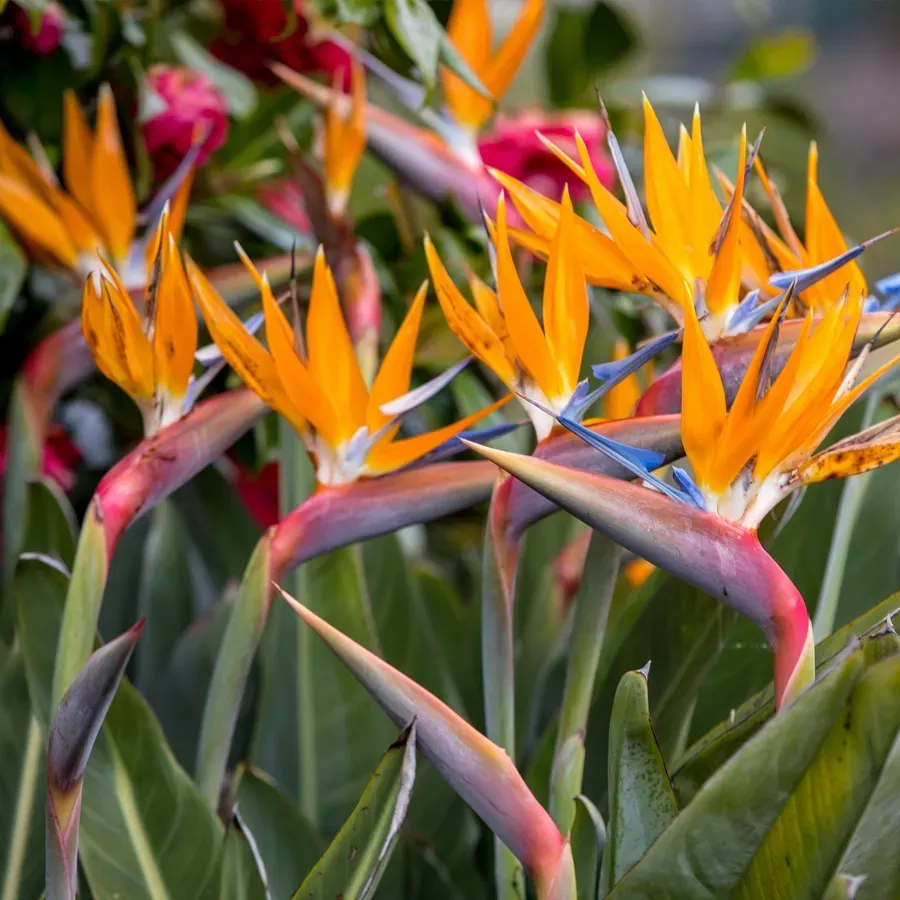
Bird of Paradise (Strelitzia reginae) is one of the most reliable performers in Houston's climate. Its bold, upright form and striking orange-and-blue flowers add dramatic color without demanding much attention. It thrives in full sun and handles Houston's summer heat well.
Dwarf Bougainvillea
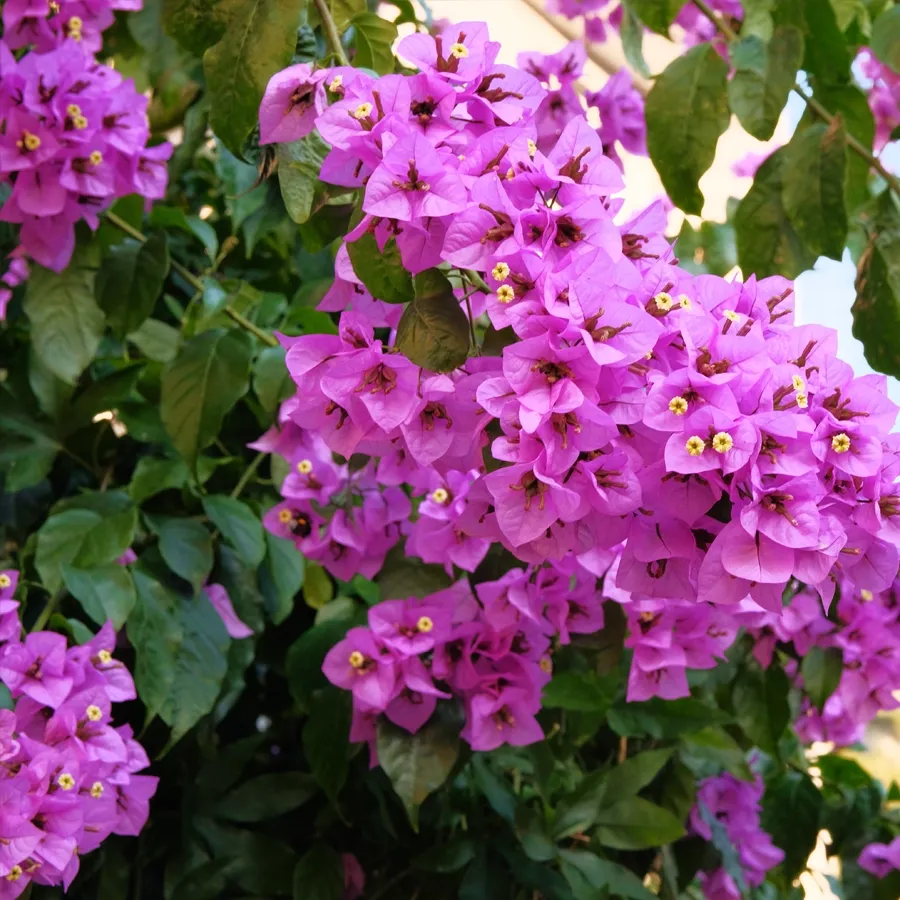
Dwarf Bougainvillea brings vivid color in shades of magenta, orange, and red, and thrives in hot, sunny conditions with minimal water once established. It is one of the best choices for adding consistent seasonal color to a tropical landscape without the need for regular replanting
Firebush
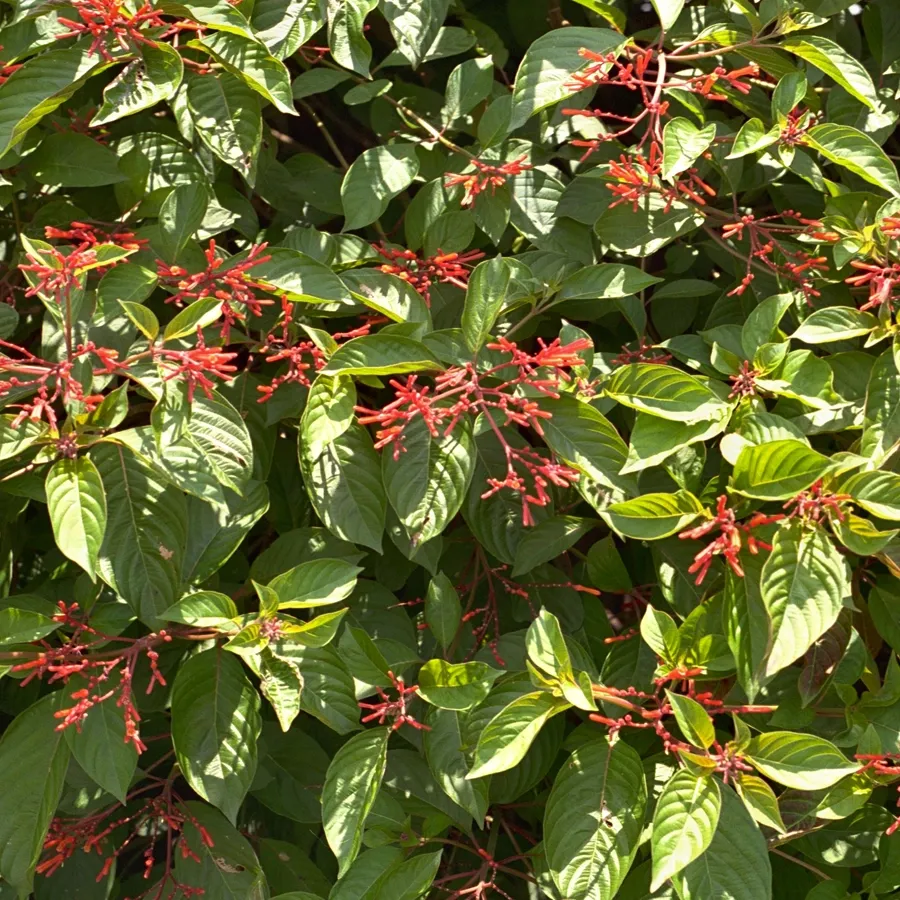
Firebush (Hamelia patens) is a Texas-friendly tropical shrub that produces clusters of orange-red flowers throughout the warm months, attracts pollinators, and requires very little care. It dies back in winter but returns reliably in spring.
Canna Lily brings bold, tropical foliage and tall flower spikes in red, orange, yellow, and pink. It spreads naturally over time, filling in gaps in a tropical planting bed with minimal effort.
Canna Lily
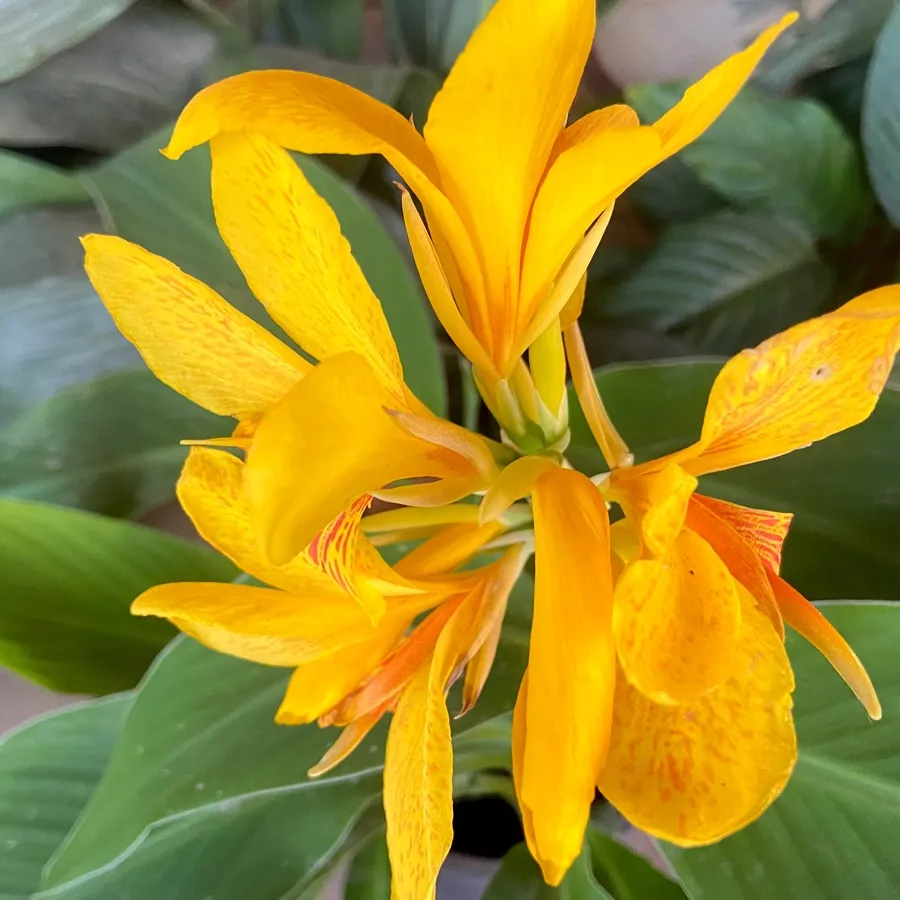
Canna Lily brings bold, tropical foliage and tall flower spikes in red, orange, yellow, and pink. It spreads naturally over time, filling in gaps in a tropical planting bed with minimal effort.
Ground Covers and Low-Growing Plants
Asian Jasmine
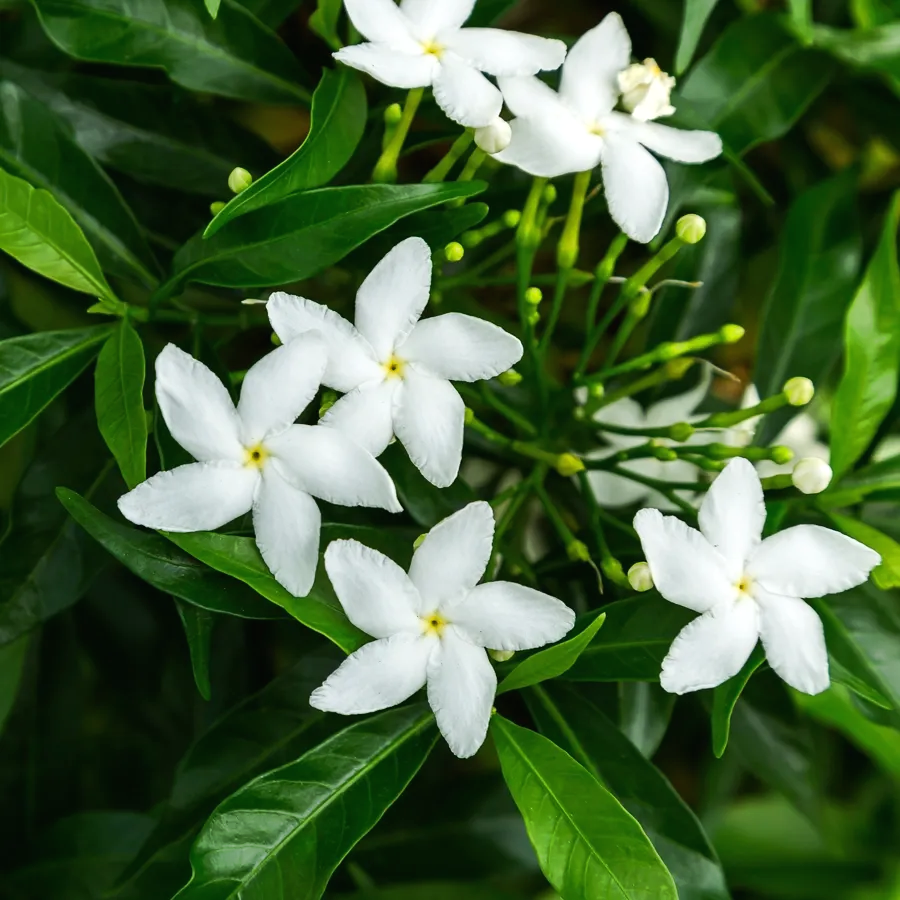
Asian Jasmine is one of the most popular ground covers in Houston for good reason. It spreads quickly, stays green year-round, and requires far less water and maintenance than traditional turfgrass.
It is an excellent alternative to lawn in areas under palms where grass struggles to grow.
Liriope
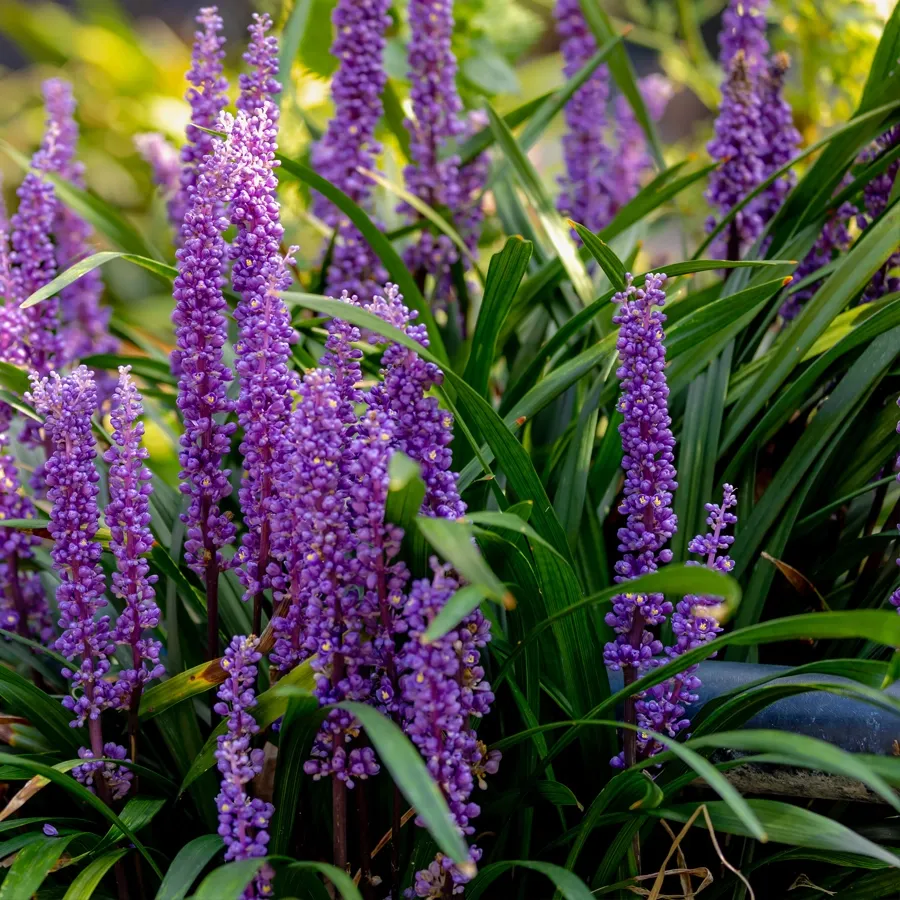
Liriope (Monkey Grass) is another reliable, low-maintenance ground cover that handles Houston's heat and humidity well, works in both sun and shade, and creates clean edges around planting beds and pathways.
Plumbago
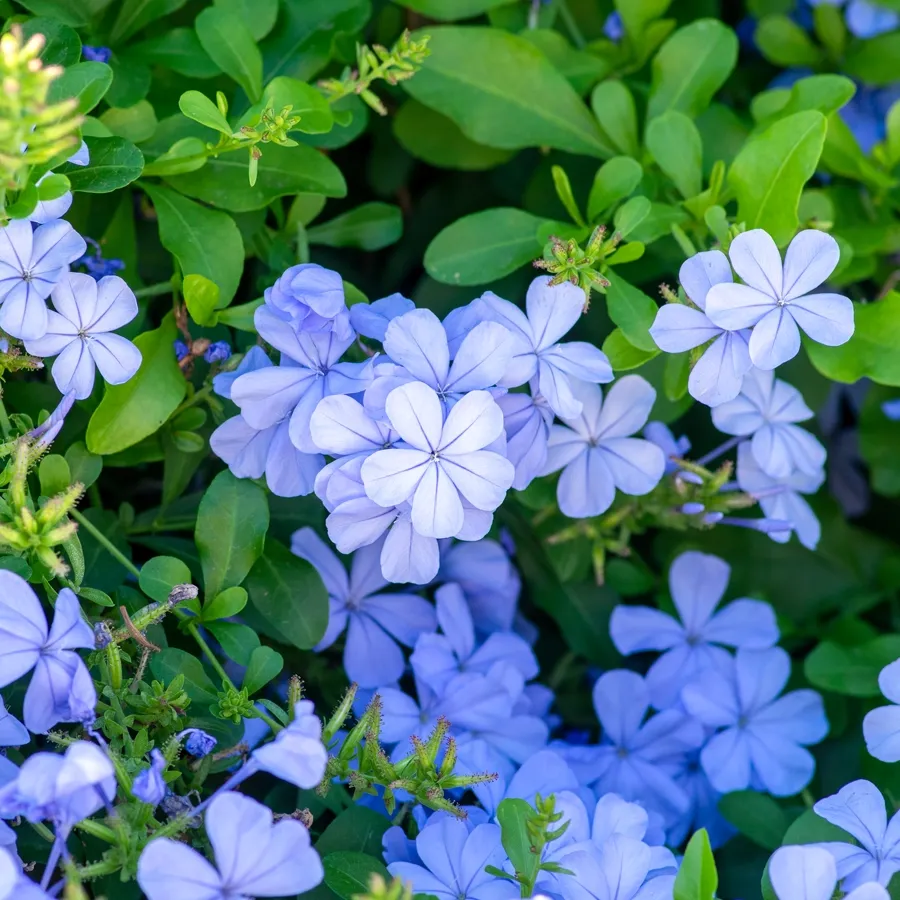
Plumbago is a low-growing shrub that produces cheerful blue flowers throughout the warm months and handles heat and drought with ease. It pairs beautifully with the bold textures of palms and tropical shrubs.
Design Principles for a Low-Maintenance Tropical Backyard
Getting the plants right is only part of the equation. How you arrange and design the space makes the difference between a garden that looks lush and intentional and one that just looks busy.
Use Mulch Generously
A generous layer of mulch, two to three inches deep across all planting beds, is one of the most effective low-maintenance strategies available. It suppresses weeds, retains soil moisture, regulates soil temperature during Houston's extreme summers, and breaks down over time to improve soil structure. Refreshing the mulch layer once a year is far less work than weeding bare soil or maintaining turfgrass.
Minimize Lawn Area
Traditional turfgrass is one of the most high-maintenance elements in any Houston landscape. It requires mowing, fertilizing, watering, and aerating to stay presentable, and it struggles in the shade created by palms and tropical plantings. Replacing lawn areas with ground covers, gravel, decomposed granite, or hardscaping significantly reduces ongoing maintenance while creating a more cohesive tropical aesthetic.
Group Plants by Water Needs
Irrigation is much easier to manage when plants with similar water requirements are planted together. Drought-tolerant palms and succulents can share a zone with minimal watering, while moisture-loving tropicals can be grouped separately. This kind of intentional zoning reduces water waste and simplifies irrigation scheduling.
Choose Perennials Over Annuals
Annual plants require replanting every season, which adds time, cost, and maintenance. Perennial tropicals like Bird of Paradise, Firebush, Plumbago, and ornamental grasses reliably return each year, filling the landscape without requiring seasonal replacement.
Hardscaping: Creating Structure Without Maintenance
The right hardscaping elements provide structure, define spaces, and significantly reduce the amount of planted area that needs ongoing attention.
Decomposed granite and gravel pathways are low-maintenance alternatives to lawn or mulch for high-traffic areas. They drain well, which is important given Houston's heavy rainfall, and naturally complement the texture of tropical plantings.
Concrete or stone pavers create durable, attractive surfaces for outdoor entertaining areas that require no seasonal care beyond occasional cleaning. A simple patio with a few well-placed palms and tropical plantings around its perimeter can create the feel of a private resort with very little ongoing effort.
Raised planting beds are particularly useful in Houston's clay-heavy soil. They improve drainage, make planting and maintenance easier, and create visual definition in the landscape.
For professional guidance on designing and installing hardscaping alongside tropical plantings, our
Landscaping Services team works with Houston homeowners from initial design through full installation.
Keeping Your Tropical Backyard Healthy Long-Term
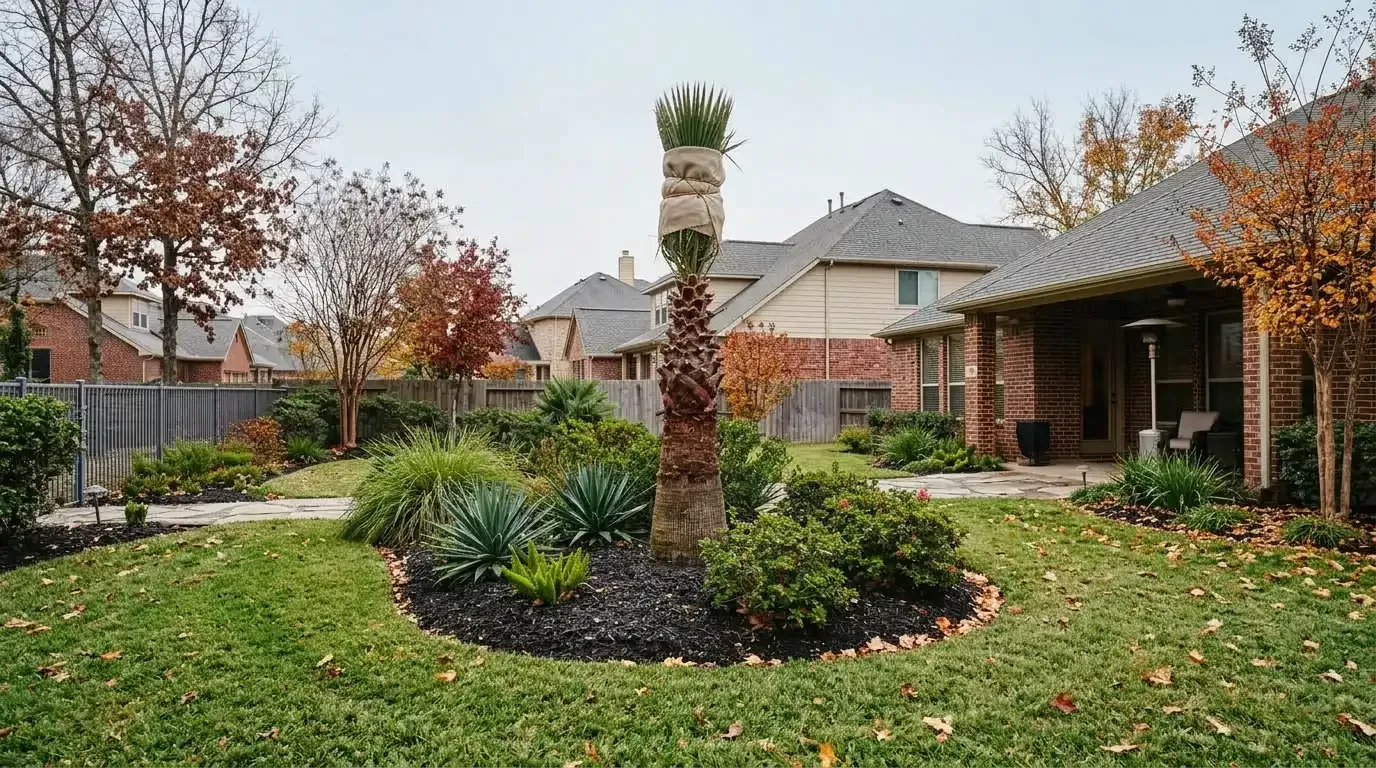
Low-maintenance does not mean no maintenance. The plants that perform best in a Houston tropical garden are those that receive proper foundational care, particularly during their first one to two years of establishment.
Palm Fertilization
Palms in Houston's soils need palm-specific fertilization two to three times per year to replace the nutrients that alkaline, clay-heavy soils do not naturally provide. Using the right formulation, one that includes magnesium, potassium, and manganese, keeps palms looking vibrant and resilient through every season.
Seasonal Monitoring
Even low-maintenance landscapes benefit from a seasonal check. Looking for yellowing fronds, signs of pest activity, or drainage issues early in the season allows small problems to be corrected before they become larger ones. For homeowners who prefer to have this handled professionally, our
Palm Thrive program provides year-round quarterly visits, visual health inspections, and palm-specific nutrition.
Smart Irrigation
An automated irrigation system with separate zones for palms, tropical shrubs, and ground covers ensures efficient, consistent watering without manual effort. Smart controllers that adjust watering schedules based on rainfall and temperature are an excellent investment for any Houston homeowner looking to reduce maintenance time.
For more on keeping your palms specifically healthy through Houston's demanding seasons, read our guide:
Why Palm Trees in Houston Need Year-Round Care (Not Just Winterization)
Visit Rosehill Palms Garden Center
Creating a tropical backyard starts with the right plants, and finding healthy, well-grown specimens makes a significant difference in how quickly a landscape establishes and how well it performs over the long term.
At our
Garden Center in Tomball, we carry a wide selection of palms, tropical plants, shrubs, ground covers, and garden accessories, along with the expertise to help you choose the right combination for your space, soil, and sun exposure.
If you would rather have a professional team handle the design and installation from start to finish, our
Landscaping Services team designs and installs custom tropical landscapes throughout the Greater Houston area. For commercial properties, our
Commercial Landscaping Services team brings the same expertise to larger-scale projects.
Conclusion
A lush, tropical backyard in Houston is not a fantasy, and it does not have to mean constant work. With the right plant selection, thoughtful design, and a few key maintenance habits, it is entirely possible to create an outdoor space that looks beautiful year-round without taking more time than you want to give.
The key is to start with plants that suit Houston's climate rather than fighting it, build in smart design choices that reduce ongoing effort, and give your palms and tropical plants the foundational care they need to establish well.
Ready to get started? Visit us at Rosehill Palms in Tomball, browse our
Palm Trees and
Garden Center selections online, or
contact our team to talk through your landscape vision.
Frequently Asked Questions
What are the best low-maintenance tropical plants for Houston backyards?
Palms are the obvious starting point, particularly cold-hardy varieties like Windmill Palm, Sabal Palm, and Phoenix Sylvestris. Beyond palms, Bird of Paradise, Firebush, Dwarf Bougainvillea, Plumbago, and Asian Jasmine are among the most reliable, low-maintenance tropical plants for Houston's climate. All of these are well adapted to the heat and humidity and require minimal intervention once established.
Can I create a tropical backyard in Houston without a lot of water?
Yes. The key is to choose drought-tolerant species and use mulch generously across planting beds to retain soil moisture. Most established palms and tropical perennials in Houston require far less supplemental watering than traditional turfgrass, particularly once their root systems are well developed after the first growing season.
How long does it take for a tropical backyard to look established in Houston?
Most tropical plantings in Houston begin to look settled and full within one to two growing seasons. Palms typically take a little longer to show significant development of the trunk and canopy. Still, the surrounding shrubs, ground covers, and perennials fill in quickly, giving the landscape a lush feel relatively soon after installation.
Do I need a professional landscaper to create a tropical backyard in Houston?
Not necessarily. Many Houston homeowners successfully plant and establish their own tropical gardens with good plant selection and basic soil preparation. However, for larger projects, spaces with drainage challenges, or layouts that include hardscaping, hiring a professional landscaper ensures the design is executed well, and the plants are installed in conditions that set them up for long-term success.
What is the biggest mistake Houston homeowners make when creating a tropical backyard?
Choosing plants that look tropical but are not suited to Houston's specific conditions. Plants that cannot handle the clay soils, humidity, occasional freezes, or intense summer heat require constant attention and often fail within a few seasons. Sticking to proven performers for the Greater Houston area, including those available at Rosehill Palms' Garden Center and Nursery, is the most reliable path to a lush, low-maintenance result.
Does Rosehill Palms offer landscaping design and installation services for tropical backyards?
Yes. Our landscaping team designs and installs custom landscapes throughout the Greater Houston area, including Tomball, Cypress, Spring, The Woodlands, Katy, and Conroe. We combine deep local knowledge with a design-first approach to help homeowners create outdoor spaces that thrive in Texas conditions. Learn more about our Landscaping Services or visit us in Tomball to get started.
Flexible
90-Day
Payment Option!
We believe your dream outdoor space should be within reach. That's why we offer a convenient 90-day in-house payment option to fit your budget.
How It Works:
50% DOWN PAYMENT.
Due upon approval to secure your project, materials, and labor. The remaining balance is divided into 3 equal payments.
Invest in Your Outdoor Space Now
Recent Posts
Proud member of the
Texas Nursery & Landscape Association

Please feel free to contact us via the form below. We will give you an answer as soon as possible!
Contact Rosehill Palms
We will get back to you as soon as possible.
Please try again later.
Rosehill Palms | Developed by WSI Urdaneta Group | All Rights Reserved 2026