
How Houston's Summer Heat Affects Your Palm Trees (And What to Do About It)
How Houston's Summer Heat Affects Your Palm Trees (And What to Do About It)
Palm trees have a reputation for loving the heat, and in many ways, that reputation is well earned. But Houston summers are not just hot. They are hot, humid, and prolonged, often stretching from late spring well into October. For palm trees, that combination creates a different kind of stress than the dry desert heat many people associate with palms.
Understanding what your palms are actually experiencing during a Houston summer, and what signs of stress look like, can be the difference between a palm that sails through the season and one that enters fall already weakened.
Why Summer Is the Most Demanding Season for Houston Palms
Heat alone is not usually the problem. Most palm varieties grown in Houston, including Queen Palms, Sylvester Date Palms, and Windmill Palms, are well adapted to high temperatures. What makes Houston summers genuinely demanding is the combination of factors working together.
Daytime temperatures regularly climb above 95 degrees Fahrenheit for weeks at a time. Humidity stays high even after the sun goes down, which means palms get little relief overnight. Afternoon thunderstorms are frequent, dumping heavy rain onto soil that is already warm and slow to drain. And nutrient uptake from the soil accelerates in the heat, meaning palms burn through their reserves faster than in the cooler months.
Individually, palms can handle each of these factors. Together, over the course of three to four months, they create cumulative stress that shows up in predictable ways.
If you're still deciding which palm varieties to add to your landscape, browse our full selection at
Palm Trees to see what performs best in Houston's conditions.
How Heat Stress Shows Up in Palm Trees
Recognizing heat stress early gives you the best chance of correcting it before it affects the palm's long-term health.
Frond Scorch and Browning
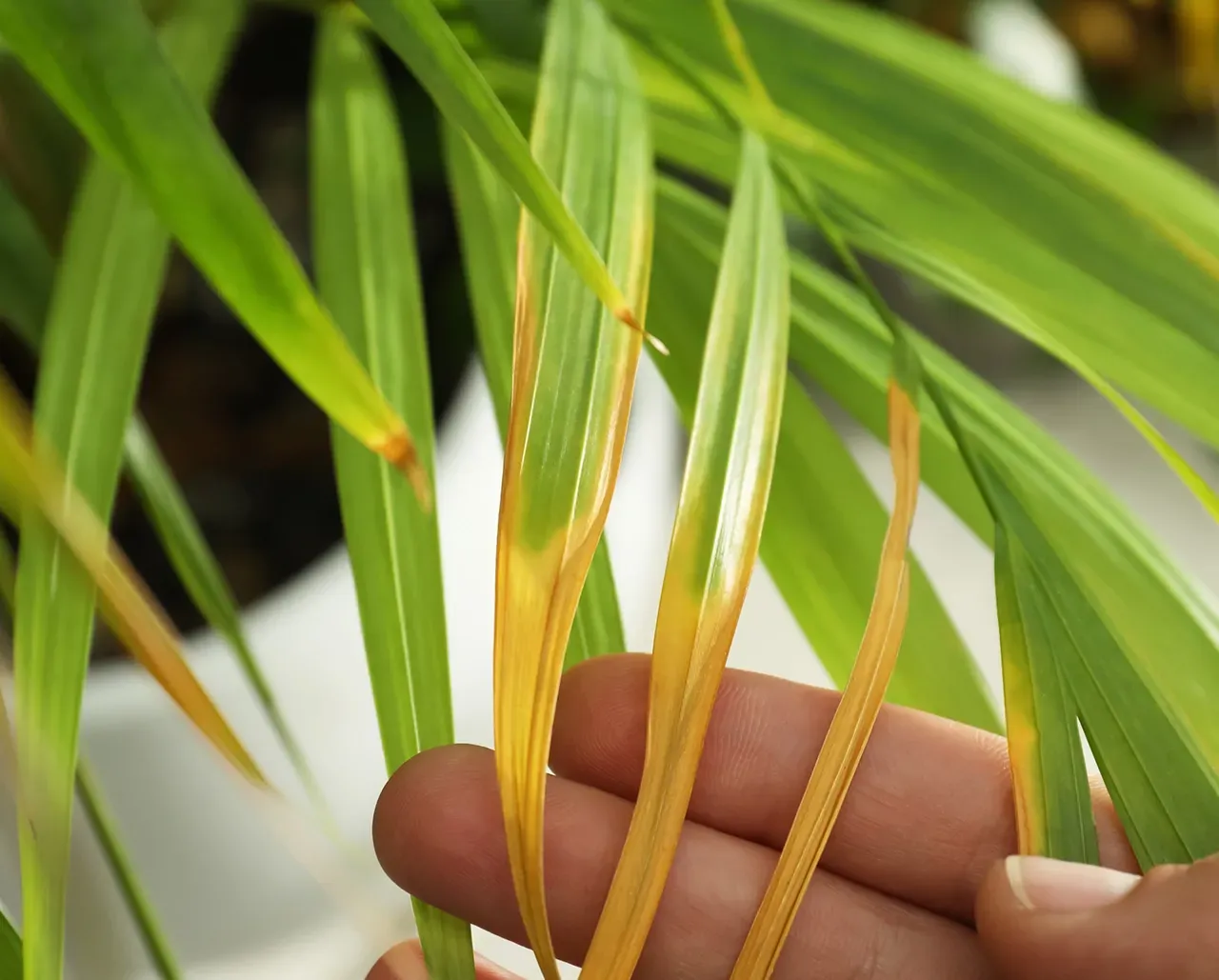
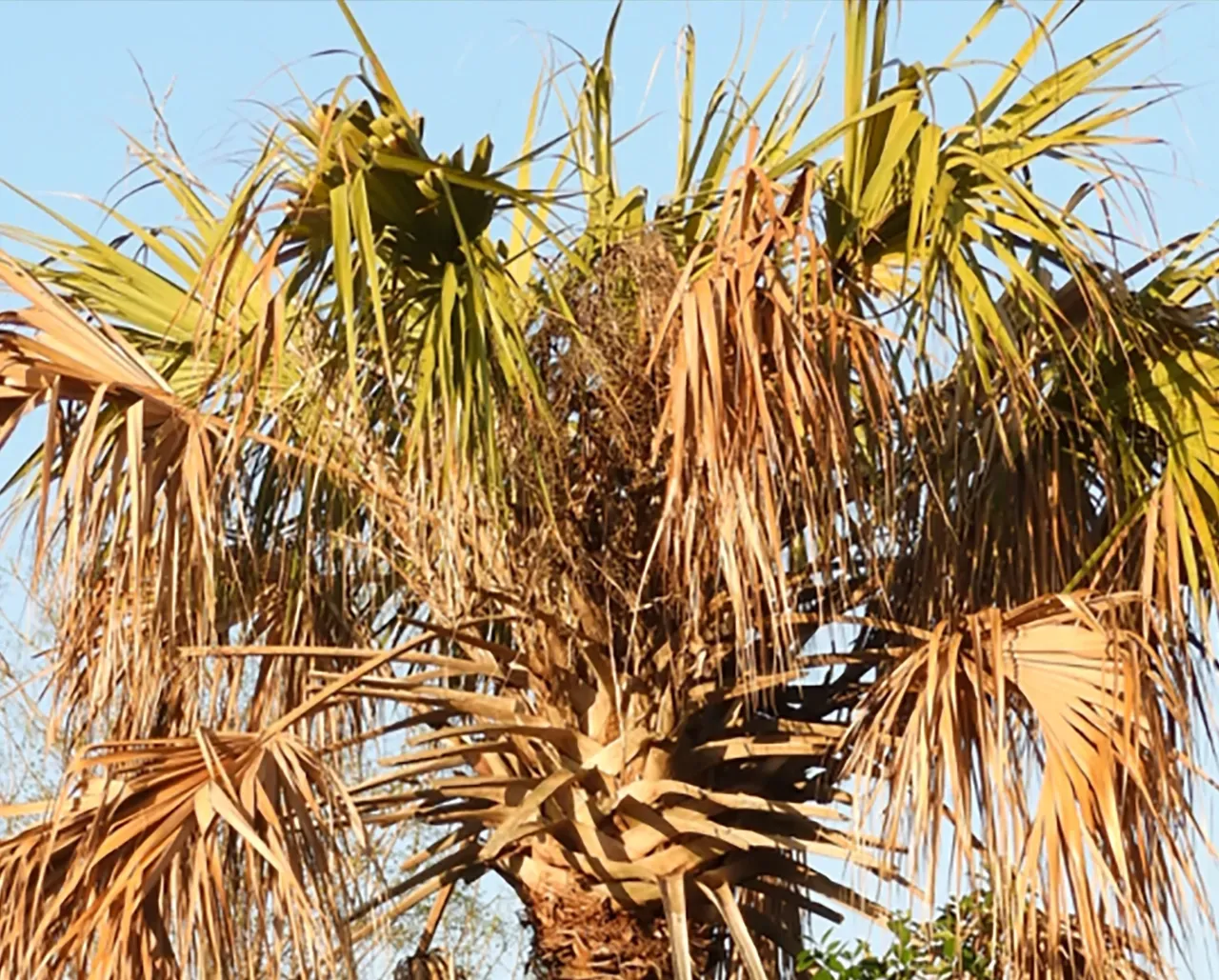
The most visible sign of heat stress is scorching along the tips and edges of fronds, sometimes called leaf burn. Affected fronds develop crispy, brown margins while the rest of the frond remains green. This is especially common on the south and west-facing sides of a palm, where afternoon sun exposure is most intense.
Mild scorch is often cosmetic and does not threaten the palm's overall health. Widespread or repeated scorch across the canopy, however, usually indicates the palm is struggling to keep up with water loss through its fronds.
Accelerated Nutrient Depletion
Heat speeds up biological processes in both the palm and the soil. This means nutrients that would normally last through a full growing season can be depleted faster during a hot Houston summer. Magnesium, potassium, and manganese, the three nutrients palms in Texas soils need most, are particularly prone to running short during peak heat.
The result is often mistaken for simple sun damage: yellowing of older fronds, orange or yellow banding patterns, and an overall canopy that looks paler than it should. In reality, the palm is showing a nutrient deficiency that heat has accelerated.
Wilting or Drooping Fronds
A palm that is genuinely struggling with heat and water stress may show fronds that droop more than usual, particularly during the hottest part of the afternoon. Some drooping during peak heat is normal, and the palm often recovers by evening. Fronds that remain droopy into the next morning are a more concerning sign, often pointing to root stress or insufficient water reaching the canopy.
If these signs progress further, it may point to a larger issue. Learn more in our guides:
5 Signs Your Palm Trees Need Professional Care and
Why Are My Palm Trees Dying? Signs Your Palms Are in Decline
How to Help Your Palms Handle Houston Summers
The good news is that summer heat stress is largely preventable with the right approach.
Water Deeply, Not Frequently
When supplemental watering is needed, water deeply and less often rather than giving palms a light sprinkle every day. Deep watering encourages roots to grow downward, where soil temperature and moisture are more stable, rather than staying near the surface, where conditions fluctuate constantly.
Apply Summer Fertilization
Because nutrient demand increases during summer, this is the second key fertilization window of the year, following the spring application. A palm-specific, slow-release fertilizer containing magnesium, potassium, and manganese helps palms keep pace with what the heat is pulling from their reserves.
Maintain a Mulch Layer
A two to three-inch layer of mulch around the base of the palm, kept a few inches away from direct contact with the trunk, helps regulate soil temperature and retain moisture more evenly. This reduces the swings between bone-dry soil and waterlogged soil that are common during Houston summers.
Avoid Pruning During Peak Heat
Summer is not the ideal time for significant pruning. Removing fronds, even dead ones, creates wounds that are more prone to stress and slower to heal in extreme heat. If pruning is necessary, limit it to fully brown, dead fronds and avoid heavy canopy reduction until cooler months.
Monitor Regularly
Heat stress develops gradually, so regular visual checks throughout the summer help catch problems before they become more serious. Look at frond color across the full canopy, not just the most visible fronds, and pay attention to any new browning or yellowing patterns as the season progresses.
For a deeper look at how heat stress specifically presents and what to do about it, read our guide:
How to Identify and Treat Heat Stress in Palm Trees.
If you would rather have a professional handle the season for you, our
Palm Thrive™
Program builds summer fertilization, inspections, and seasonal monitoring into a structured year-round plan, so nothing gets missed during the busiest months for palm stress.
Commercial Properties Face the Same Summer Stress
Heat stress does not stop at residential property lines. Retail centers, office parks, multi-family communities, and HOA common areas across Greater Houston face the same seasonal pressures on their palms, often affecting dozens or hundreds of trees at once.
For property managers and HOA boards, the stakes are different but just as real. A palm showing visible stress at a retail entrance or in a community pool area affects curb appeal and the tenant experience in a way that is hard to ignore. And because commercial properties often involve far more palms than a typical residence, small issues that go unnoticed can add up to high costs.
This is exactly the kind of seasonal challenge our
Commercial Landscaping Services team is built to manage, with structured maintenance schedules and our
Palm Thrive™ Maintenance Services adapted for commercial properties, so palms across an entire property receive consistent care through every Houston season, not just when a problem becomes visible.
For residential landscapes, our general
Landscaping Services team offers the same seasonal expertise, from design and installation to ongoing seasonal care.
Conclusion
Houston summers ask a lot of palm trees, and most varieties are well equipped to handle it, as long as they go into the season with good reserves and receive the right support along the way. Frond scorch, nutrient depletion, and wilting are not signs that your palm is failing. They are signals that the heat is catching up with it, and they respond well to timely watering adjustments, summer fertilization, and consistent monitoring.
If your palms are showing signs of summer stress, or if you simply want a professional set of eyes on them before the season progresses further, we are here to help.
Have questions about your palms this summer?
Contact the Rosehill Palms team or
visit us in Tomball to talk through what you are seeing.
Frequently Asked Questions
Is it normal for palm trees to look stressed during a Houston summer?
Yes, to some degree. Mild frond scorch, slight wilting during peak afternoon heat, or a few yellowing lower fronds are common and not usually cause for concern on an otherwise healthy palm. The key is watching for patterns that worsen over time or spread across multiple levels of the canopy, rather than isolated, minor signs. When in doubt, a quick professional check can offer peace of mind.
How often should I water my palm trees during a Houston summer?
This depends heavily on rainfall and soil type, but as a general guideline, deep watering once or twice a week is usually sufficient for established palms, with adjustments based on the area's natural rainfall. Always check soil moisture before adding more water, rather than watering on a fixed schedule.
Can too much heat kill a palm tree?
On its own, heat rarely kills an otherwise healthy, well-established palm in Houston, since most varieties grown here are well-suited to the climate. Palm decline during summer is more often caused by a combination of factors, such as nutrient depletion, overwatering, or pre-existing stress from earlier in the year, rather than heat alone.
Why are the tips of my palm fronds turning brown in summer?
Browning frond tips during summer are most commonly caused by leaf scorch from intense sun exposure, nutrient deficiency accelerated by heat, or inconsistent watering. If the browning is limited to frond tips and edges with the rest of the frond remaining green, it is usually manageable with adjusted watering and fertilization.
Should I fertilize my palm trees during the summer?
Yes. Summer is one of the two key fertilization windows for palms in Houston, alongside spring. Use a palm-specific, slow-release fertilizer that includes magnesium, potassium, and manganese to help palms keep pace with the increased nutrient demand of hot weather.
Do commercial properties need different palm care than residential properties?
The underlying care principles are the same, but commercial properties typically involve more palms across larger areas, which calls for more structured scheduling and consistent crew accountability. Rosehill Palms' Commercial Landscaping Services and Palm Thrive™ Maintenance Services are designed specifically to manage palm health at that scale.
What is the best way to prevent heat stress in palm trees?
Consistent, proactive care throughout the year is the most effective prevention strategy. This includes proper spring and summer fertilization, deep and appropriately timed watering, a healthy mulch layer, and regular visual inspections to catch developing issues early. To learn more about what year-round palm care involves, read our guide: Why Palm Trees in Houston Need Year-Round Care (Not Just Winterization)
Flexible
90-Day
Payment Option!
We believe your dream outdoor space should be within reach. That's why we offer a convenient 90-day in-house payment option to fit your budget.
How It Works:
50% DOWN PAYMENT.
Due upon approval to secure your project, materials, and labor. The remaining balance is divided into 3 equal payments.
Invest in Your Outdoor Space Now
Recent Posts

Proud member of the
Texas Nursery & Landscape Association

Please feel free to contact us via the form below. We will give you an answer as soon as possible!
Contact Rosehill Palms
We will get back to you as soon as possible.
Please try again later.
Rosehill Palms | Developed by WSI Urdaneta Group | All Rights Reserved 2026