
Phoenix Sylvestris for Landscaping: Design Ideas for Houston Homeowners
Phoenix Sylvestris for Landscaping: Design Ideas for Houston Homeowners
Few trees make a statement quite like the Phoenix Sylvestris. Its towering trunk, distinctive diamond-patterned bark, and sweeping silver-green fronds bring instant tropical character to any outdoor space, and in Houston's climate, it thrives as it belongs here.
Whether you're planning a full landscape redesign or simply looking to add a standout tree to your yard, the Silver Date Palm is one of the most versatile and rewarding choices for Houston homeowners. In this guide, we explore the best ways to incorporate it into your landscape, what to consider before planting, and when it makes sense to bring in a professional.
Why the Phoenix Sylvestris Is a Perfect Landscaping Palm for Houston
The Phoenix Sylvestris is not just beautiful, it is genuinely well-suited for Greater Houston's climate. Native to the subtropical regions of southern Asia, it evolved in conditions that closely mirror Houston's long, hot, humid summers and unpredictable winters.
Once established, it tolerates heat, drought, and clay-heavy soils with minimal complaint. It is cold-hardy down to approximately 15 to 18°F, making it resilient enough to handle Houston's occasional freeze events. And with a mature height of 40 to 50 feet and a canopy spread of 10 to 15 feet, it provides genuine presence and shade without overwhelming most residential properties.
For a complete overview of this palm's characteristics and care requirements, read our guide:
Phoenix Sylvestris: The Complete Guide to the Silver Date Palm
Design Ideas: How to Use Phoenix Sylvestris in Your Houston Landscape
The Phoenix Sylvestris works beautifully in a wide range of landscape designs; from formal and architectural to lush and tropical. Here are the most effective ways to incorporate it into your outdoor space.
Driveway Entrance Statement
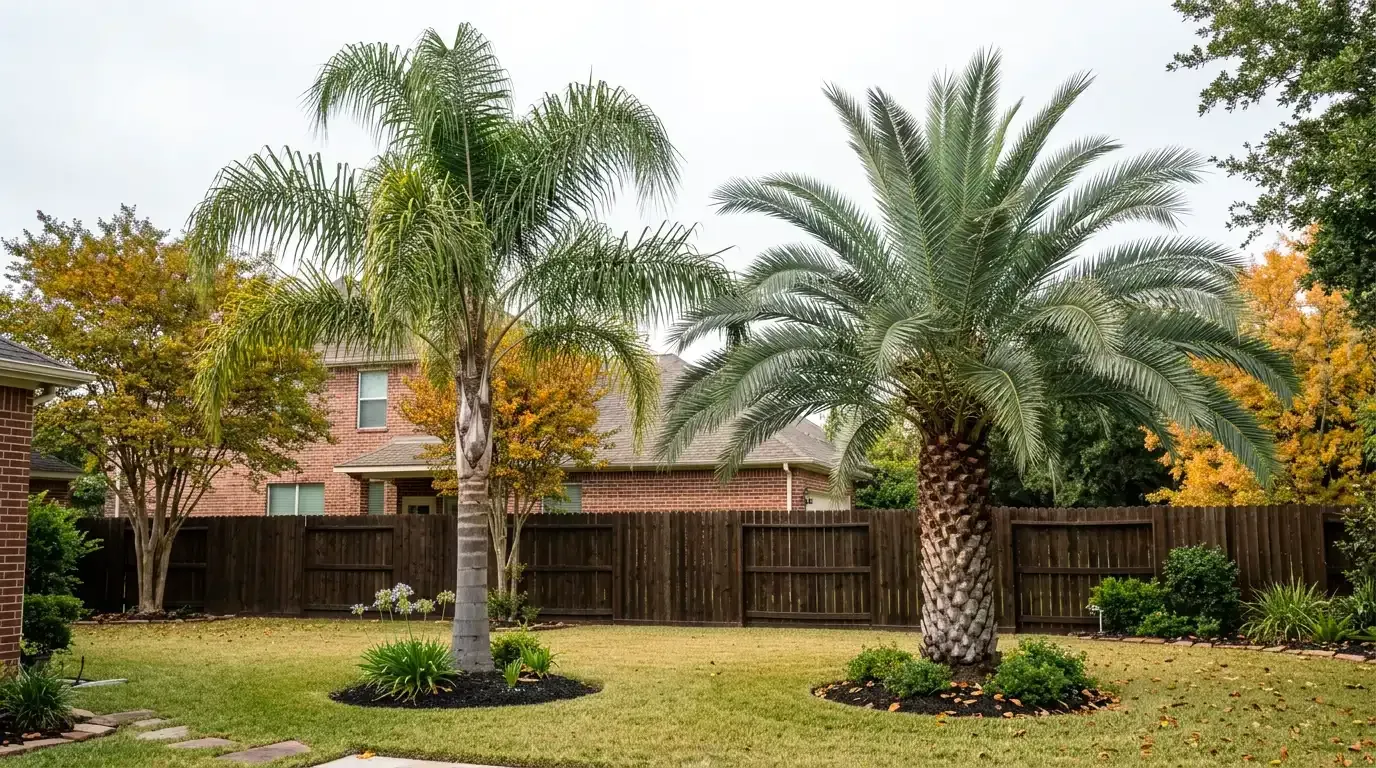
One of the most classic and impactful uses of the Phoenix Sylvestris is as a driveway focal point. A pair of Silver Date Palms flanking a driveway entrance creates an immediate sense of arrival, the kind of dramatic, resort-like first impression that significantly elevates curb appeal.
For this application, symmetry is key. Choose two palms of similar trunk height and canopy size, and plant them at equal distances from the driveway edge. As they mature, their canopies will arch gracefully toward one another, framing the entrance with natural elegance.
Poolside Landscaping
The Phoenix Sylvestris is one of the best palms for poolside landscaping in Houston. Its vertical growth habit means it provides shade without sprawling into the pool area, and its tropical canopy creates the kind of resort atmosphere that transforms a backyard into a private retreat.
When planting near a pool, keep the palm far enough from the pool edge to avoid surface root interference with the deck, typically a minimum of 6 to 8 feet. Also consider the direction of prevailing winds, as fronds and fruit clusters can drop into the water if the palm is directly upwind of the pool.
Pair the Phoenix Sylvestris with lower-growing tropical plants like bird of paradise, dwarf bougainvillea, or ornamental grasses to create a layered, lush poolside composition.
Specimen Planting in an Open Lawn
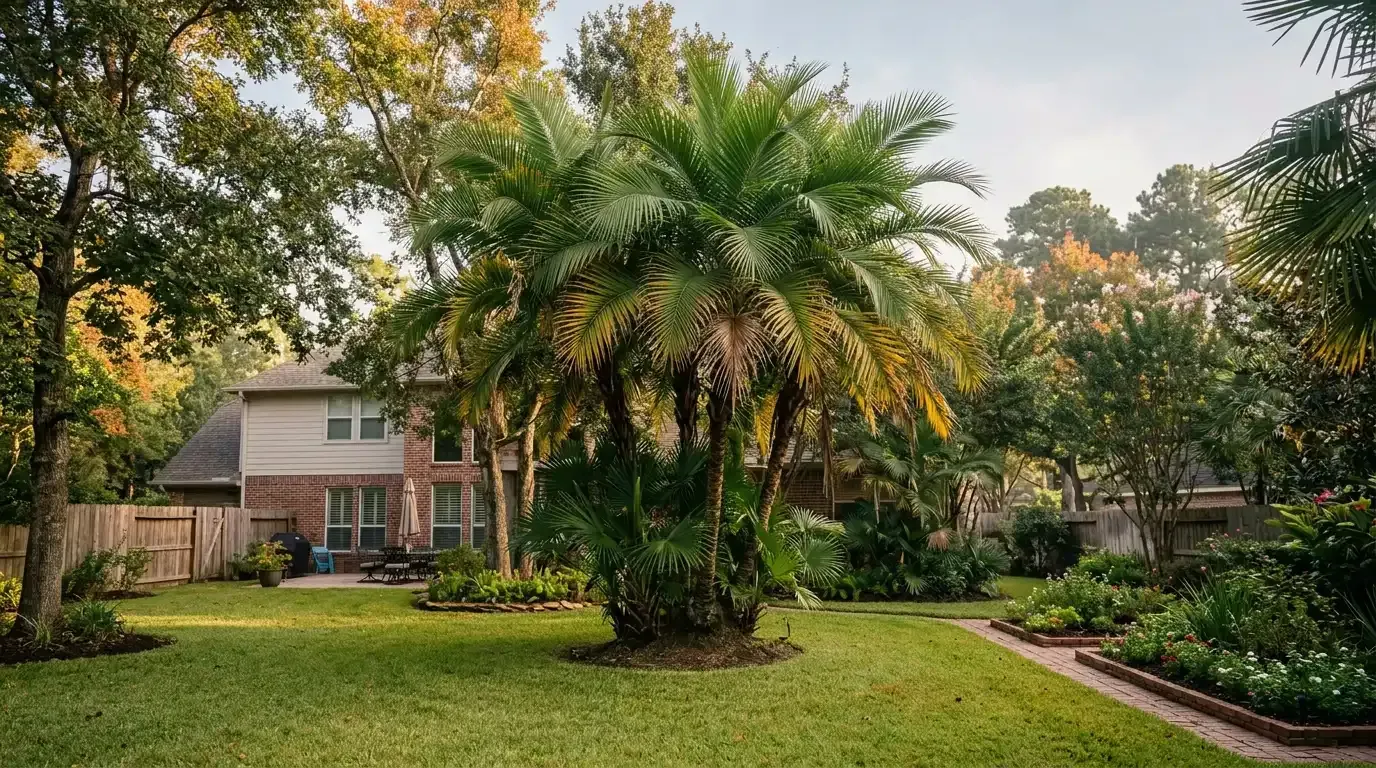
A single, well-positioned Phoenix Sylvestris in an open lawn becomes an instant focal point. This approach works especially well in larger yards where the palm has room to develop its full canopy without competing with nearby structures or trees.
The key to successful specimen planting is placement. Position the palm where it can be viewed from multiple angles; ideally visible from the street, the home's main living areas, and any outdoor entertaining spaces. This maximizes visual impact and allows the tree's distinctive trunk and canopy to be appreciated year-round.
Group Planting for a Tropical Canopy Effect
Clustering three or more Phoenix Sylvestris palms together creates a lush, immersive tropical canopy that few other plantings can replicate. This approach works particularly well in larger properties, commercial landscapes, or any yard where the goal is to create a defined outdoor "room" or shaded gathering area.
When grouping palms, vary the trunk heights slightly for a more natural, organic look. Space them 8 to 12 feet apart to allow full canopy development while maintaining the sense of enclosure that makes grouped palms so visually effective.
Framing Your Home's Facade
Strategically placed Phoenix Sylvestris palms can dramatically enhance the architectural presence of your home. Planting one or two near the corners of the front facade, or flanking the main entrance — draws the eye upward, softens hard architectural lines, and adds vertical interest that most shrubs and ground covers simply cannot provide.
For this application, choose palms with established trunks for immediate impact, and ensure they are positioned far enough from the structure to allow for full canopy development without contact with the roofline or gutters.
Planning Your Phoenix Sylvestris Landscape: What to Know Before You Plant
Good landscaping starts with good planning. Before adding Phoenix Sylvestris palms to your yard, here are the key considerations to get right from the start.
Space Requirements
The Phoenix Sylvestris is a large tree. At maturity, it reaches 40 to 50 feet in height with a canopy spread of 10 to 15 feet. Before planting, make sure the location provides adequate vertical and horizontal clearance — away from power lines, rooflines, fences, and other trees that could compete for light and space as the palm grows.
Also consider the root zone. While Phoenix Sylvestris roots are generally less aggressive than some other large trees, planting too close to foundations, driveways, or irrigation systems is not recommended.
Soil and Drainage Preparation
Houston's clay-heavy soils are the single biggest challenge for palm establishment. Clay retains moisture, and palms sitting in consistently waterlogged soil are significantly more vulnerable to root rot and nutrient deficiencies.
Before planting, assess your drainage. If water tends to pool in the area after heavy rain, consider amending the soil with sand or organic matter, or building a slightly raised planting bed to improve drainage. This one step makes a significant difference in long-term palm health.
The Right Time to Plant
Spring is the ideal time to plant Phoenix Sylvestris palms in Houston. Warming soil temperatures and longer daylight hours support faster root establishment, giving the palm a strong foundation before the intense summer heat arrives. Fall is also a reasonable planting window, though palms planted in fall have less time to establish before winter.
If you're planting in summer, consistent watering during the first 60 days is essential — the palm's root system needs significant moisture to establish in hot, dry conditions.
DIY vs. Professional Landscaping: Which Is Right for You?
For many Houston homeowners, planting a single Phoenix Sylvestris is a manageable DIY project — especially with a smaller palm, proper soil preparation, and a clear understanding of placement and care. If you are confident in your ability to assess drainage, dig an appropriate planting hole, and commit to a consistent watering schedule during establishment, planting your own Silver Date Palm is absolutely achievable.
However, there are situations where professional landscaping services make a meaningful difference:
- You are installing multiple palms and want a cohesive, well-proportioned design
- Your yard has drainage challenges that require more than basic soil amendment
- You want the palms installed the first time correctly, with professional guidance on placement and spacing
- You are combining the Phoenix Sylvestris with other plants, hardscaping, or irrigation as part of a larger landscape project
- You want the confidence of knowing the palm was properly planted and is starting its life in optimal conditions
In these cases, working with a professional landscaping team ensures that the design vision is executed well and that the investment in premium palms like the Phoenix Sylvestris is protected from the start.
At Rosehill Palms, our
landscaping team designs
and installs landscapes throughout the Greater Houston area, with deep expertise in palm placement, soil preparation, and tropical garden design.
Protecting Your Investment: Long-Term Care for Landscaped Palms
Adding Phoenix Sylvestris palms to your landscape is only the beginning. To keep them looking their best and performing at their peak, consistent year-round care is essential, especially in Houston's demanding climate.
Key elements of long-term palm care include palm-specific fertilization in spring and summer, seasonal inspections to catch developing issues early, appropriate pruning to remove dead fronds without over-cutting, and drainage management to protect roots during Houston's heavy rainfall periods.
For homeowners who want structured, professional care for their palms throughout the year, our
Palm Thrive:
Palm Maintenance, Care & Conditioning Program offers quarterly visits, visual health inspections, palm-specific nutrition, and ongoing monitoring — so your landscape investment is protected season after season.
For a full breakdown of what year-round palm care looks like, read our post:
Why Palm Trees in Houston Need Year-Round Care (Not Just Winterization)
And if you want to know the warning signs that a palm needs professional attention, visit our guide:
5 Signs Your Palm Trees Need Professional Care
Conclusion
The Phoenix Sylvestris is one of the most rewarding landscaping palms available to Houston homeowners. Its dramatic presence, adaptability to Texas conditions, and long-term durability make it a premium choice whether you're designing a grand driveway entrance, a resort-style poolside retreat, or a single statement tree for an open lawn.
The key to success is getting the details right, placement, soil preparation, establishment care, and long-term maintenance. Whether you choose to plant and care for your palms yourself or work with a professional team, the Silver Date Palm will reward that attention with decades of beauty and tropical character.
At Rosehill Palms, we carry Phoenix Sylvestris palms in our nursery and offer professional landscaping services throughout the Greater Houston area. Our team can help you choose the right palms for your space, design a layout that maximizes visual impact, and ensure every tree is installed and cared for correctly.
Ready to add Phoenix Sylvestris palms to your landscape?
Contact our team or visit us in Tomball to see our current selection.
Frequently Asked Questions
How many Phoenix Sylvestris palms do I need for a driveway entrance?
A pair — one on each side — is the classic approach for a driveway entrance. For longer driveways, repeating pairs at regular intervals creates a more formal, avenue-style effect. When selecting palms for a paired planting, try to choose trees with similar trunk heights for visual symmetry.
How close to my pool can I plant a Phoenix Sylvestris?
A minimum of 6 to 8 feet from the pool edge is generally recommended, though farther is better. The primary concerns are surface root interference with pool decking over time and fronds or fruit dropping into the pool. Positioning the palm upwind of the pool minimizes debris issues.
Can I plant a Phoenix Sylvestris near my house?
Yes, but placement matters. Keep the palm far enough from the structure to allow full canopy development without contact with the roofline, gutters, or eaves, typically at least 10 to 15 feet from the home's foundation. Also, avoid planting directly above underground utilities or irrigation lines.
How long does it take for a Phoenix Sylvestris to look established after planting?
With proper planting and consistent watering during the first 60 days, most Phoenix Sylvestris palms begin pushing out new growth within one growing season. Visible establishment, with a full, healthy canopy and normal growth rate, typically takes one to two years after planting.
Is the Phoenix Sylvestris a good palm for a small yard?
The Phoenix Sylvestris is a large tree at maturity and is best suited for yards with adequate space for its full canopy to develop. For smaller spaces, other palm varieties may be a better fit. Our post Fan Palms vs Date Palms: Which Is the Best for Your Landscape? can help you compare options.
Does Rosehill Palms offer landscaping design and installation services?
Yes. Our landscaping team designs and installs custom landscapes throughout the Greater Houston area, including Tomball, Cypress, Spring, The Woodlands, Katy, and Conroe. We combine local expertise with a design-first approach to help homeowners create outdoor spaces that thrive in Texas conditions. Learn more about our landscaping services
Flexible
90-Day
Payment Option!
We believe your dream outdoor space should be within reach. That's why we offer a convenient 90-day in-house payment option to fit your budget.
How It Works:
50% DOWN PAYMENT.
Due upon approval to secure your project, materials, and labor. The remaining balance is divided into 3 equal payments.
Invest in Your Outdoor Space Now
Recent Posts

Proud member of the
Texas Nursery & Landscape Association

Please feel free to contact us via the form below. We will give you an answer as soon as possible!
Contact Rosehill Palms
We will get back to you as soon as possible.
Please try again later.
Rosehill Palms | Developed by WSI Urdaneta Group | All Rights Reserved 2026